Originally published October, 2024. Updated June 2026.
Before our first typhoon, we honestly thought it would be similar to a bad windstorm back home.
We were wrong.
We waited a little too long to put up our heavy wooden storm doors, wrestling them into place as rain blew sideways and strong gusts kept catching them out of our hands. Then the power went out for a day and a half—in the middle of Japan’s hot, humid summer, with no air conditioning.
Typhoon season is simply a part of life in Japan, especially during the late summer months. Since then, we’ve developed a simple routine to prepare our home before each storm.
Here’s how we get our home, emergency supplies, and ourselves ready before a typhoon arrives.
Before We Begin
Japan’s weather forecasts are usually accurate several days before a typhoon arrives. Rather than waiting until the day of the storm, we start preparing as soon as a typhoon is predicted to affect our area. That gives us plenty of time to shop for supplies, secure the property, and avoid the last-minute rush.
1. Bring In Loose Outdoor Items
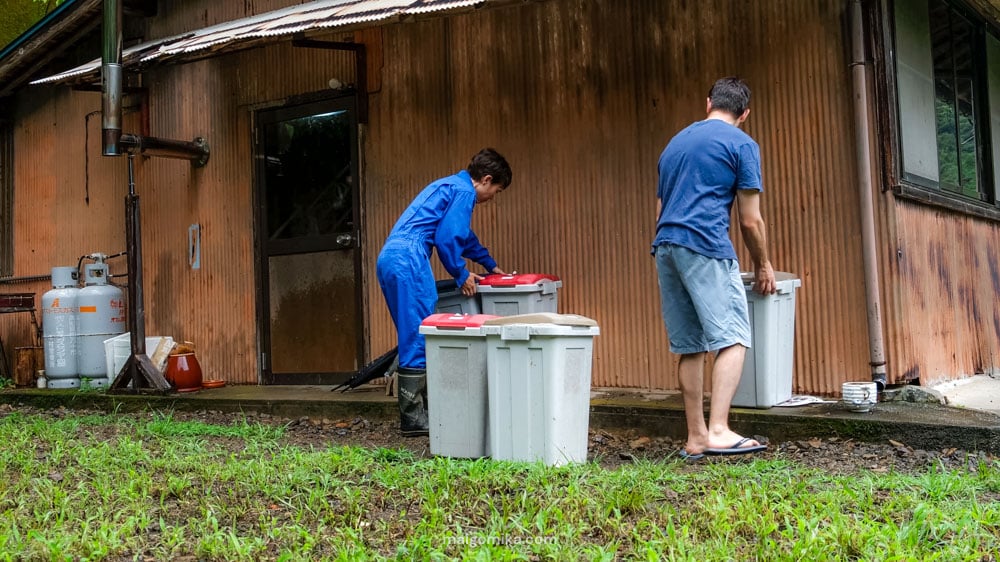
When our first strong typhoon hit in 2022, our recycling bins were among the first things to nearly fly away. Since then, we make sure to bring in anything that could become airborne, including bins, potted plants, outdoor furniture, and other lightweight items.
If heavy rain or flooding is expected, we also move our car to higher ground whenever possible. Many neighborhoods in Japan have designated evacuation areas, schools, or shrines located above flood-prone areas, making them safer places to park until the storm passes.
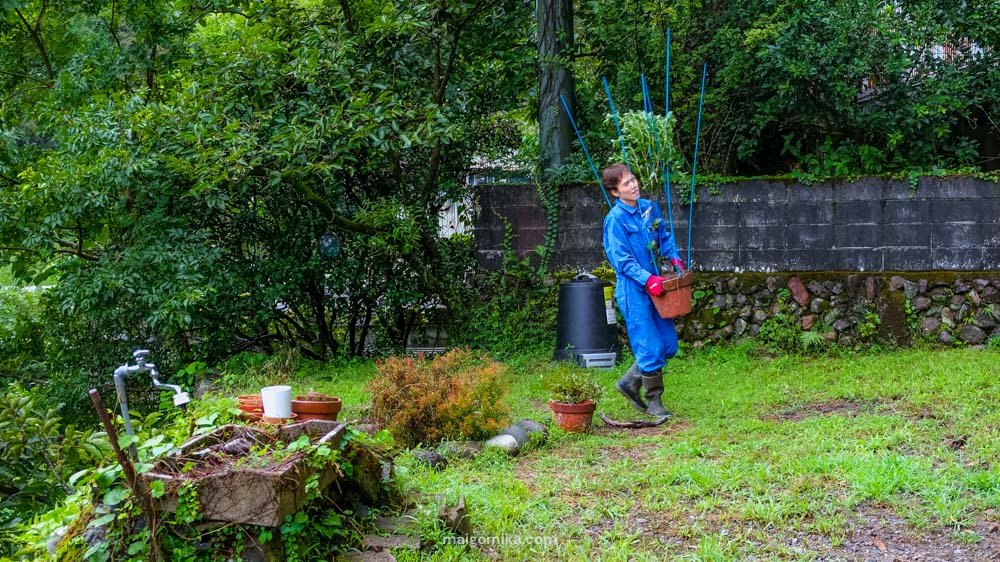
We also take a walk around the property to prepare the garden. We stake or tie up young trees and tall plants that could be damaged by strong winds, and trim away any dead or weak branches that might snap off during the storm.
2. Put Up Our Storm Doors
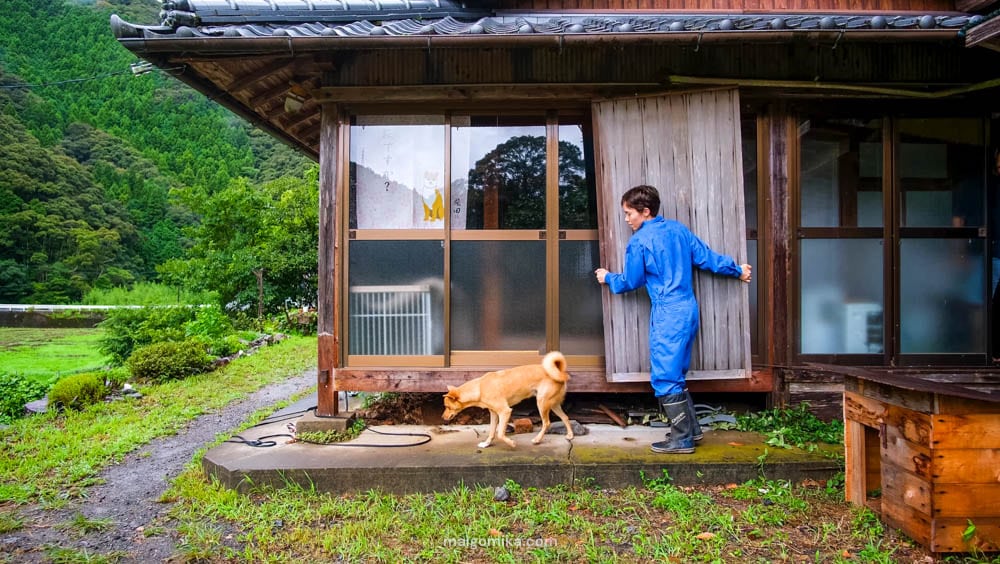
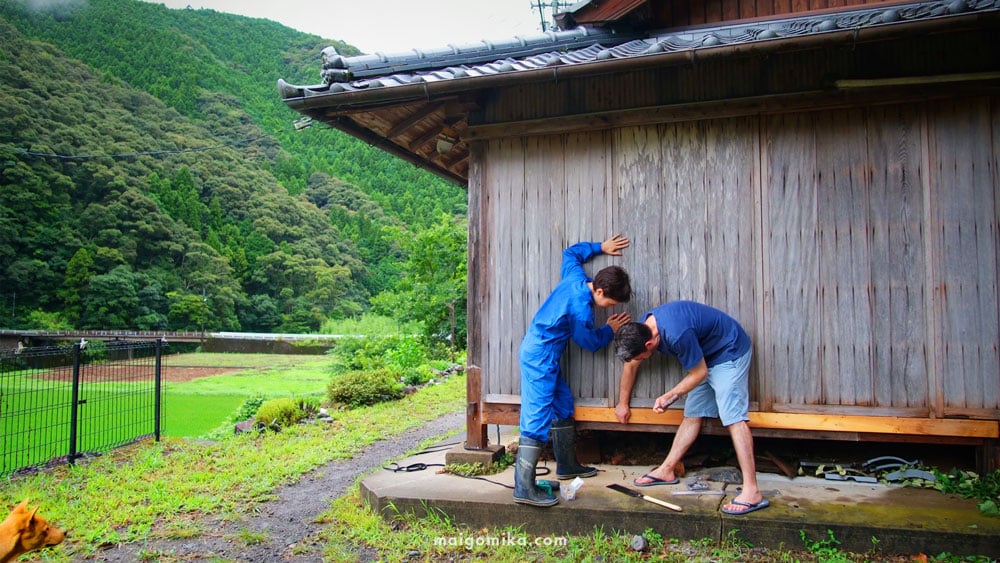
Many homes in Japan have storm shutters, known as amado (雨戸), which are designed to protect glass windows and doors from strong winds and flying debris during typhoons. While modern homes often use lightweight aluminum shutters, our 150-year-old Japanese house still has its original wooden storm doors.
The doors are stored in compartments at each end of the engawa (veranda). When a storm is approaching, we slide each door out onto a track and close them one by one until all the glass doors are covered.
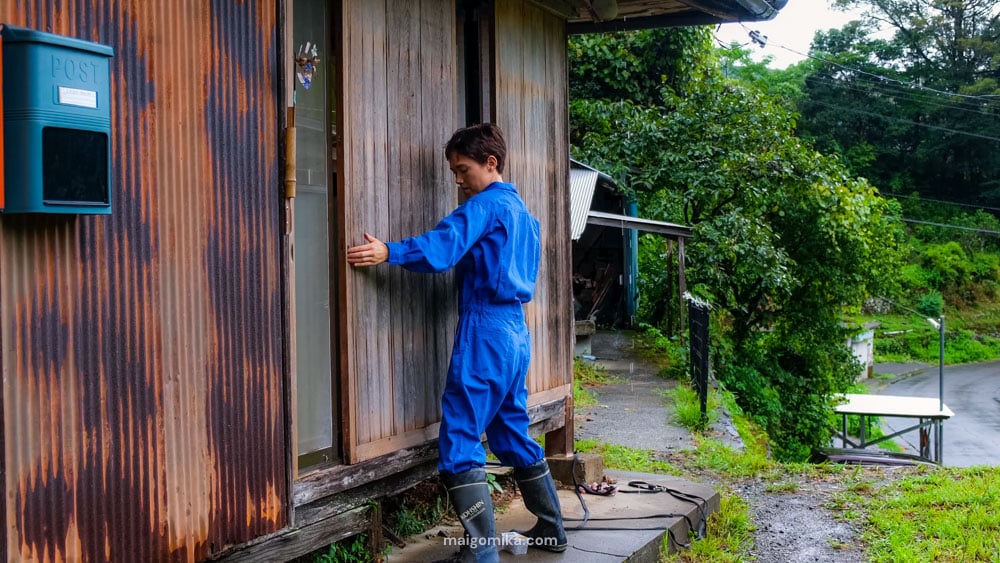
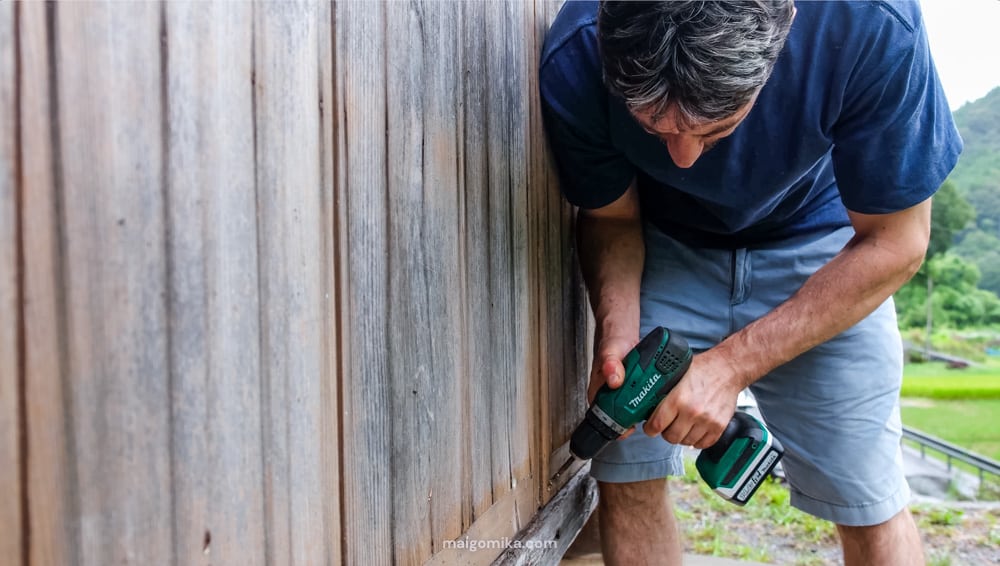
Unfortunately, time has taken its toll on the system. The bottom track has started to rot, making it difficult to slide the doors into place. Instead, we carefully carry each door into position and secure it with nails. It’s not as quick or convenient as it once was, but it’s still far better than leaving the windows exposed during a typhoon.
If you’re curious to see how traditional Japanese storm doors work, you can watch us install ours in my YouTube video about preparing our house for typhoon season.
3. Check Your Emergency Kit
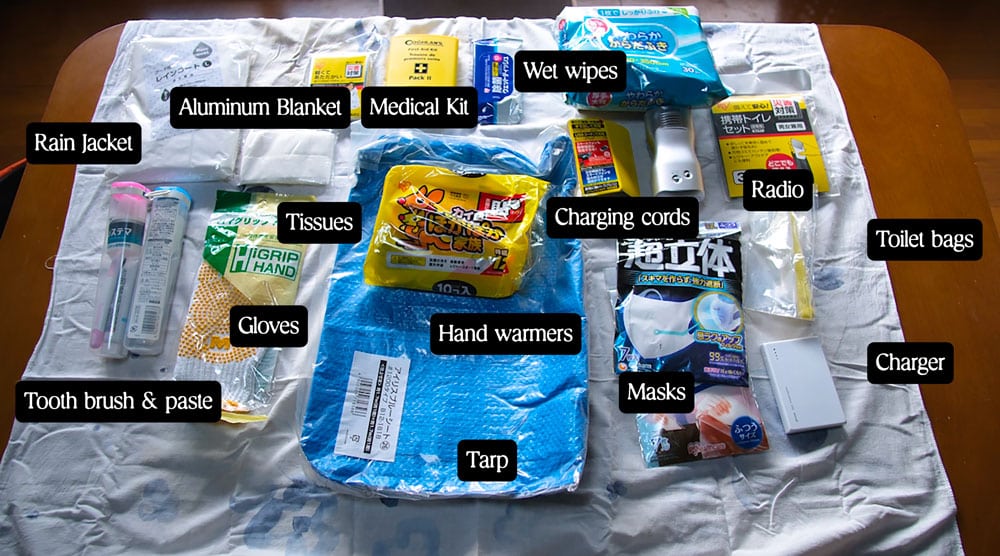
Before typhoon season, we review our emergency kit to make sure everything is stocked, in working order, and easy to grab if we ever need to evacuate.
In Japan, ready-made emergency backpacks are sold at many hardware stores, but they’re also easy to put together yourself.
A basic kit typically includes a first aid kit, rain poncho, emergency blanket, flashlight, batteries, gloves, wet wipes, tissues, masks, a tarp, a charging cable, a hand-crank radio, and portable toilet bags.
We personalized our kit with a few extra essentials, including toothbrushes, toothpaste, a camping stove with extra propane canisters, a gas lantern, and candles.
We make sure our phones, power banks, rechargeable batteries, flashlights, and other electronic devices are fully charged. If the power goes out, having reliable light and a way to charge essential devices can make a big difference.
If you happen to be traveling, a printed list of emergency contacts and some cash in case electronic payment systems are unavailable is useful.
4. Stock Up on Food and Water
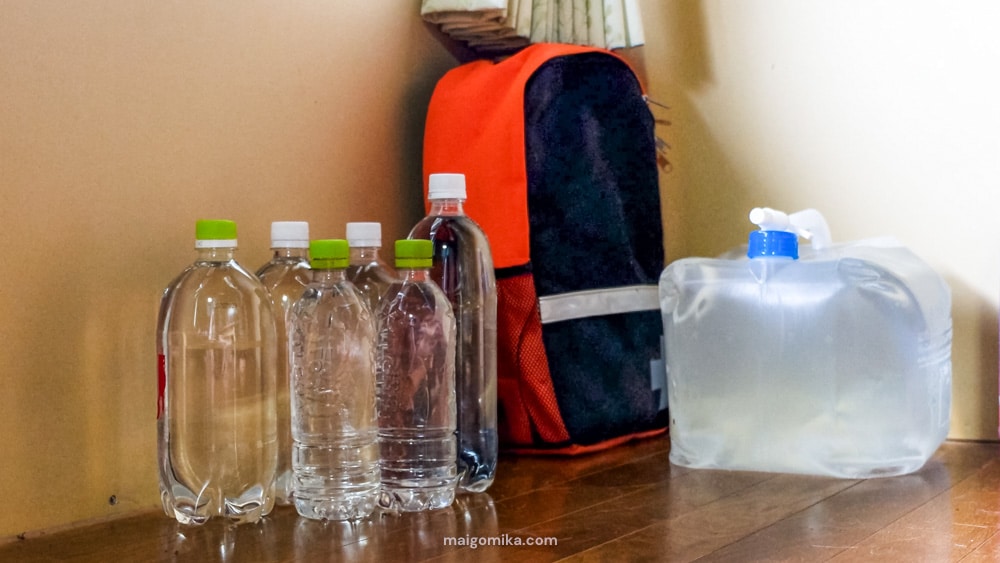
Before a typhoon arrives, we make sure we have plenty of drinking water on hand. We also fill the bathtub, giving us an emergency supply of water for flushing toilets, washing, or other household needs if the water service is interrupted.
We keep a camping stove and extra propane canisters ready as well, so we can still cook meals if the power goes out.
We also stock the pantry with enough food for a few days, focusing on foods that don’t require refrigeration and are easy to prepare, such as canned goods, instant noodles, rice, dried fruit, nuts, crackers, and other long-lasting snacks.
One simple trick we’ve found helpful is freezing a few bottles of water before a storm arrives. They help keep the freezer cold if the power goes out, and as they thaw, they provide clean drinking water.

5. Make a Pet Kit
Since adopting Pancake, we’ve put together a small emergency kit just for him. It includes several days’ worth of dog food, bottled water, treats, medications, waste bags, and copies of his vaccination records.
Many evacuation shelters in Japan can accommodate pets, but they may need to stay in a crate or designated area. We got Pancake comfortable with a carrier or crate ahead of time to help make an already stressful situation much easier.
6. Stay Informed
Because our home is located near a river in a flood delta, it is more prone to flooding. So we pay close attention to weather updates and evacuation information whenever a typhoon approaches.
Like many towns across Japan, ours has a public address (PA) system that broadcasts emergency announcements throughout the community. These updates let us know if conditions are worsening and whether certain areas should prepare to evacuate or leave immediately.
We also make sure we know where our nearest designated evacuation shelter is before typhoon season begins. If we’re traveling somewhere unfamiliar, we take a few minutes to find the closest evacuation site as soon as we arrive.
There are several multilingual apps that provide emergency alerts in English, Japanese, and other languages.
Two of the best are Safety Tips from the Japan National Tourism Organization (JNTO), which sends notifications for typhoons, earthquakes, tsunamis, and other disasters, and NHK WORLD-JAPAN’s Safety Tips, which provides emergency information and weather alerts in multiple languages.
7. Prepare For a Power Outage
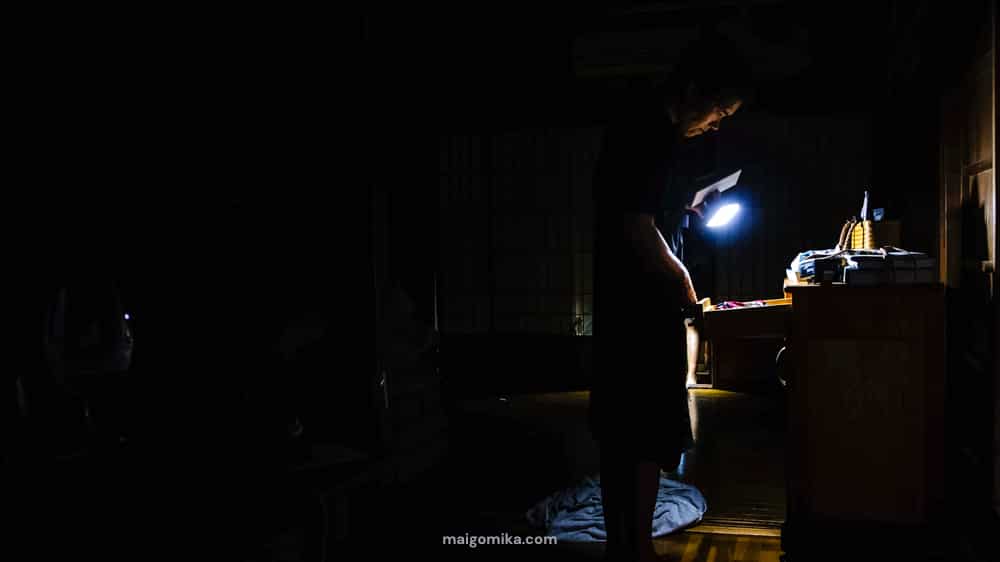
Power outages are common during stronger typhoons, so we think about how we’ll spend the time if the electricity is out for several hours—or even a couple of days.
During our first typhoon, we were without power for nearly two days. We passed the time by working on puzzles under the warm glow of a propane lantern. It wasn’t exactly our original plan for the weekend, but it made the outage feel a little less stressful.
If you have a laptop, tablet, or e-reader, charge it before the storm arrives and download a few movies, TV shows, books, or games in advance, since mobile service or internet access may become unreliable during severe weather.
Board games, puzzles, cards, and books are also great ways to pass the time while you wait for the power to return.
Fortunately, Japan has excellent weather forecasting and warning systems, giving us several days to prepare before a typhoon arrives. A little planning goes a long way, and we hope these tips help you feel more prepared for the next storm.
What do you all think? Do you have any other helpful typhoon preparation tricks up your sleeve? Let me know in the comments below. 🙂
Typhoon FAQ
Japan’s typhoon season officially runs from May through October, although most typhoons develop between July and October. The busiest months are usually August and September, when warm Pacific Ocean waters fuel stronger storms.
Southern regions such as Okinawa and Kyushu often experience more frequent typhoons, while areas farther north may only see a few each year.
A typhoon and a hurricane are actually the same type of storm—a tropical cyclone. The only difference is where they form.
Typhoon: Northwest Pacific Ocean (including Japan)
Hurricane: Atlantic Ocean and Northeast Pacific
Cyclone: Indian Ocean and South Pacific
It depends on the storm’s strength and timing, but in general, it’s best to avoid unnecessary travel during a typhoon. Strong winds, heavy rain, flooding, and landslides can make roads dangerous, while trains, ferries, and flights are often delayed or canceled.
Japan has several excellent apps that provide emergency alerts in English, Japanese, and other languages, making them especially useful for travelers and foreign residents.
One of the best is Safety Tips from the Japan National Tourism Organization (JNTO), available for both iOS and Android. The app sends push notifications about typhoons, earthquakes, tsunamis, volcanic eruptions, and other emergencies. It also includes evacuation guidance and weather updates in multiple languages.
Another option is the NHK WORLD-JAPAN app, which provides weather forecasts, breaking news, and disaster updates in English and several other languages. During major storms, it offers reliable coverage and emergency information as conditions change.


Pingback: Explore Japan Weather Forecast
This is great! My wife and I live on the Oregon coast, get lots of typhoon action in the winter and spring. We keep crosswords, cribbage and puzzles handy. And a couple LED lamps that double as power banks. New to your story and here to learn, as we’ve recently started exploring this path. Cheers!
Hi Logan, thanks for the comment! That sounds like a wonderful way to spend those stormy days. We got to keep a few crossword books here ourselves for the next typhoon. And welcome to the community! Excited for you as you explore this new path. Cheers to new adventures!