First published Sept. 2022
Picture this: You just moved to Japan. You’re standing in front of your new home—an akiya (空き家). It’s been abandoned for seven years. The ceiling is full of rats. Wild growth had fully claimed the yard, and the only toilet is an outhouse. Now, imagine this is where you’re supposed to start your new life.
That moment—the blend of excitement and sobering reality—was the first of many surprises waiting for us at our akiya home. Every challenge, from the smallest repair to the deepest cold, has offered countless lessons about this Japanese life and the start of our restoration journey for this home.
So, let’s get down to the unvarnished business of our first year living and breathing new life into our akiya!
Why Did We Choose to Live in an Akiya House?
An akiya is simply a vacant house in Japan, often left behind due to complex inheritance issues, renovation costs, or sheer burden of ownership.
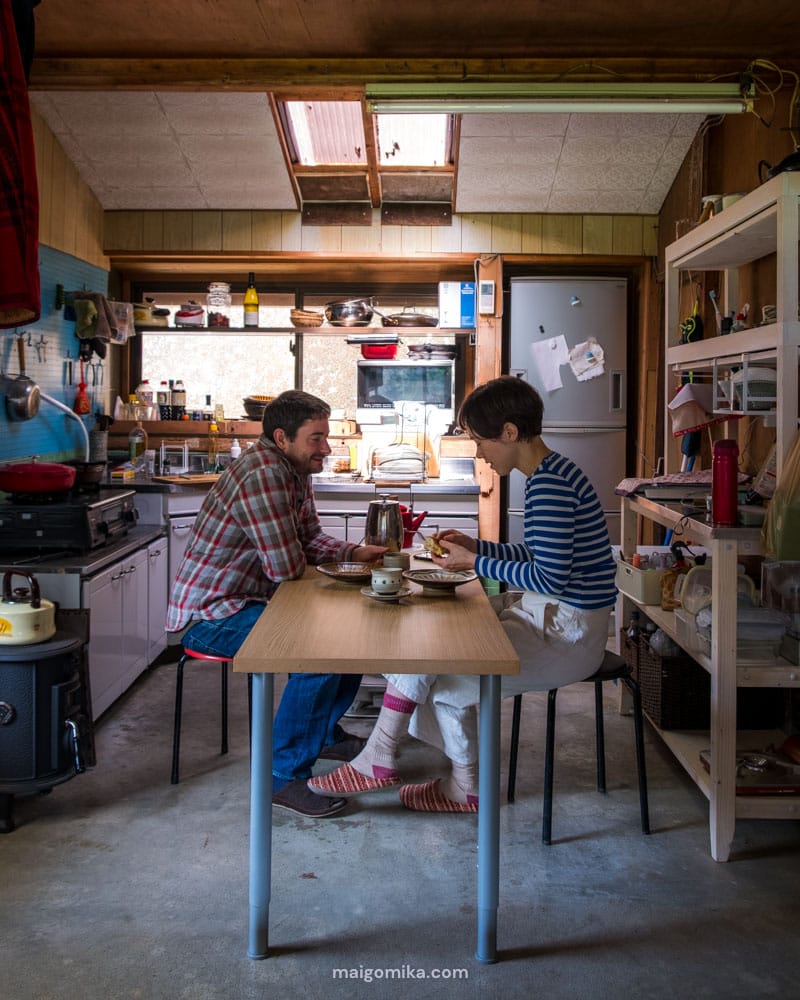
For Jesse and me, living in one was always the dream. After years in one of the most expensive cities in the world, the thought of paying 30,000 JPY per year (about $300 CAD annually) in rent was unimaginable. More than the cost, it offered us the exhilarating freedom to tackle the renovation challenge, tear down walls without permission, and pursue Jesse’s blacksmith apprenticeship in a remote, rural area of Kochi Prefecture.
We found our house the old-fashioned way: insider knowledge from a helpful local. After meeting the owner and her two sons, we struck a deal: a rental agreement allowing us to do whatever we wanted with the house, as long as we simply took care of their family home.
🏠 Our Akiya House Details at a Glance
- Age Estimate: Approximately 100 years old.
- Unique History: The house was moved to this location from a nearby area roughly 80 years ago.
- Vacant Period: It sat abandoned for 7 years before we moved in.
- How We Found It: Through an introduction by a local to the owner.
- The Agreement: A rental agreement established directly with the owner and her two sons.
- Cost: 30,000 JPY per year (approximately 300 CAD annually).
- Key Condition: We are permitted to do whatever renovations or repairs we want—the landlord requested we simply not bother them and that we take care of their family home.
The Before: A Sobering First Walkthrough
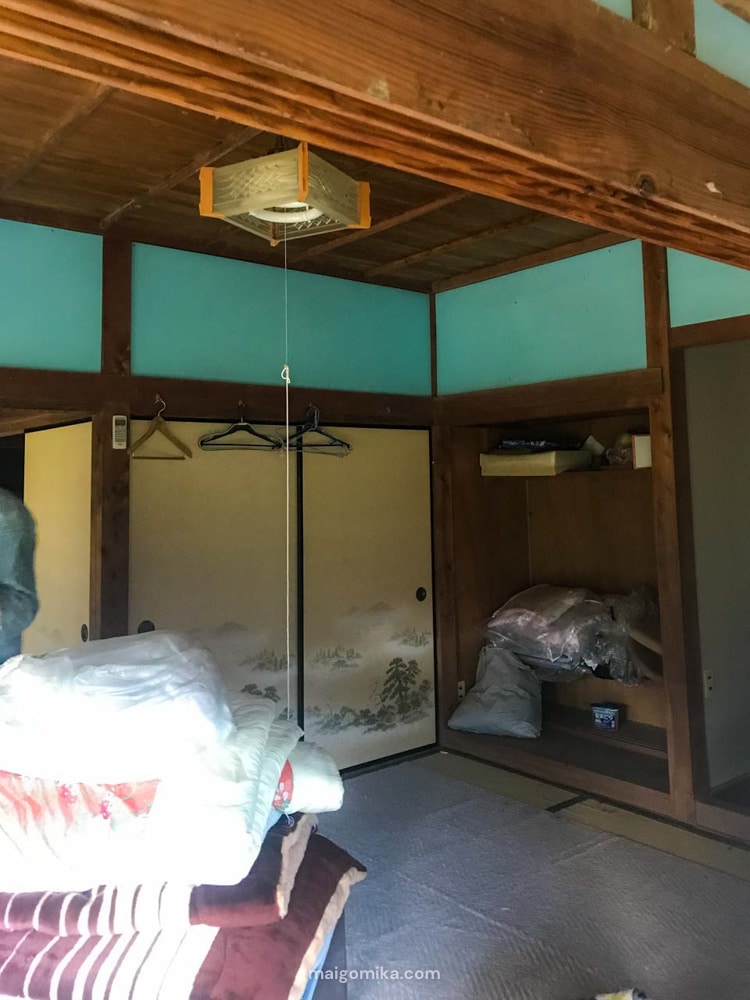
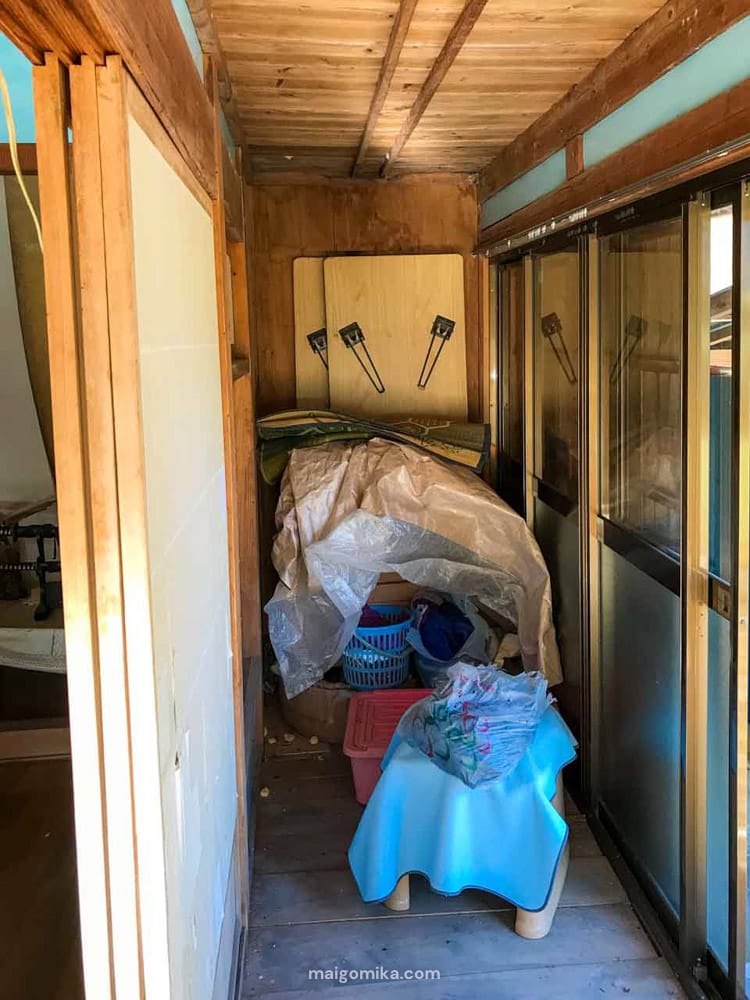
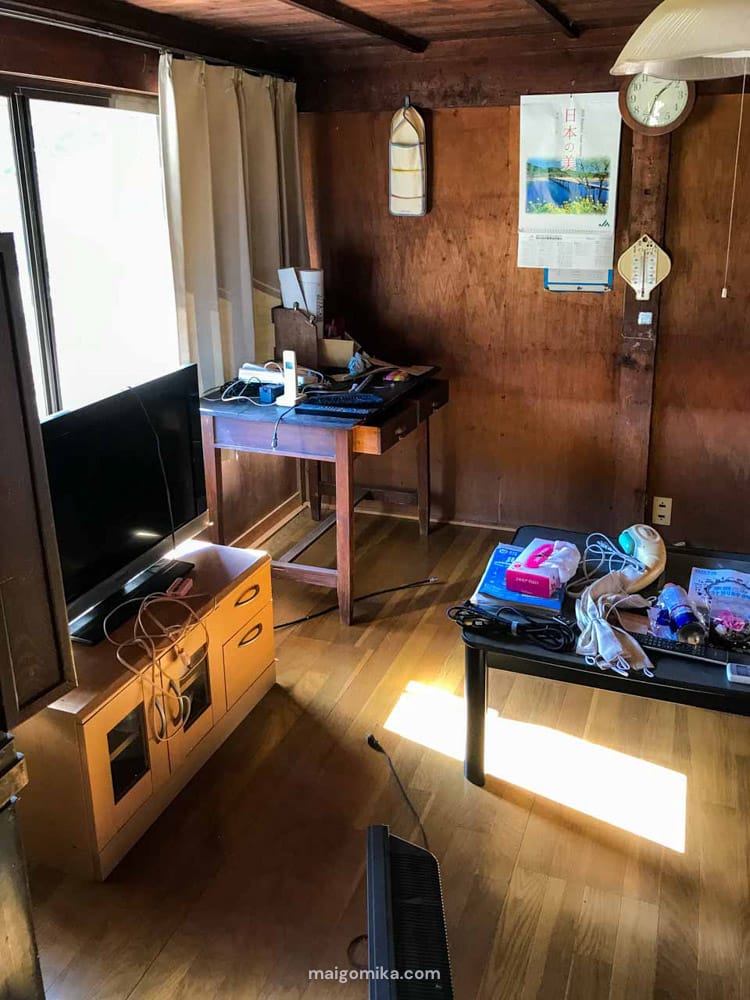
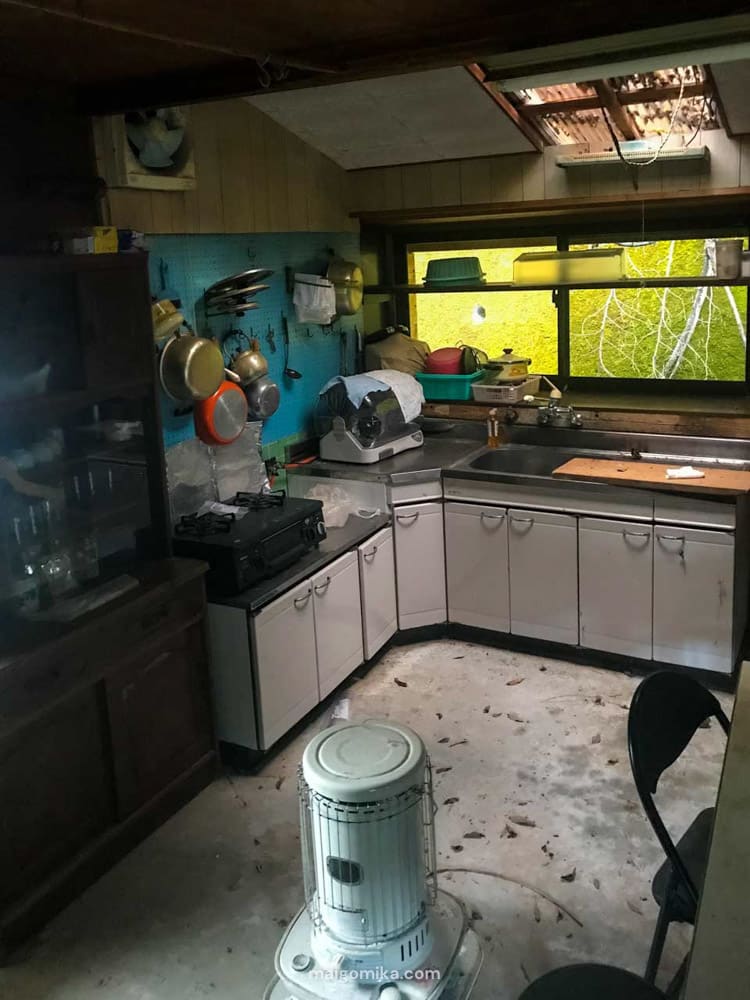
The initial viewing of the house, after seven years closed up, was certainly sobering. We had to remind ourselves that any house left dormant—especially in Japan’s humid summers—shows signs of its long abandonment.
Personal items remained on tables, and the interior bore the wear and tear of time: soiled tatami mats from years of rats and birds coming and going through the eaves, and tattered shoji screens.
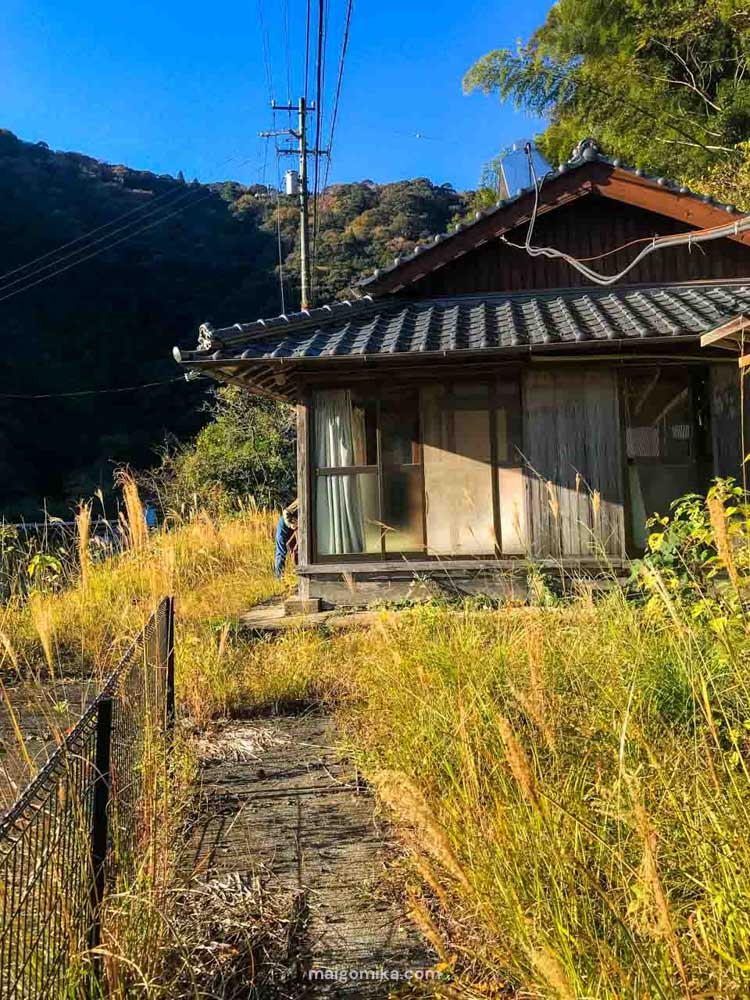
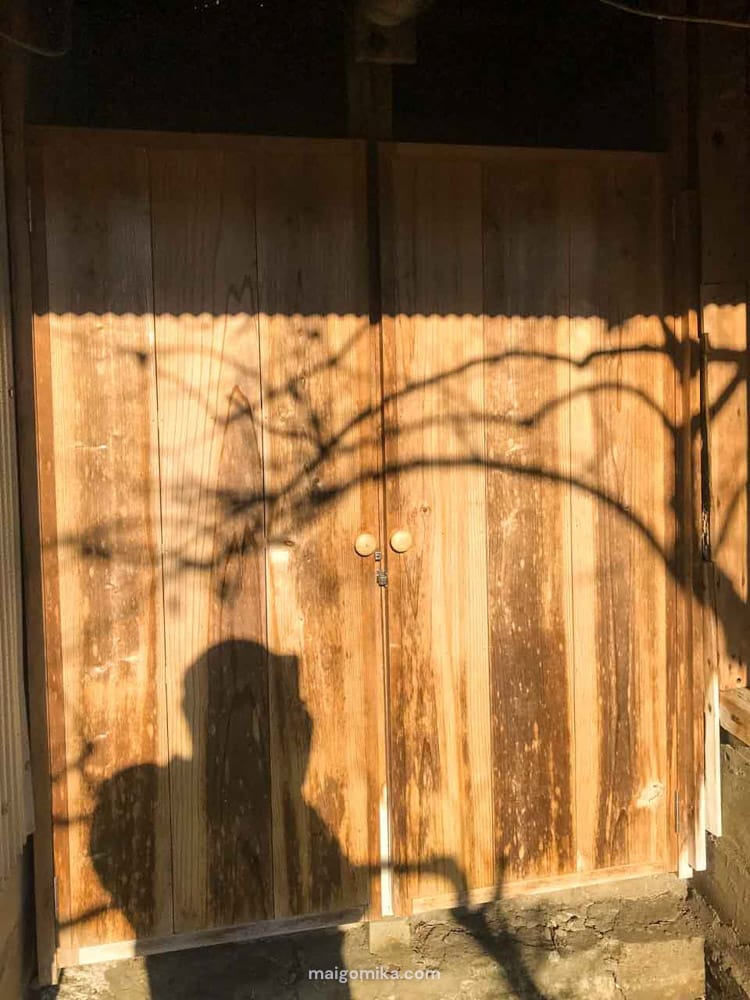
The outside was equally demanding. Aggressive weeds and tenacious vines had completely claimed the yard and stone walls, requiring days of intense clearing just to see the boundary lines.
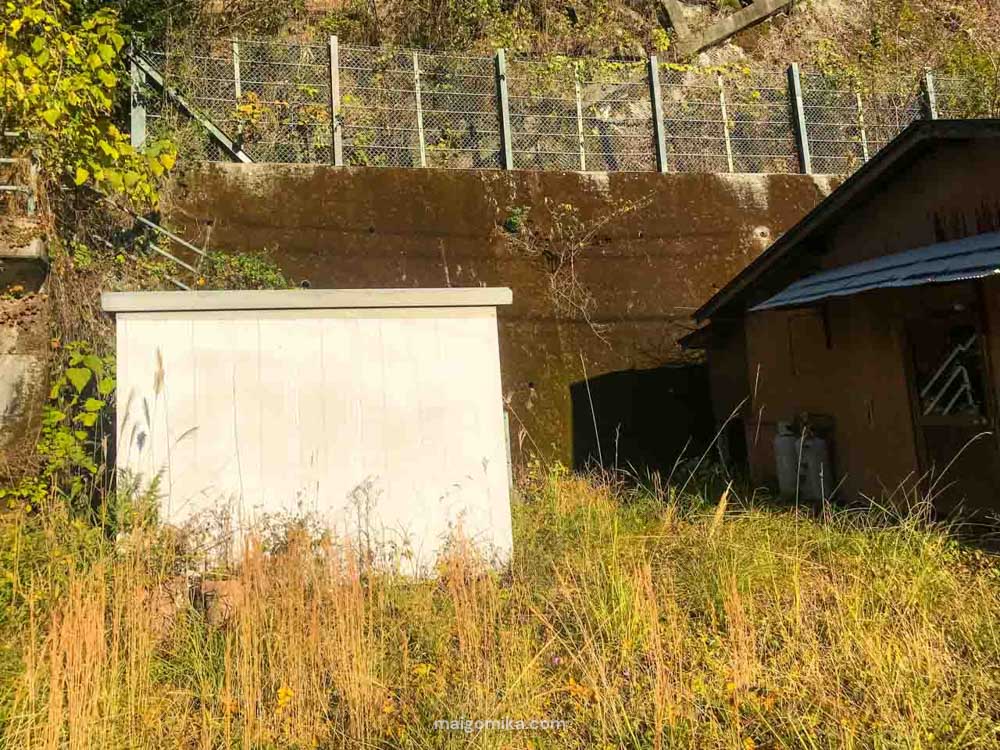
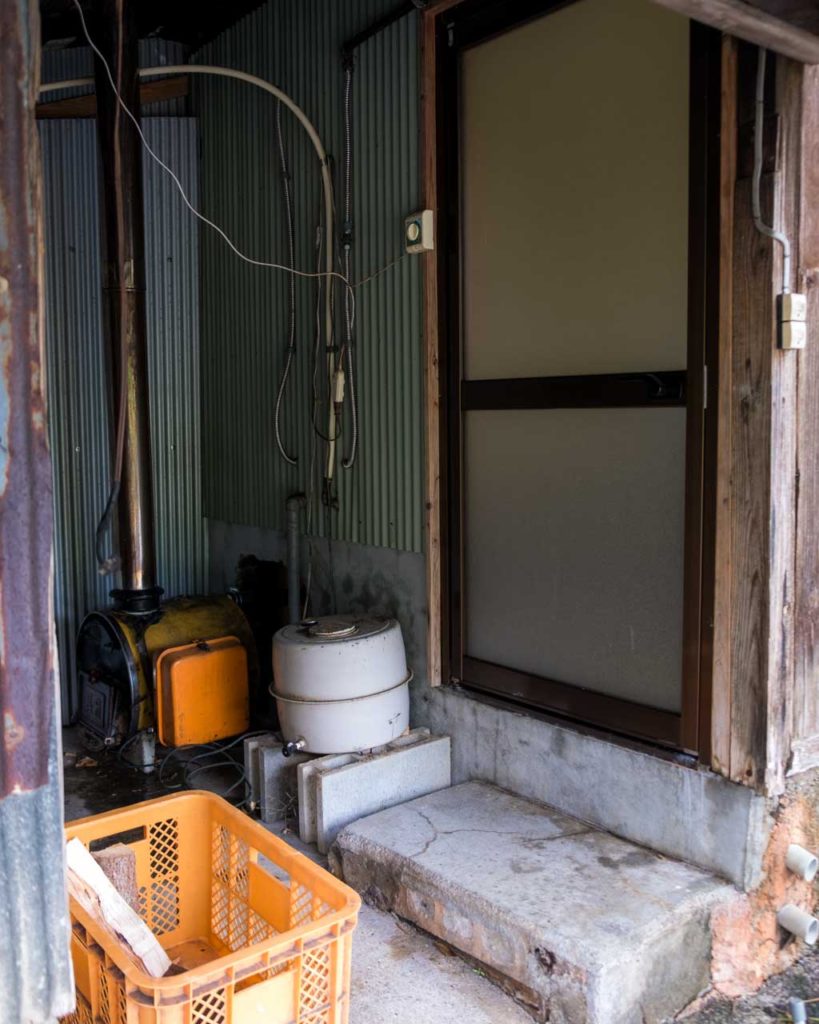
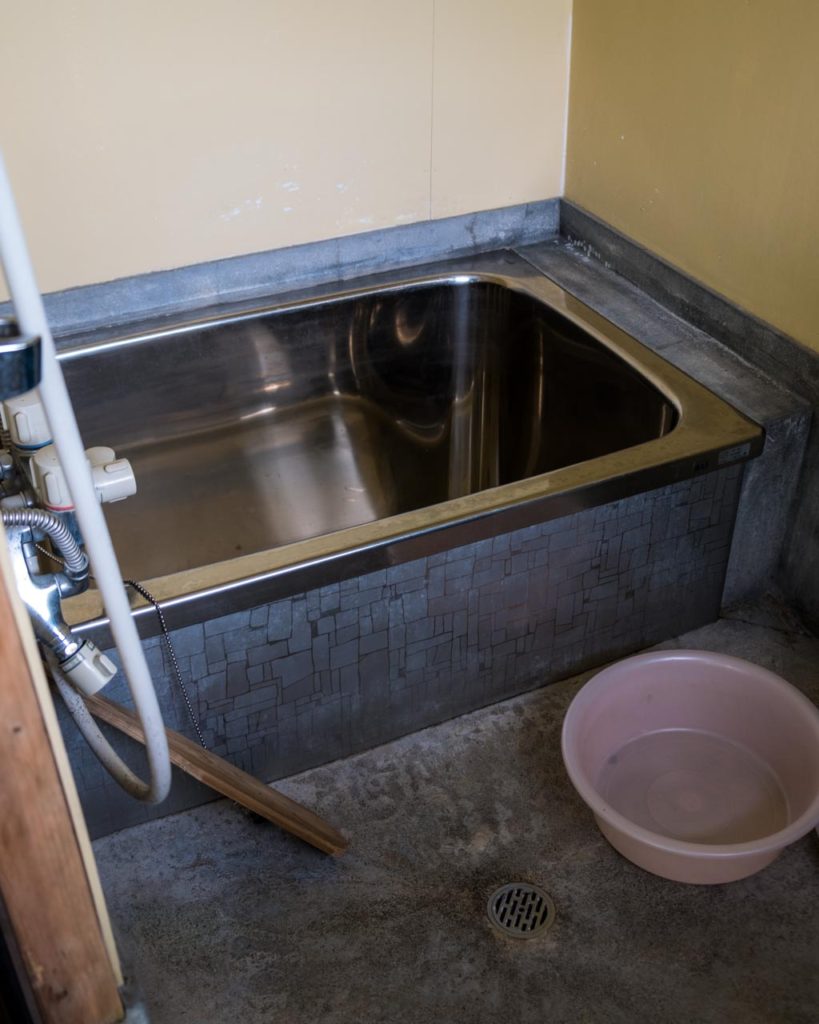
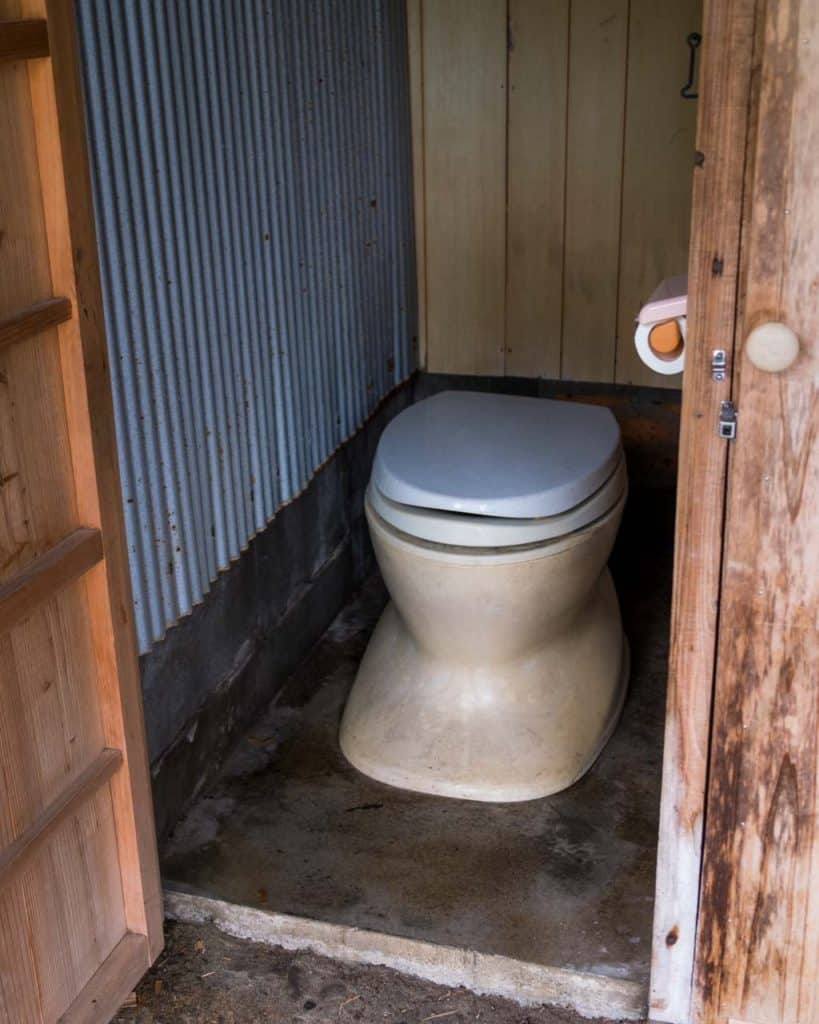
Our outhouse and stove-heated bath— in a separate structure—immediately signaled a deeper return to traditional, rural Japanese life than we’d initially prepared for.
The After: A Great Clean Up
The cleaning phase became a deep, three-week-long process just to make the interior safe and move-in ready. We wore masks against the dust and spores, packing old futons and clothing into bags and storing them temporarily in the shed. The old furniture, bloated and warped by years of humidity, couldn’t be carried easily—it had to be wrestled and sometimes dismantled just to be removed.
One of the most unforgettable moments came when we removed a heavy, crumbling cupboard glued to the kitchen wall, accidentally releasing a tangle of geckos that tumbled to the ground in a writhing mess.
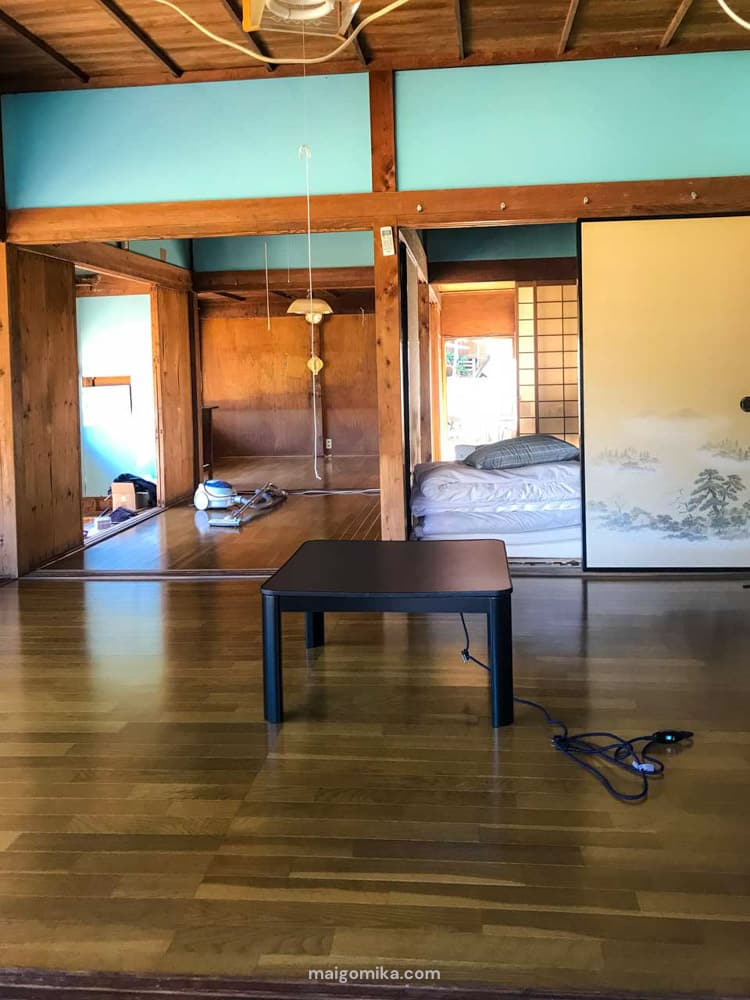
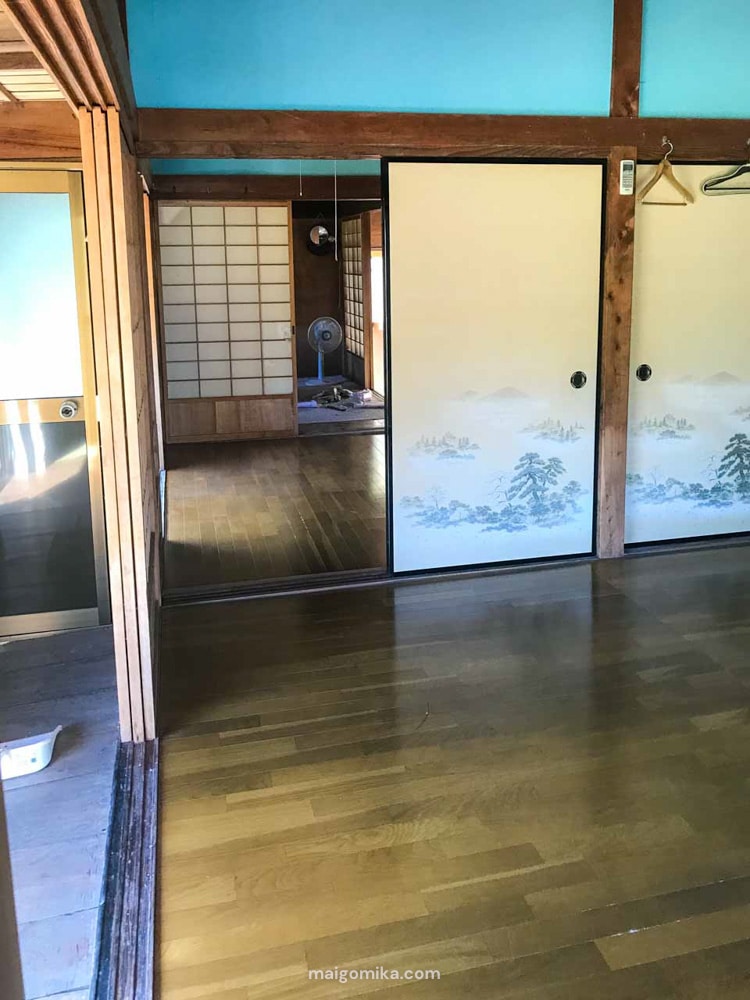
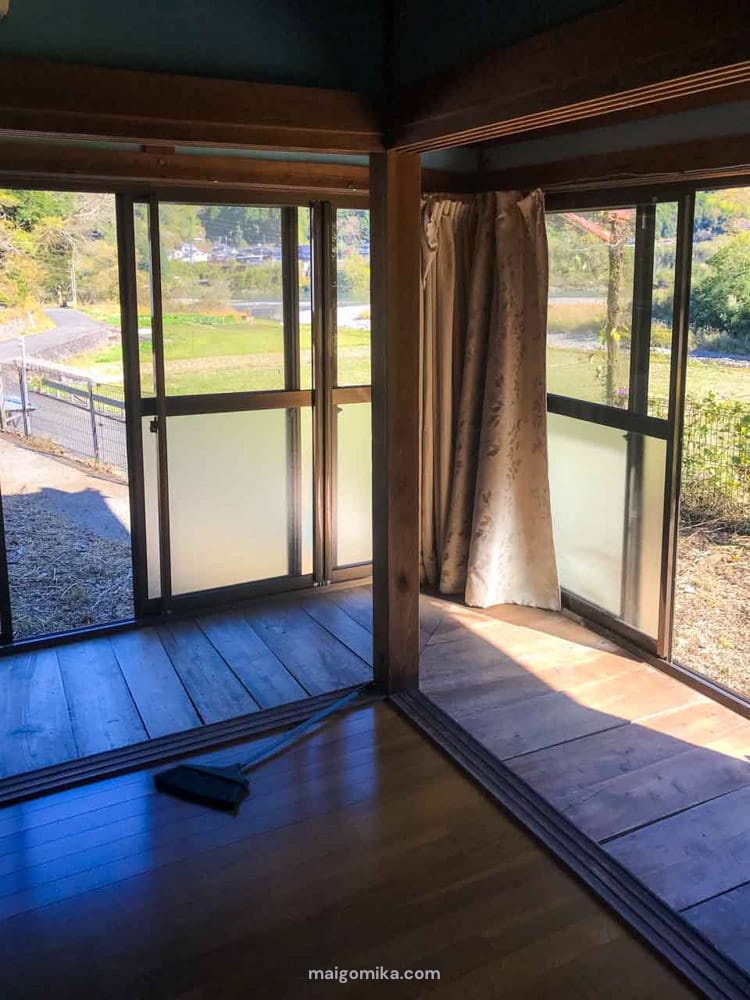
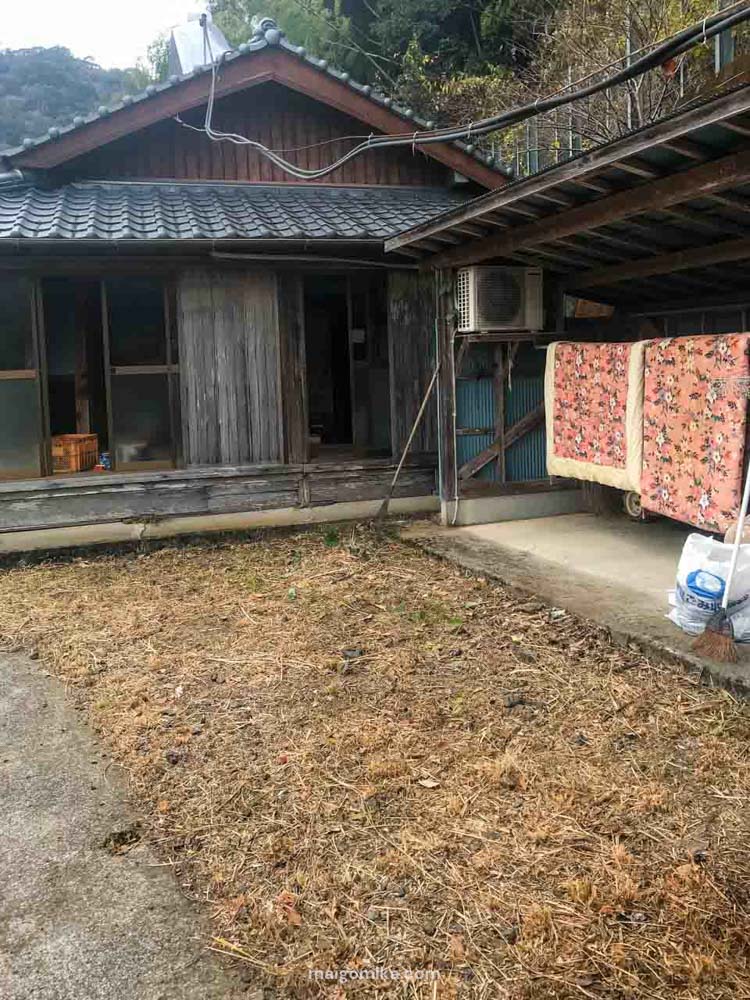
But with each bag of trash and every window we opened, the space began its slow transformation. As we aired the house out, day after day, the feeling of the family home it once was started to return.
The First Real Trial: Winter
If we wanted a true test of our chosen life, winter delivered a profound lesson.
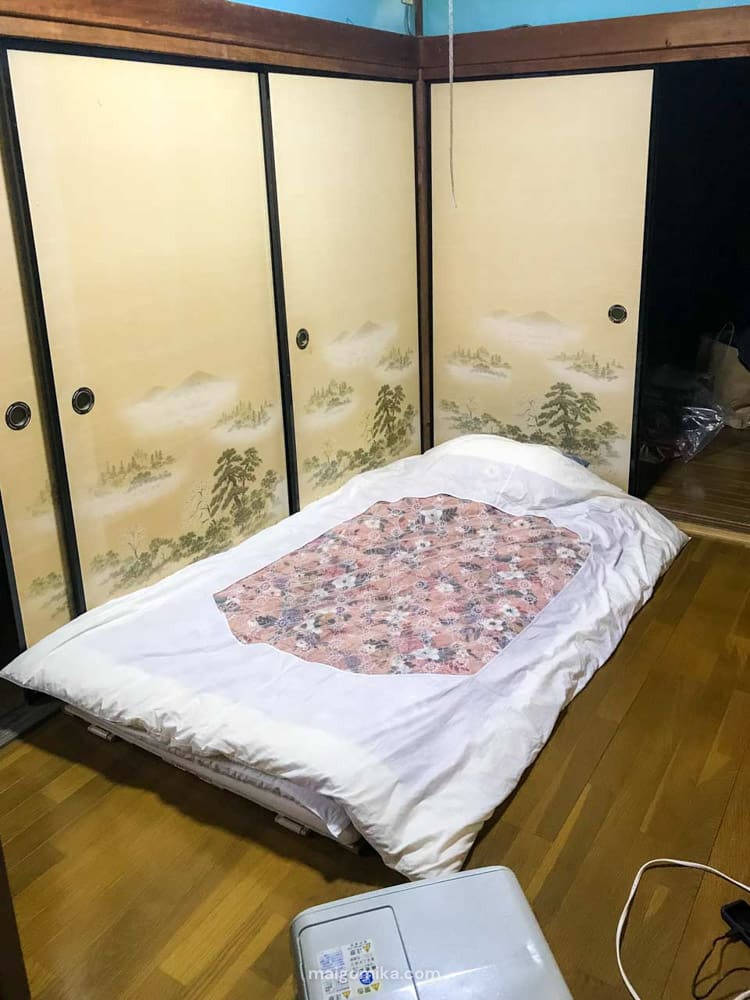
Winter in an old Japanese house is a special kind of cold. Like many older buildings, our akiya had no insulation. Gaps and holes in the walls meant chilled air was in constant circulation. The chill wasn’t just in the air; it radiated up through the floorboards and clung to our clothes. Your breath hung in the kitchen, even with the small kerosene heater roaring.
Our first New Year was spent huddled tight against that little heater—a true baptism by cold! A Japanese winter here isn’t a deep freeze; it’s a profound, seep-into-your-bones chill that only a deep, hot bath can truly vanquish.
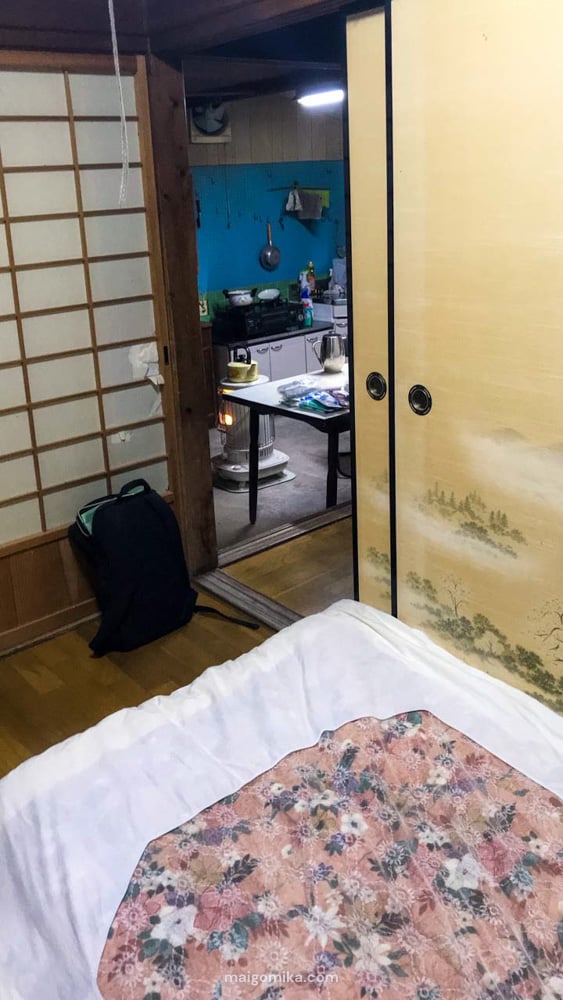
Motivated to find warmth, we quickly got creative with our restoration efforts:
1. We Installed a Wood-burning Stove
Our first and best investment was a cast-iron wood stove. It proved far more effective at radiating warmth than any kerosene heater we could find. We also spent the first few weeks nailing scrap plywood boards into every gap we could find to try to hold that precious heat in.
If winter was the biggest trial, the cast-iron wood stove was our salvation and easily our first and best investment. When the tiny kerosene heater proved incapable of warming anything beyond a two-foot radius, we knew we had to go big.
The stove became our anchor—a solid, radiating core of warmth in a house defined by cold air movement. We nailed scrap plywood boards into every crack and gap we could find in the walls. It wasn’t pretty, but the goal was simply to try and hold that radiating heat inside the room, preventing it from instantly escaping into the chilly winter night. The moment we had that first roaring fire and felt the deep, enveloping warmth, we knew we had won the first major battle against our akiya winter.
Read more about how we made the house more comfortable:
- How We Repaired Our Japanese Shoji Screen Doors
- How (and Why) These 5 Helpful Fixes Made Our Akiya House More Comfortable
2. We Mastered the Wood-Burning Bath
Like many traditional homes, our bath and toilet are in a separate outbuilding. We had to master the wood-burning outdoor bath to survive.
Each evening, the ritual began: prepare the wood, fill the tub with cold water, and set the fire. After about an hour and a half, the water would be scalding hot. Then came the exhilarating sprint! We’d charge into the bathroom, scooping up buckets of scalding water, mixing it with cold to wash off while teetering on our tippy toes on the frozen cement floor. (I can still imagine ourselves looking like a couple of crazy imps, hooting and hollering as we doused ourselves in hot water. )
Finally, we would sink into the blissful warmth of the tub. It was the only thing that truly melted the cold from our bones. I felt I learned more about Japan’s bathing culture in those first few weeks than in my time visiting onsen hot springs and bathhouses. It wasn’t just about getting clean; it was a necessity for survival.
3. We Solved the Outhouse Problem
The outhouse was, hands down, the biggest source of initial dread for me, thanks entirely to those rustic, smelly memories from Canadian camping trips. I genuinely figured it would be the first thing to make us quit the akiya life. But we discovered two magical secrets that completely changed the game.
First, the simple fix: we installed a vent fan. I was pleasantly surprised to learn how much of a difference this simple fan addition makes. It actively draws the air out, rendering our outhouse practically odorless for most of the year. What I once considered a show-stopper was solved with a little airflow!
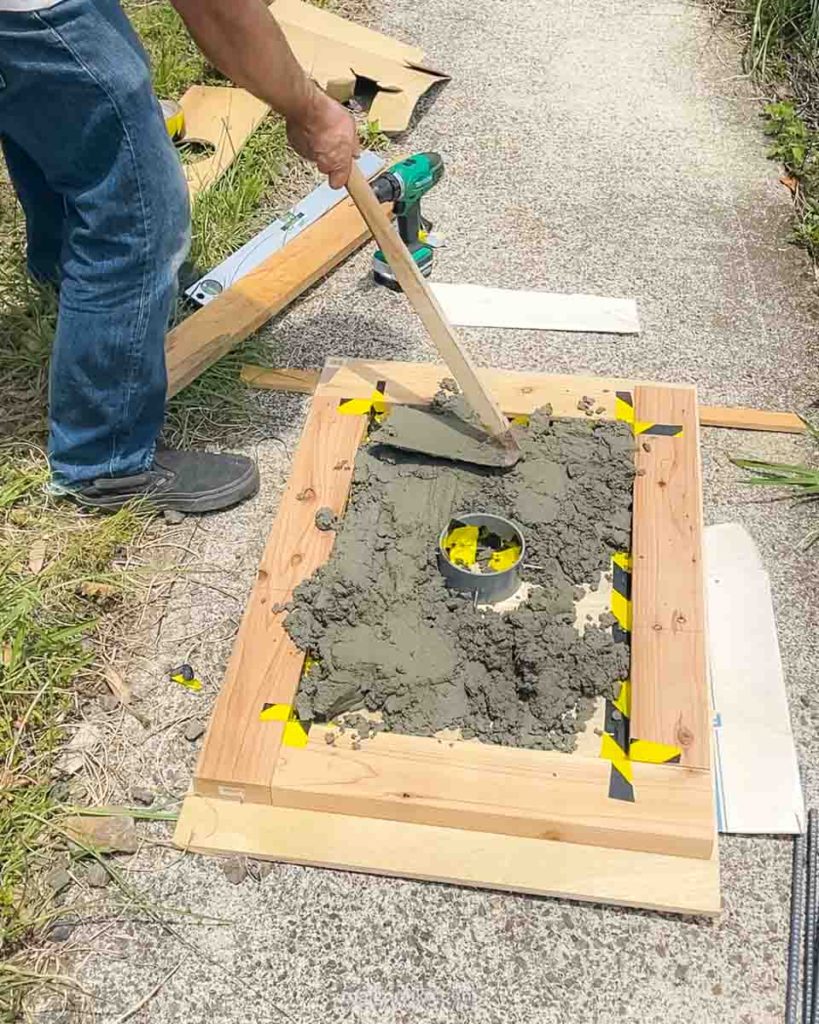
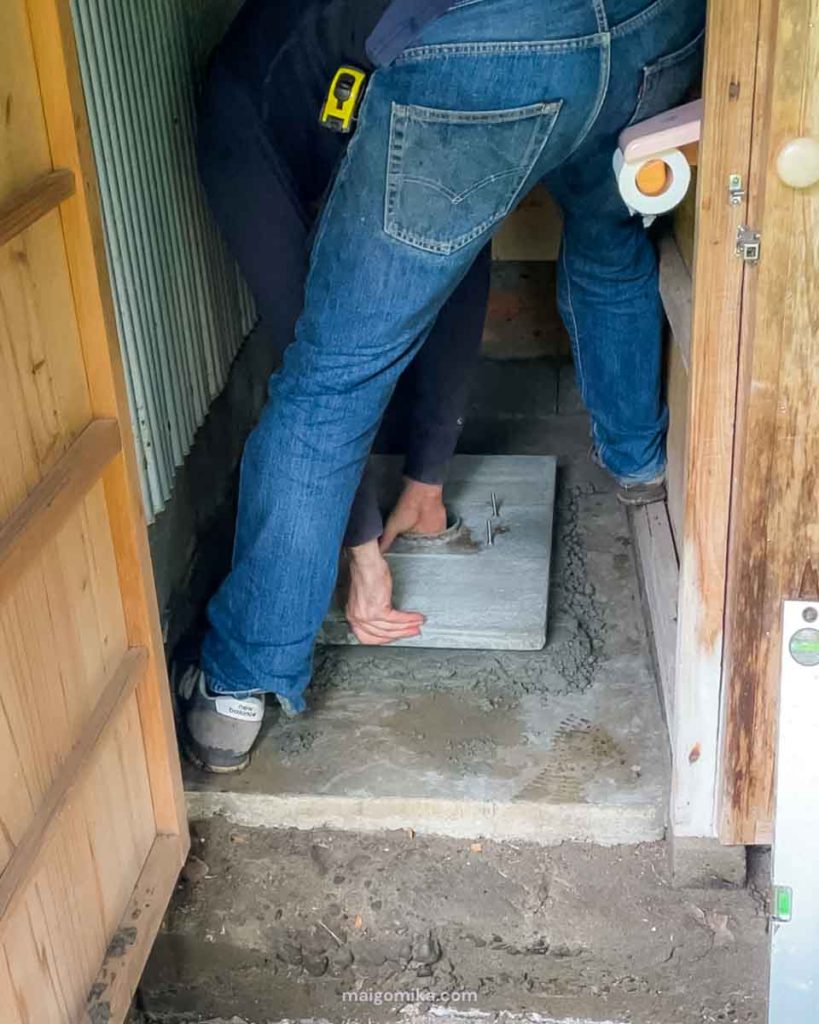
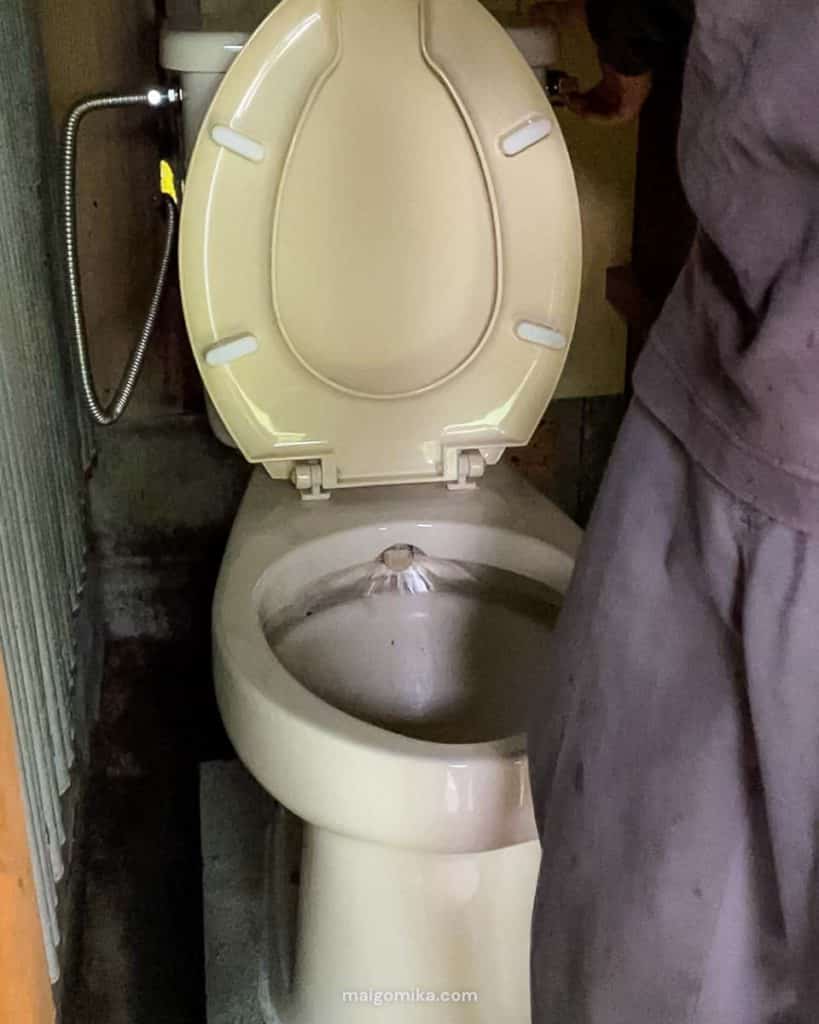
Second, we went for a major upgrade. We managed to acquire an unused porcelain toilet, which was thankfully stored in a neighbor’s shed. Jesse’s DIY construction skills kicked in next: he created a special cement form to firmly anchor the porcelain base, ensuring it wouldn’t shift or wobble. Then, we hooked up running water to the tank. With the porcelain bowl, the working flush, and the fresh air from the fan, you genuinely forget you’re using an outhouse.
Co-existing with Our Critter Companions

Moving into our old house revealed more than mere abandonment: it was actually home to a thriving ecosystem. And our first introduction to that ecosystem was with Françoise.
We came home one evening to find her clinging to our freshly re-papered shoji screen doors—the stark, new paper made her immense size all the more startling. Our wide-eyed, silent shock only sent her scurrying across the paper, then—thud—down to the floor before she scampered away.
While we initially banished her, our fear soon gave way to something akin to care and concern. We learned that the huntsman spiders are excellent natural pest controllers, and now it’s become my nightly ritual to check on her. Any disappearance causes genuine concern!
Beyond Françoise, the lines between inside and outside quickly blurred. On hot, rainy nights, geckos, frogs, and other nocturnal visitors often greet us near the entrance. In the early spring months, bath time becomes a different kind of magic altogether. We’d turn off the lights, open the door of the bathhouse, and listen to the chorus of frogs in the freshly flooded rice paddies below—one of the quiet, unexpected pleasures of rural Japanese life.
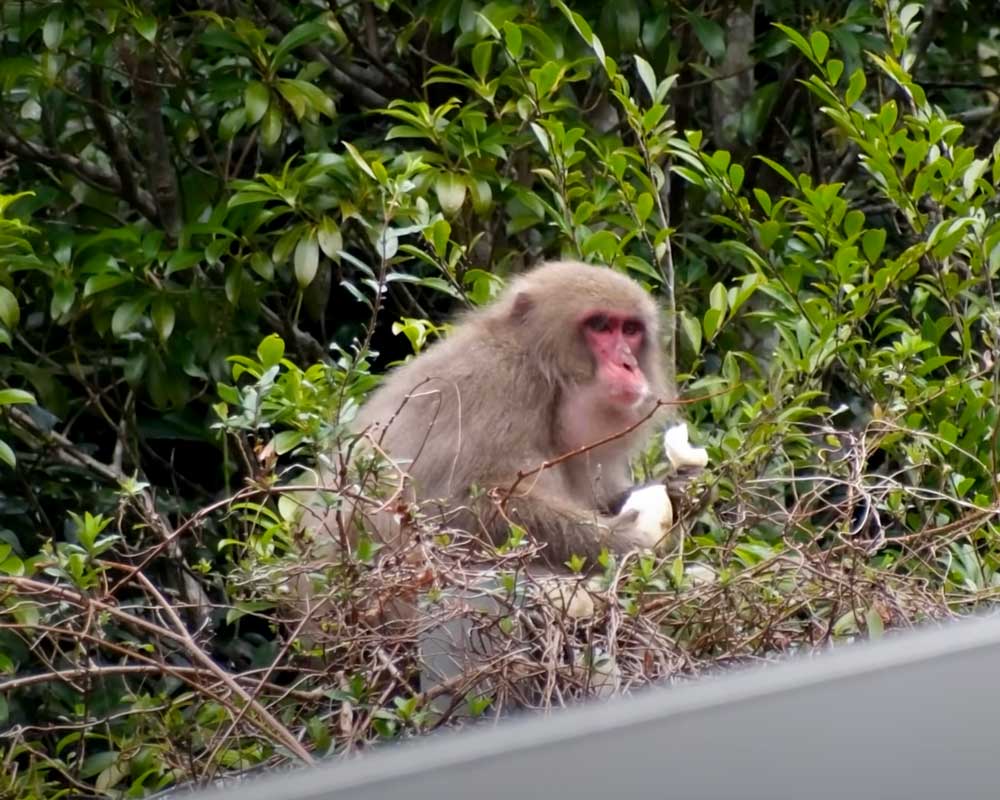
We even have visits from wild macaques. Clinging to tree branches and stone walls, the macaques checked for people before racing down to raid neighbourhood gardens, carrying away armfuls of vegetables.
You might be interested in reading this, too:
The only exception to our peace treaty is the mukade centipede, one of the few venomous creatures in the area. We keep a watchful eye out for them, but otherwise, our initial screams of surprise have given way to amusement and respect for the house’s original residents.

The Financial Picture: What Our Akiya Costs
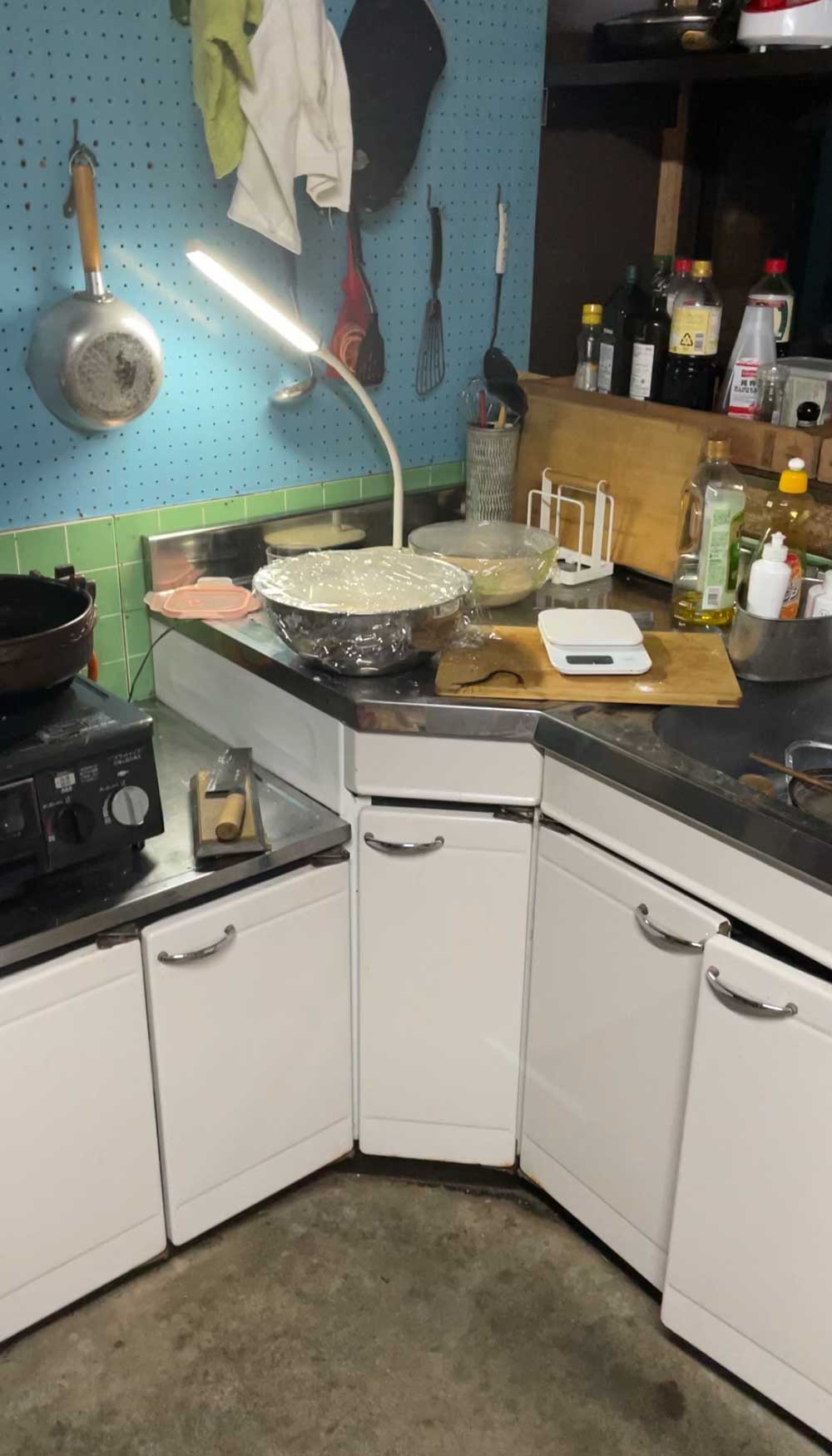
While the 30,000 JPY per year rent is unimaginably modest, we learned that this incredibly low price comes with significant, ongoing renovation and maintenance costs we’d never face with a newer build.
Here’s a rough monthly average of our core house-related expenses:
| Rent (30,000 JPY / 12 = 2,500 JPY) | 2,500 JPY |
| Kerosene and Firewood (winter seasons) | 12,000 JPY |
| Budget for Renovation, Tools, and Materials | 25,000 – 50,000 JPY |
| Total | 39,500 – 64,500 JPY |
The true price of our low rent was sweat equity and time. Since we began renovating, Jesse and I have been handling most of the work ourselves, fitting it into our weekends, holidays, and evenings around our regular jobs. This has transformed our “free time,” which we previously used for relaxation or hobbies, into dedicated “home maintenance time.”
You might want to read this as well:
What’s Next for Our Akiya?
The excitement to continue creating our home is stronger than ever. Over the past twelve months, we’ve focused on renovating and making cosmetic changes.
Next, we’re planning to tackle projects like re-papering our shoji screens and, eventually, replacing walls and adding sorely needed insulation. As the second winter approaches, we’re exploring new firewood sources and ways to permanently enhance the house’s warmth.
Keep reading our restoration journey:
- I Started Revitalizing our Neglected Yard into a Flower Garden this Spring
- How We Repaired Our Japanese Shoji Screen Doors
Ultimately, there’s still much to learn and many challenges ahead, but that excitement to create our home is stronger than ever. We’ll keep sharing updates on our life in the Japanese countryside—and I’ll be sure to pass along your greetings to Françoise. 🕷️
Have you ever considered moving into an akiya in Japan? What aspects of this unique lifestyle intrigue you most, or what questions do you have about it? I’d love to hear your perspective in the comments below!




Pingback: How We Fixed Our Japanese Shoji Paper Screen Doors in 8 Days
I really enjoyed how you both respected sharing your living space with animals, critters,and nature. It made me think alittle more about who we truly are 😊
I truly enjoyed this post & I’m seriously looking into making the leap, “head-first”, as it were, upon a vacant Akiya opportunity. My angle is a bit different, I’m an abandoned place specialist, whose talents are lamentably not valued in America’s “tear-it-down” bare corner lot ethos. In my research I have seen many examples of people doing what your accomplishing: your spirit is inspiring. I’m taken aback by the layers of middlemen, Lawyers, Judicial Scriveners, & other agents, however, I’m sure that cultural and language barriers can be overcome with the right connections & “elbow-grease”. I’m seeking advice on how to approach the Consular office of Japan when applying for a Economic Visa around the Akiya issue, and I also wish to commend the apprentice blacksmith on joining an honourable & venerated profession! Someday soon I plan to have a Kiln in my own Rural workshop on the side of a hill. ~Lawrence
I deeply appreciated the moment when Francois was identified as a spider. Childhood memories. Thank you gor your compassionate courage in living through this new experience as a visitor to the wilds (they did “own” it back for nearly 7 years, after all, lol) and for sharing the amazing adventures with us. Now more than ever I want an akiya by water.
Thank you! 💜
I love this!! I can’t wait to do this one day! Thank you for keeping it real, I also follow cheaphousesjapan.
Didn’t know huntsman spiders were in Japan lol I had them alot when zi lived in Australia. Keep it coming!
What a beautiful and inspiring journey! Moving into a traditional akiya sounds like both a challenge and a dream come true. I love how you’re breathing new life into an old space while honoring its history. Can’t wait to follow along as you continue transforming it!
why did not you buy it outright instead of renting.
Hi Dave, thank you for your comment. While we hope to buy it someday, there are a few important reasons we haven’t taken that step yet. We wanted a house that was slightly larger and including a space for a dedicated workshop area for Jesse. The landowners are also not quite ready to sell just yet, but we’re hopeful that might change down the line.
Thanks for sharing your experience. Lots of valuable information.