Originally posted Oct. 2018. Updated June 2026
I always wanted to own a traditional Japanese futon. Not the Western-style sofa bed, but the real deal: a thick, cloud-like duvet sandwich laid on the floor. The first time I stayed at a ryokan (traditional inn) and sank into the blissful comfort of those cotton beds, I vowed to own one myself when I moved to Japan.
But when I mentioned this to friends in Japan, most of them warned me against it. They talked about mold, moisture, and the constant maintenance, insisting that a Western mattress was easier. And honestly, my mattress back in Canada was perfectly comfortable.
It’s just… I was in Japan!
Sleeping on a futon felt like something I wanted to experience properly for myself. People here have used them for centuries, after all. And so, I figured the only way to understand the appeal — and the upkeep — was to actually live with one.
Quick Futon Ownership Takeaways
- A futon is firmer than you think: Traditional futons (shikibuton) can feel firmer than most Western mattresses, especially if placed directly on the floor. You may need to purchase padded mats for cushioning and slatted platforms for air circulation.
- Moisture is the real battle: In Japan’s humid climate, futons can trap moisture quickly. We fold ours up every morning and try to hang it outside in the sun (futon-hoshi) at least once a week to dry it out properly.
- They’re not necessarily cheaper: A good futon setup for two can easily cost around ¥140,000, including the futons, covers, mats, and base. Still, they take up far less space than a Western bed and can completely change how you use a room.
- There are trade-offs: Futons are easy to move, easy to store, and make small homes feel much more flexible. But they’re also narrower than many Western beds, and if you’re someone who likes sprawling out — or cuddling all night — you may notice the difference pretty quickly.
- Japanese Futon Terminology
- Common Japanese Futon Sizes
- 1. The Search: Finding the Right Futon
- 2. Futon Ownership: The First Reality Check
- 3. The Crucial Maintenance Routine (Preventing Mold)
- 4. Mold Remediation: What to Do If You Find It
- 5. Traditional Japanese Futon vs. Western-Style Bed
- 6. Cost Comparison: Futon Setup vs. Western Bed
- Our Verdict: The Futon Experience
Japanese Futon Terminology
Before getting into the reality of futon life, it probably helps to explain what actually makes up a traditional Japanese bedding set. Here are some terms to learn:
- Shikibuton (敷き布団) – The bottom layer, a thick, padded mat laid directly on the floor (or slatted platform).
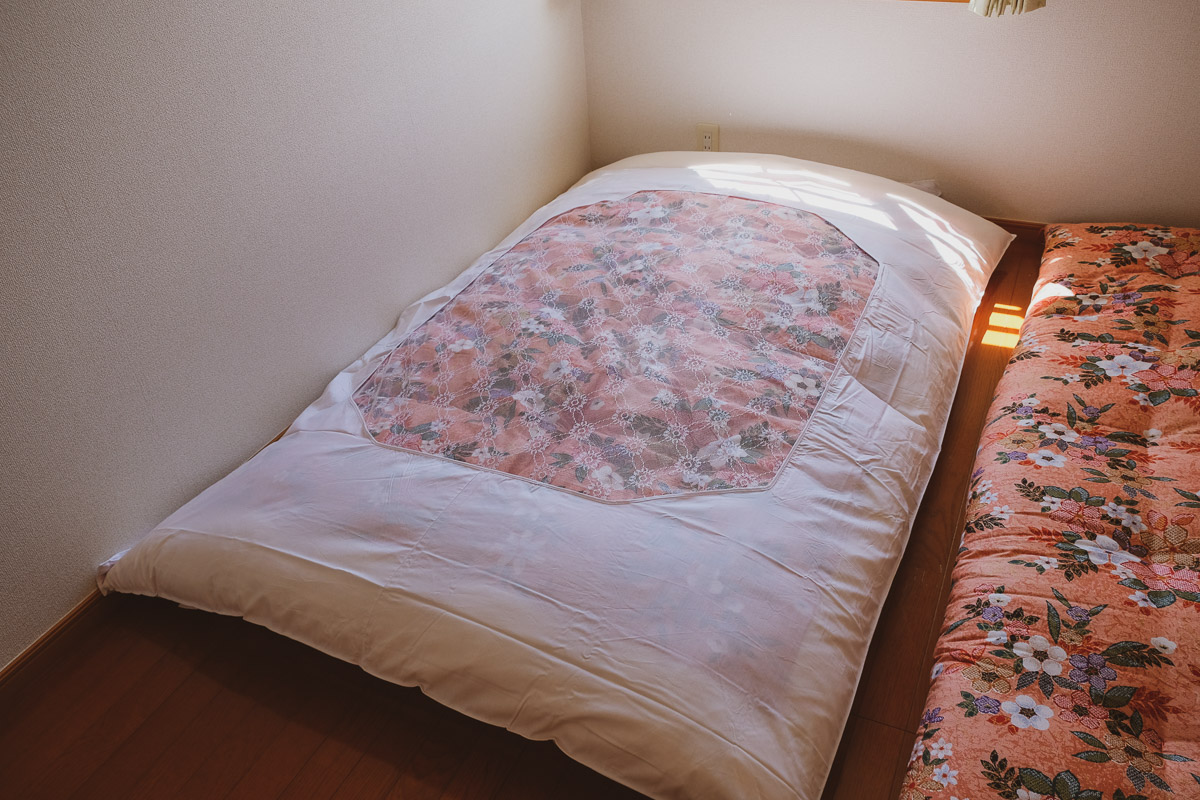
- Kakebuton (掛け布団) – The large, plush duvet or comforter used as the top blanket.
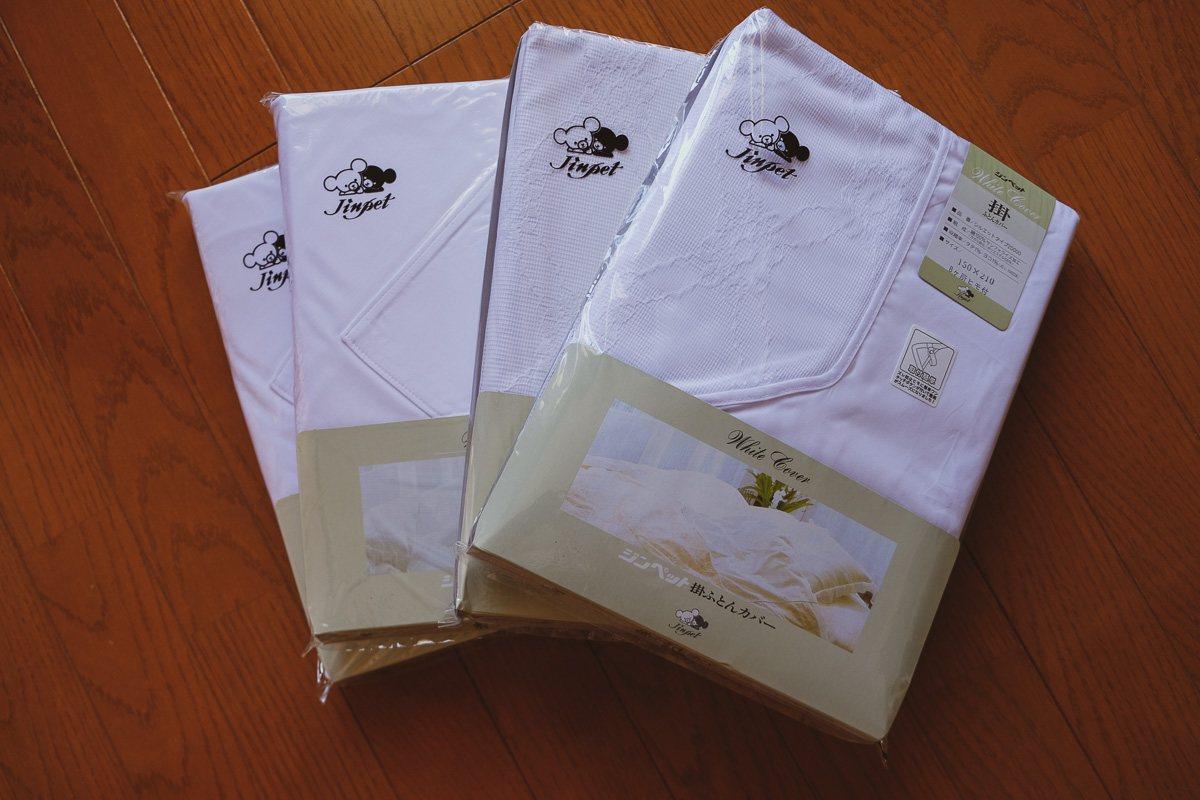
- Futon Cover (布団カバー) – A removable, washable cover that goes over the kakebuton and shikibuton.
- Makura (枕) – The pillow. Often filled with buckwheat hulls or microbeads for firm support.
Common Japanese Futon Sizes
Traditional futons generally consist of two separate pieces:
- Shikibuton (敷き布団) – the bottom sleeping mat
- Kakebuton (掛け布団) – the top comforter or duvet
The most common sizes are:
| Size | Shikibuton (Bottom Futon) | Kakebuton (Top Futon) |
|---|---|---|
| Baby | 90 × 130 cm | 110 × 130 cm |
| Kids | 90 × 160 cm | 120 × 160 cm |
| Junior | 90 × 185 cm | 135 × 185 cm |
| Single | 100 × 210 cm | 150 × 210 cm |
| Semi-Double | 120 × 210 cm | 170 × 210 cm |
| Double | 140 × 210 cm | 190 × 210 cm |
| Wide Double | 150 × 210 cm | 200 × 210 cm |
| Queen | 160 × 210 cm | 210 × 210 cm |
| King | 170–200 × 210 cm | 230 × 210 cm |
You’ll notice that the kakebuton (top futon) is always significantly wider than the shikibuton (bottom futon). This extra width allows the duvet to drape over the sides of the sleeper and helps retain warmth during colder months.
For taller sleepers, “long” versions are also available. These typically extend the length from 210 cm to 230 cm, making them a good option for anyone over about 175–180 cm (5’9″–5’11”), depending on their sleeping style.
As a general rule, many traditional Japanese futon makers recommend choosing a futon length approximately 35 cm longer than your height. By that guideline, someone who is 175 cm tall would ideally sleep on a futon around 210 cm long, which conveniently matches the standard Japanese single futon size. Learn more about the traditional Japanese approach to futon sizing.
1. The Search: Finding the Right Futon
We first tried looking for traditional, cotton-filled futons locally in our little countryside town, but had no luck. Most places either didn’t carry them or only sold the thinner, polyester variaties. So eventually, we drove out to our nearest city, hoping for better luck.
Tucked inside an old shopping arcade, we found exactly the kind of store we’d been hoping for: a small traditional futon shop that looked like it hadn’t changed in decades.

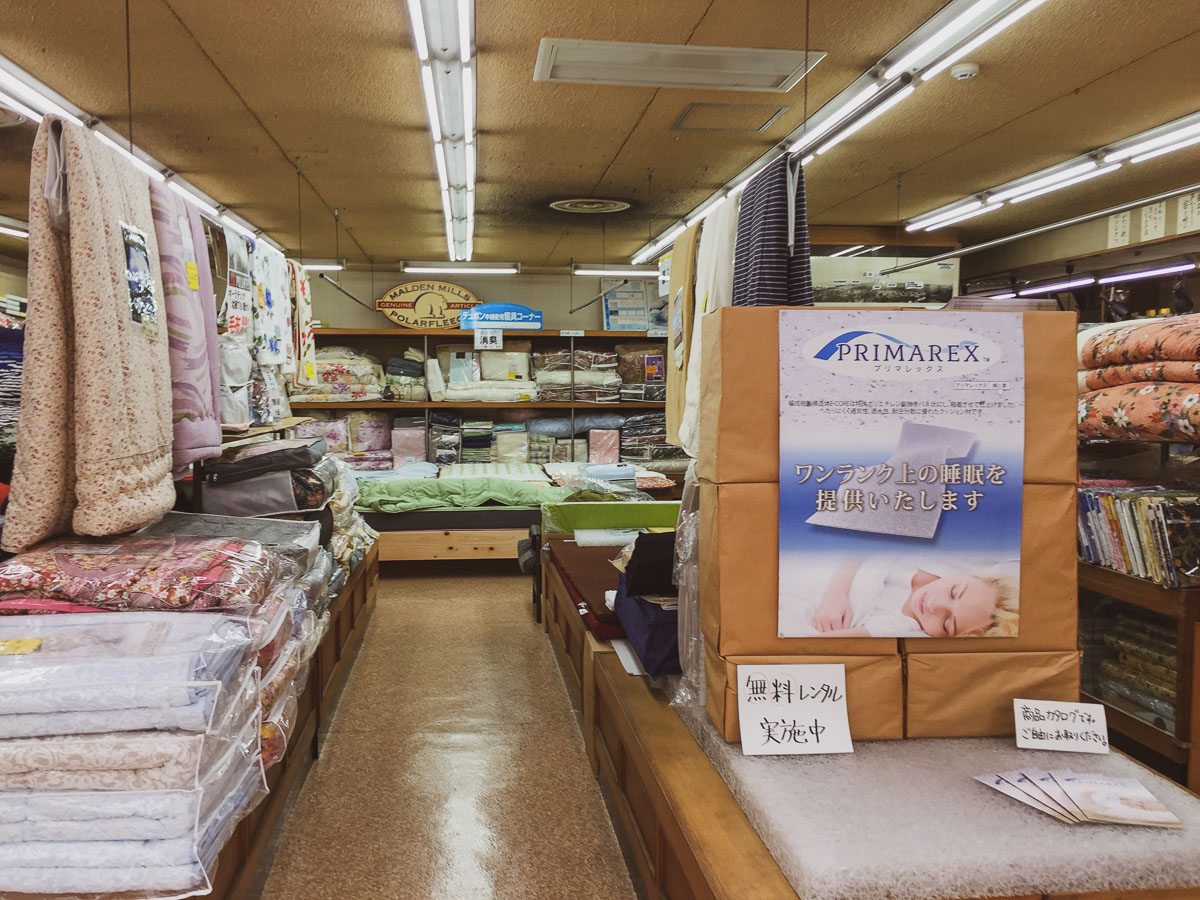
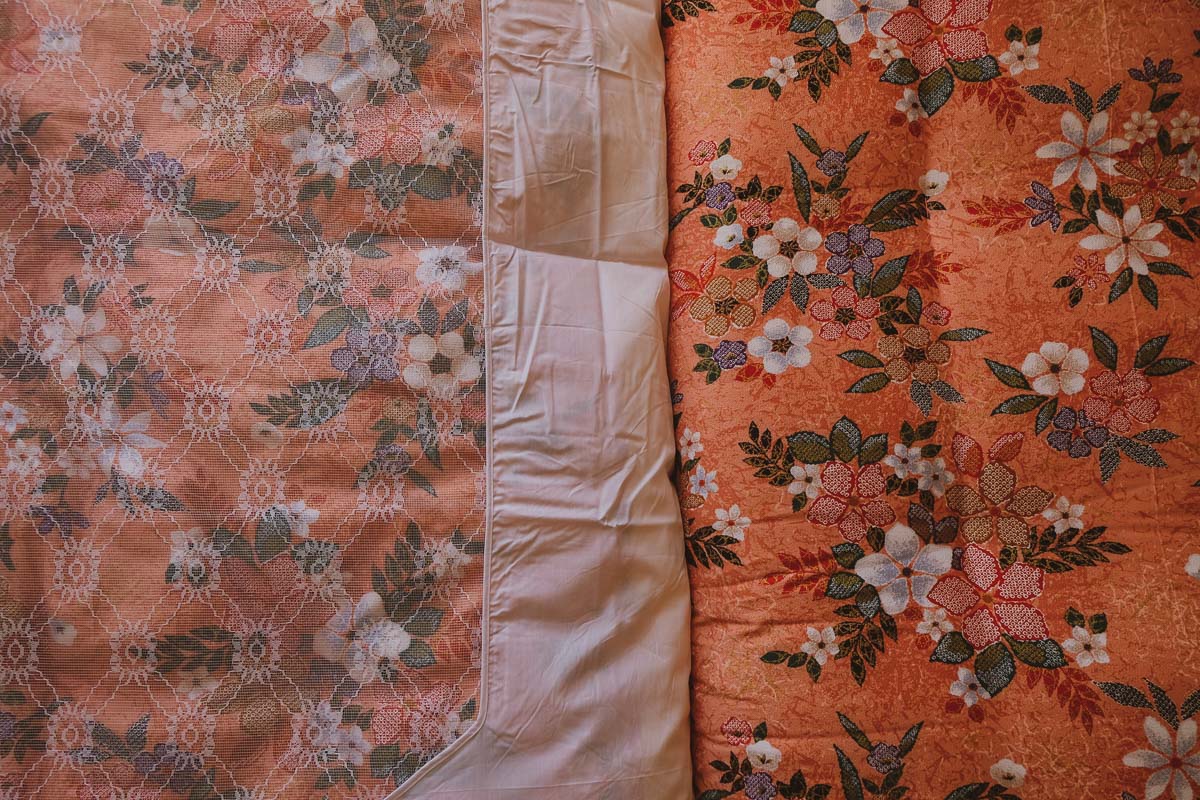
The owner pulled out stack after stack of fabric samples for us to choose from. We immediately fell for a soft peach floral print and ordered two custom-made sets on the spot.
About two weeks later, the owner himself drove out to deliver them to us.
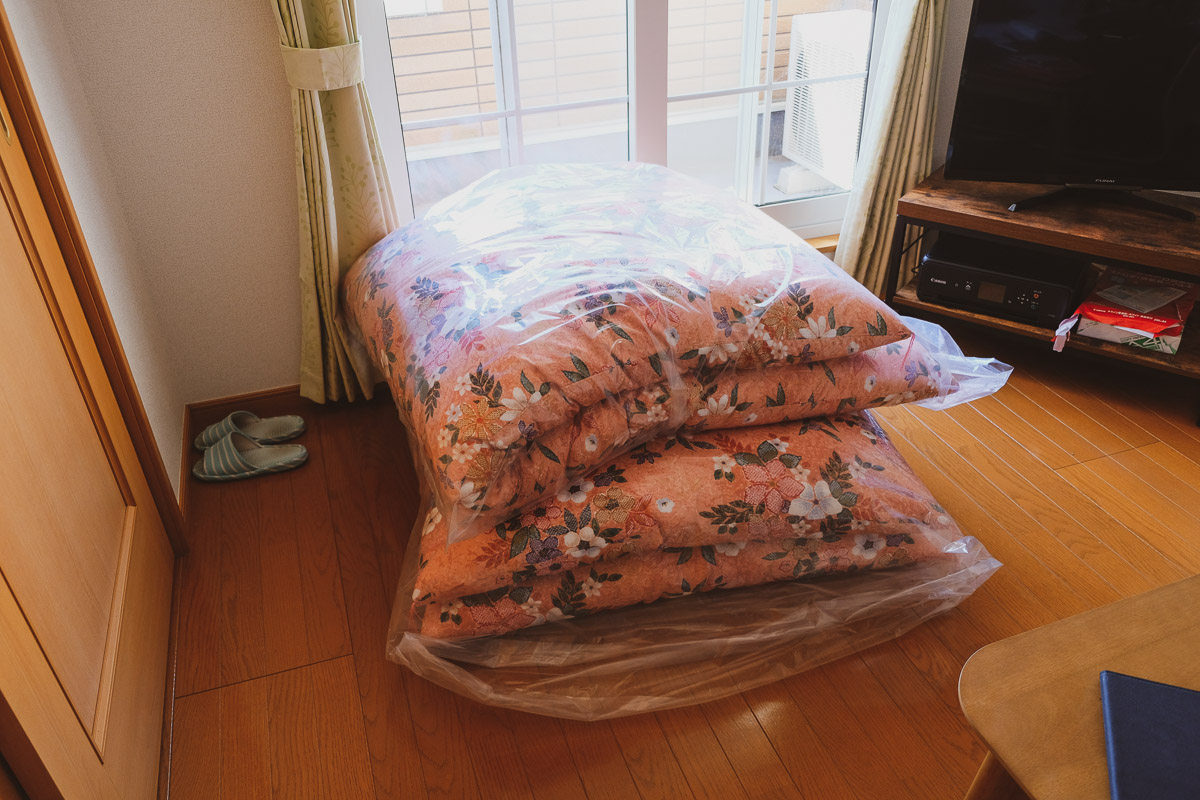
2. Futon Ownership: The First Reality Check
The first few days sleeping on our futons felt wonderful. Cozy, warm, and somehow exactly how I’d imagined it.
But it didn’t take long for reality to set in.
Futons laid directly on tatami or hard flooring can feel firm. Much firmer than I expected, even as someone who generally likes a hard bed. And then there was the moisture.
At first, we didn’t think much about it. But as the humid weather lingered into autumn, we started noticing dampness trapped underneath the futons whenever we folded them up in the morning. One day, while airing everything out, I spotted small patches of mold forming underneath our mats.
That was our introduction to the less romantic side of futon ownership.
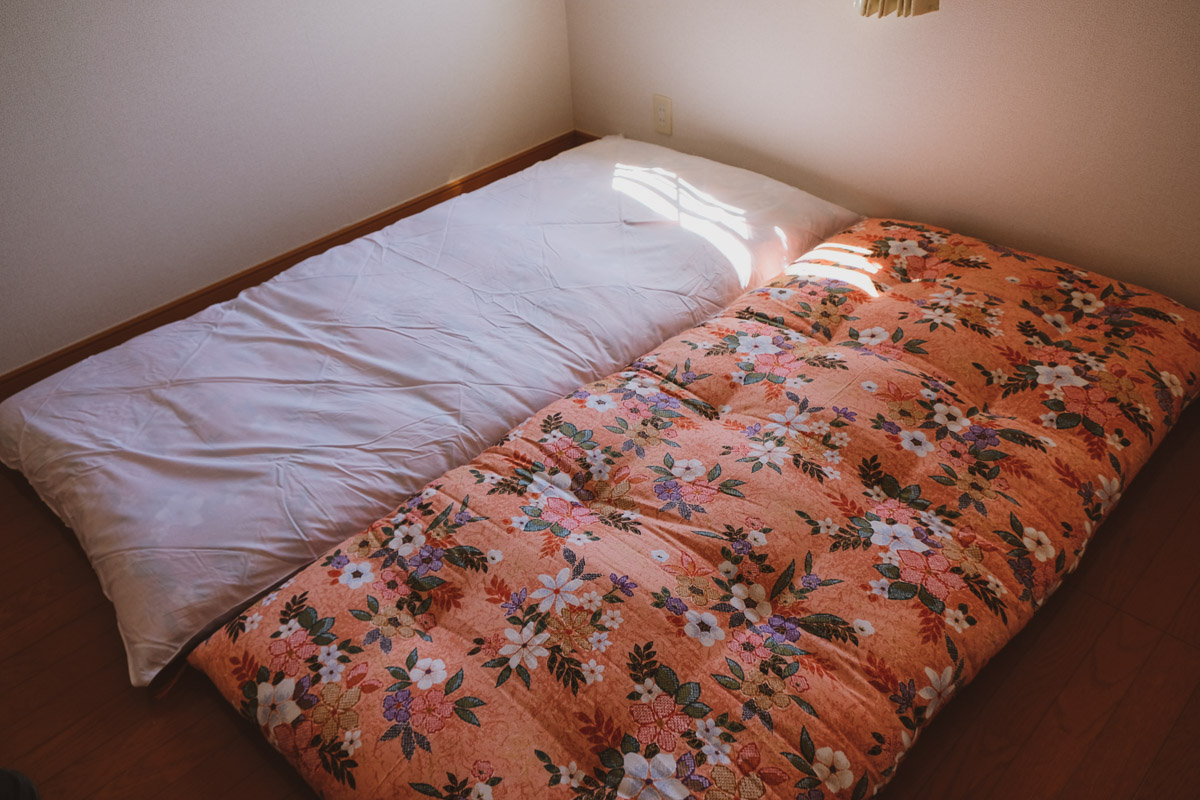
We quickly realized that a comfortable long-term futon setup needs more than just the futon itself. There are a few extra pieces that make a huge difference — both for comfort and for preventing moisture problems later on.
Padded Mats: Adds cushioning between the floor and the shikibuton (bottom futon). These completely changed our experience. Without them, the futon felt far too firm. With them, it finally became the cozy futon setup I’d imagined.
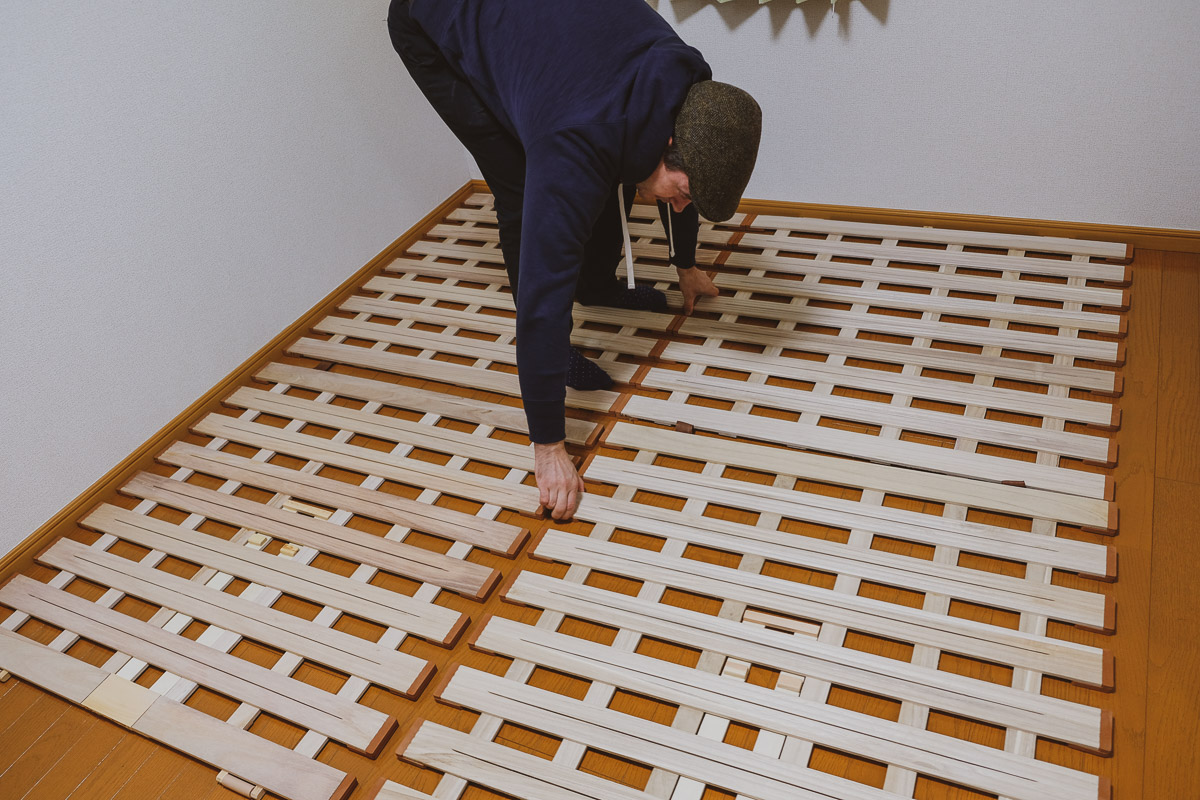
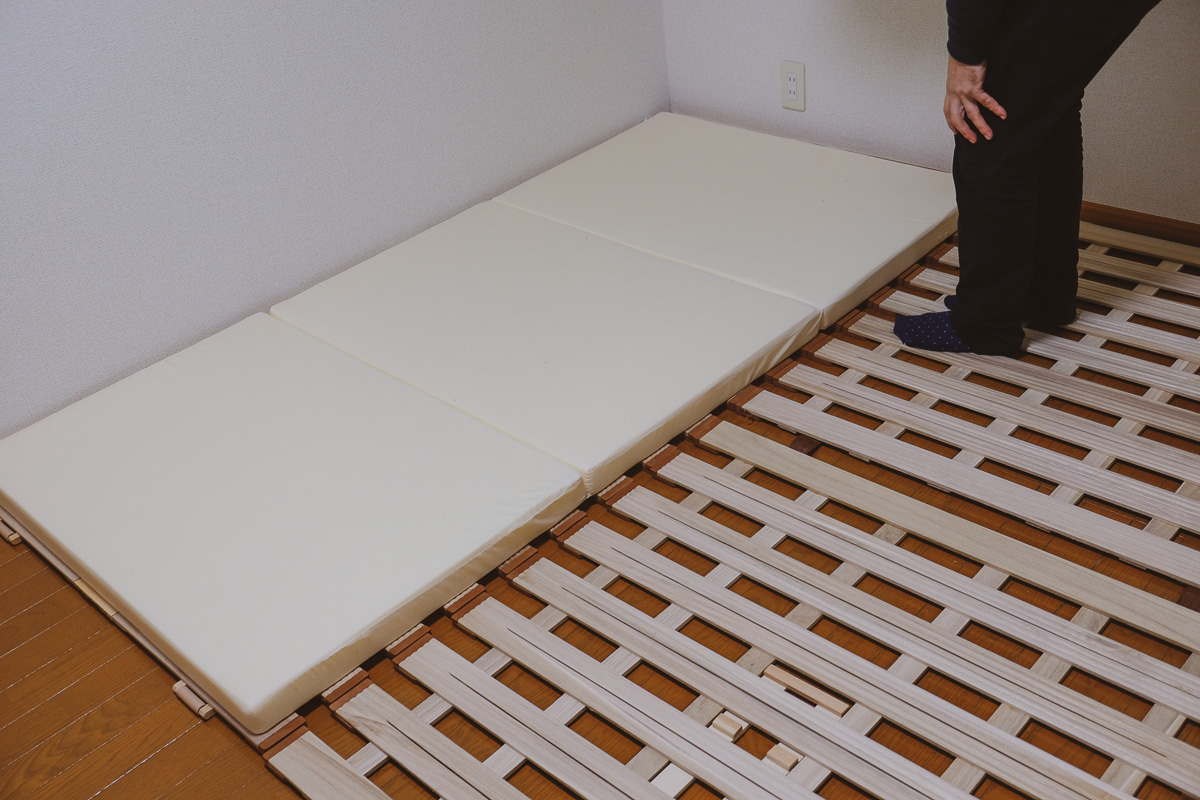
Slatted Platforms: Lifts the futon slightly off the floor so air can circulate underneath, helping prevent trapped moisture and mold. After finding mold underneath our mats, we bought these immediately. Within a week, the futons already felt noticeably drier. Honestly, in humid parts of Japan, I’d consider these essential.
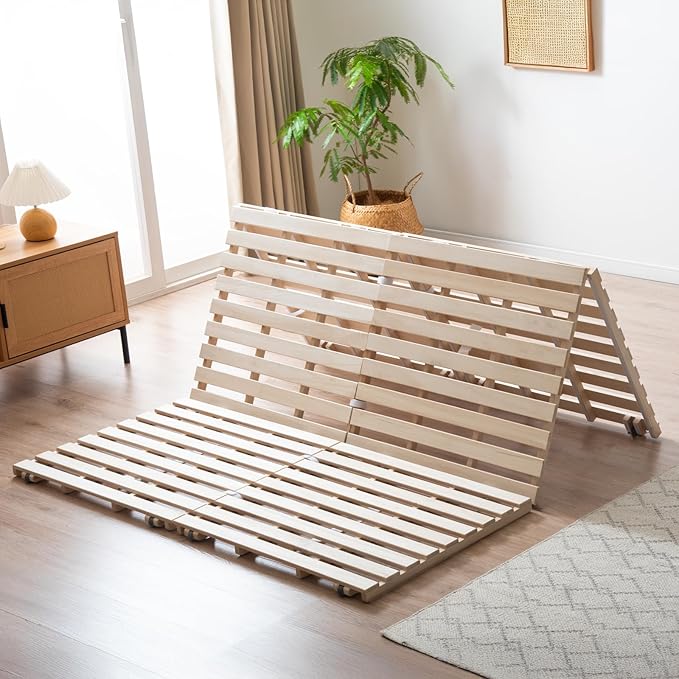
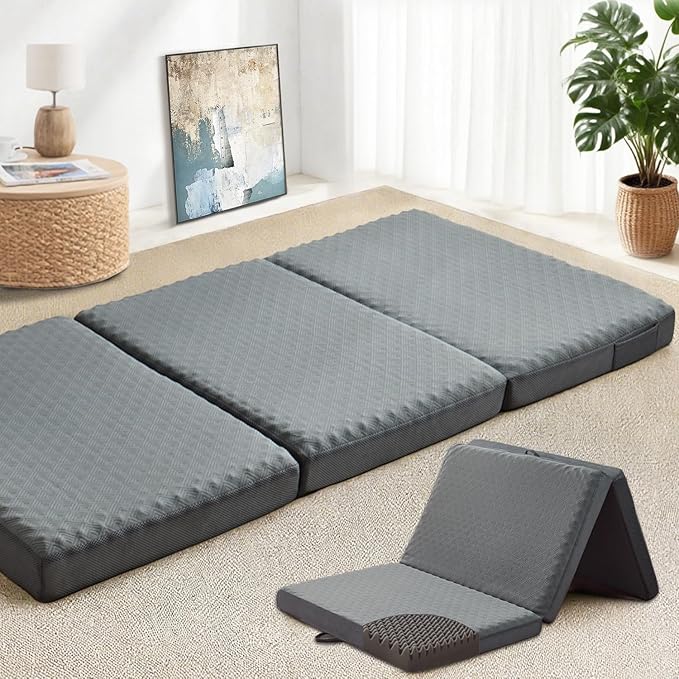
Urethane Foam Mattress: A thicker foldable foam base that works as both cushioning and insulation, often replacing both mats and slats. Several people recommended these to us as a lower-maintenance option, so we eventually transitioned to a thicker urethane foam base, which ended up being our favorite setup overall. It was easier to fold away each morning, more comfortable to sleep on, and handled moisture much better in humid weather.
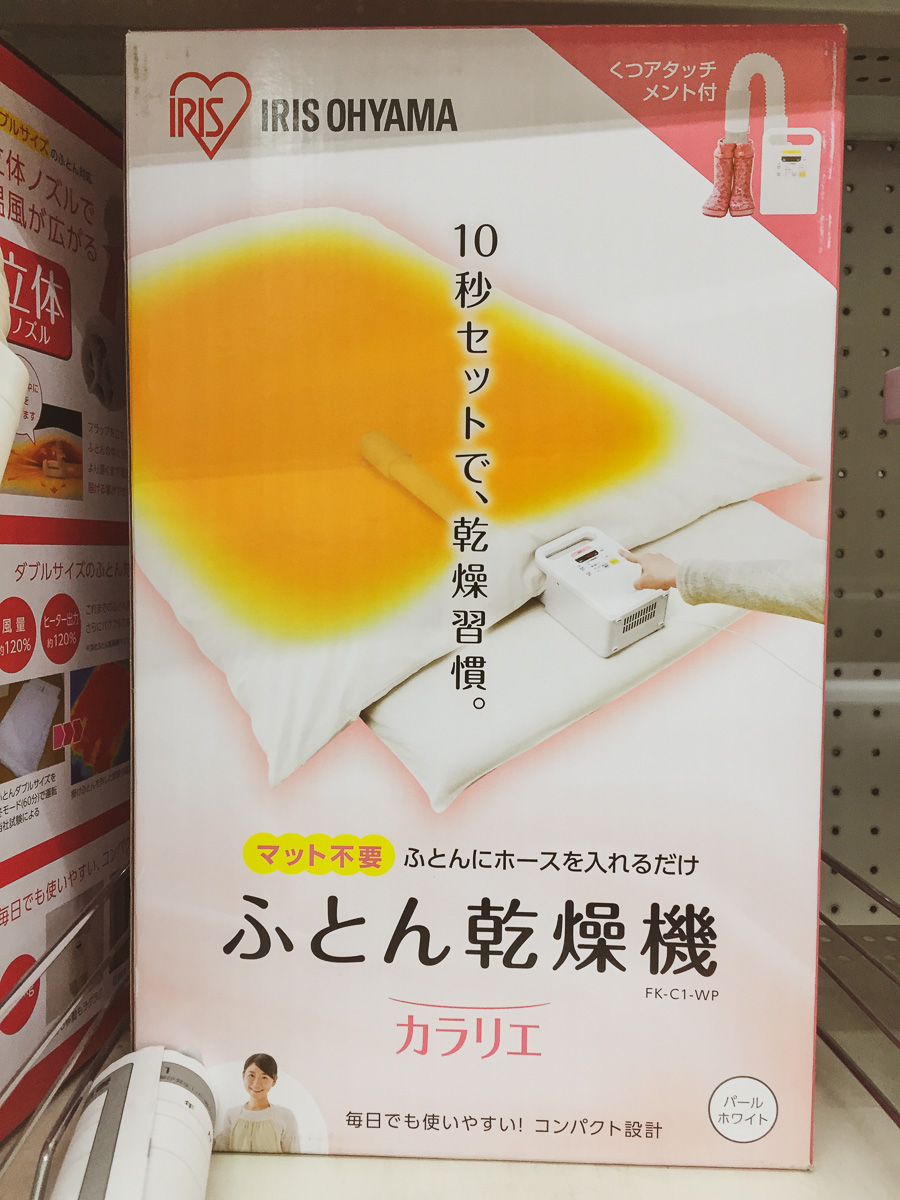
Futon Dryer: An optional drying machine that removes moisture from inside the futon. While not essential, a futon dryer might be a worthwhile addition if you lack outdoor drying space, struggle with wet weather, or prefer the convenience of a machine. We haven’t needed one yet since we can hang our futons outside, but if you live somewhere with little sun—or just want less daily maintenance—I can absolutely see the appeal. These can be found at most hardware stores or online. Prices start around ¥8,000 for a quality model.

3. The Crucial Maintenance Routine (Preventing Mold)
The hardest part of futon life isn’t actually sleeping on one — it’s managing the moisture.
Part of the reason futons became Japan’s traditional bedding is that they were well-suited to the country’s climate and homes. Cotton absorbs moisture exceptionally well, helping sleepers stay comfortable during Japan’s hot, humid summers.
Historically, families balanced this by regularly sun-drying their futons (futon-hoshi), while traditional wooden homes with tatami floors and shoji screens allowed moisture to escape naturally.
Modern homes, however, don’t always provide the same conditions. Today’s apartments are often more airtight, and many people don’t have the time or outdoor space to air out their bedding regularly. As a result, moisture management has become one of the biggest challenges of futon ownership.
And without proper airflow, mold can appear surprisingly quickly.
Over time, we settled into a simple routine that made a huge difference:
Every morning: We fold up the futons and mats for the day. Leaving them spread out on the floor all day is probably the fastest way to trap moisture underneath.
Once a week (weather permitting): On sunny or dry days, we hang the futons outside for a few hours. The sun helps dry out lingering moisture and naturally freshens the futons at the same time.
We added airflow: After our early mold discovery, we learned pretty quickly that some kind of ventilation under the futon is essential. Slatted platforms, raised bases, or breathable barriers all help create airflow and prevent moisture from getting trapped against the floor. In humid parts of Japan, especially, I honestly wouldn’t skip this step.
4. Mold Remediation: What to Do If You Find It
Discovering mold on your futon is deeply unpleasant. Ours appeared underneath the padded mats first — small dark spots that were easy to miss until we lifted everything up properly.
Thankfully, mild mold doesn’t always mean the futon is ruined. But it does mean you need to deal with it quickly.
First: Take It Outside
As soon as you notice mold, move the affected futon or mat outside or into a well-ventilated area. Try not to shake it around indoors, since that can spread spores through the room.
And honestly, wear gloves and a mask if you’re dealing with anything more than a tiny spot. Mold is not something you want to breathe in.
Look for Small Mold Spots
If the mold is still minor and mostly sitting on the surface:
- First, gently vacuum away any loose spores.
- Then dab the area with rubbing alcohol or a simple 1:1 vinegar-and-water solution using a clean cloth.
- Try not to scrub aggressively. That can push moisture and spores deeper into the fabric instead of lifting them out.
Afterward, let everything dry thoroughly.
If the Mold Is Deep or Widespread
In Japan, there are professional futon cleaning and sanitization services that specialize in deep-cleaning traditional bedding. You can send the futon away for cleaning; turnaround times are usually a couple of weeks, depending on the season, and prices generally start around ¥8,000 per futon layer.
One of the great advantages of traditional cotton futons is their longevity. Even after years of use, a futon that has become flat and worn can often be restored through a process known as wata-uchi (cotton refurbishment). The cotton is loosened, cleaned, and re-stuffed to restore much of its original loft, allowing a quality futon to remain in use for decades. I’ve even heard stories of families still using refurbished futons that originally belonged to a grandparent’s generation.
That said, refurbishment has its limits. Traditional shikibuton aren’t designed to be washed, and once mold has spread deep into the cotton filling itself, there might not be a reliable way to remove it completely. In those cases, disposal may be the safest and most practical option.
Drying and Airflow Are the Most Important Steps
No matter how you clean it, the real goal is to remove the moisture completely afterward.
For us, sunlight was the most effective solution. Hanging the futons outside for a full sunny day made a huge difference. Japan even has a word for this routine — futon-hoshi, with Japanese weather forecasts including a good or bad day for drying futons in their reports.
If outdoor drying isn’t possible, you can also use futon dryers.
More than anything, mold taught us that futon ownership is really about airflow.
Once we committed to properly airing everything out — folding the futons daily, improving ventilation underneath, and hanging them outside regularly — the moisture problems became much easier to manage.
5. Traditional Japanese Futon vs. Western-Style Bed
After living with futons ourselves, I don’t think one is “better” than the other. They just suit different lifestyles, and honestly, different personalities.
Here’s what stood out to us after using both:
| Feature | Traditional Japanese Futon | Western-Style Bed |
|---|---|---|
| 🚪Space & Portability | Easily folded and stored away during the day, which makes small rooms feel much bigger and more flexible. | Takes up a permanent footprint in the room and is much harder to move around. |
| ☀️ Maintenance | Requires regular airing and moisture management, especially in humid parts of Japan. | Generally lower maintenance since airflow underneath is built into the bed frame. |
| 😴 Comfort & Support | Cozy and surprisingly comfortable once properly set up, though often needs extra layers or airflow support underneath. | A wider range of mattress styles and firmness levels are available right away. |
| 💏 Sleeping as a Couple | Most futons are relatively narrow, so couples often sleep on separate futons side-by-side. They can shift apart slightly during the night. | Larger mattress sizes make cuddling and shared sleeping easier overall. |
| 💴 Cost | Can be more affordable initially, though quality setups still add up quickly. | Entry-level beds can be cheap, but good mattresses and frames become expensive fast. |
| 🧼 Deep Cleaning | Easier to air out, move, and professionally clean. | Large mattresses are much harder to deep clean or move once set up. |
For us, the biggest advantage of futons has honestly been how they change the feeling of a room. Folding everything away each morning makes the space feel more open, especially if you live in a smaller home or apartment.
At the same time, I completely understand why many people in Japan eventually switch to Western beds. Futons ask for a little more participation from you.
An Interesting Japanese Perspective on Futon Sizing
While researching futons, I came across an interesting argument from a Japanese futon maker that completely changed how I think about bedding sizes.
In Japan, traditional futon sizing has historically followed a simple rule: Futon length = your height + 35 cm (14 inches).
The extra length is intended to provide room for a pillow at the top and space for natural movement and turning during sleep.
For example:
| Your Height | Recommended Futon Length |
|---|---|
| 160 cm (5’3″) | 195 cm |
| 170 cm (5’7″) | 205 cm |
| 175 cm (5’9″) | 210 cm |
| 180 cm (5’11”) | 215 cm |
This helps explain why a standard Japanese single futon is often around 100 × 210 cm, noticeably longer than many standard Western mattresses (at 90-95 cm × 190 cm.)
Whether this sizing philosophy makes a meaningful difference to sleep quality is difficult to say. But, after years of sleeping on futons myself, I can say that having extra length is rarely something people regret. If you’re debating between sizes, especially if you’re tall, choosing the longer futon is probably the safer choice.
Source: Adapted from an article by Sakuramichi Futon Shop (櫻道ふとん店), originally published in Japanese.
6. Cost Comparison: Futon Setup vs. Western Bed
One thing that surprised us was how quickly the costs added up once we started building a proper futon setup.
We originally imagined futons as the cheaper option, but high-quality traditional bedding — especially custom-made futons — can become a fairly significant investment.
Here’s roughly what we spent for two people:
- Custom futons: ¥80,000 (¥40,000 each)
- Sheets and covers: ¥24,000 (¥12,000 per set)
- Padded mats: ¥14,000 (¥7,000 each)
- Slatted platforms: ¥22,000 (¥11,000 each)
Total: Around ¥140,000
That said, the total still ended up fairly comparable to a good Western bed setup in Japan. A decent mattress and frame from somewhere like Nitori can range anywhere from relatively inexpensive to surprisingly expensive once you include bedding and accessories.
Our Verdict: The Futon Experience
Even with the maintenance, the mold scare, and the unexpected costs, we honestly don’t regret buying our futons.
The routine of folding them away each morning, airing them out in the sun, and setting them back up at night slowly became part of daily life for us. Futons make you more aware of the humidity, the weather, and even the changing seasons in a way Western beds never really did for us.
At first, I thought futons were simply a different way to sleep. But over time, I realized they subtly change how you use a space, how you move through your home, and even how you pay attention to the seasons and weather around you.
I still understand why Western beds are popular. They’re easier. Simpler. Lower maintenance.
But even now, years later, there’s still something reassuring about climbing into a futon at night and feeling like your bedroom has quietly turned into a little ryokan of your own.


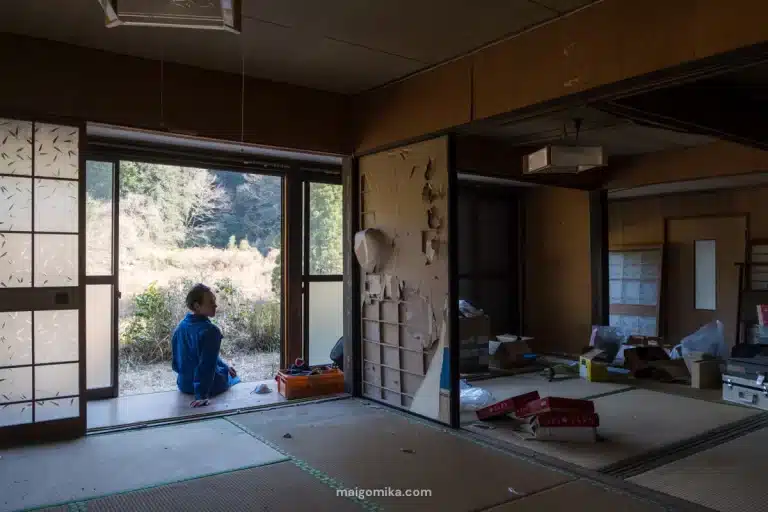


A dog or two will help absorb the extra moisture.
A great post. Glad you guys are enjoying your ryokan!