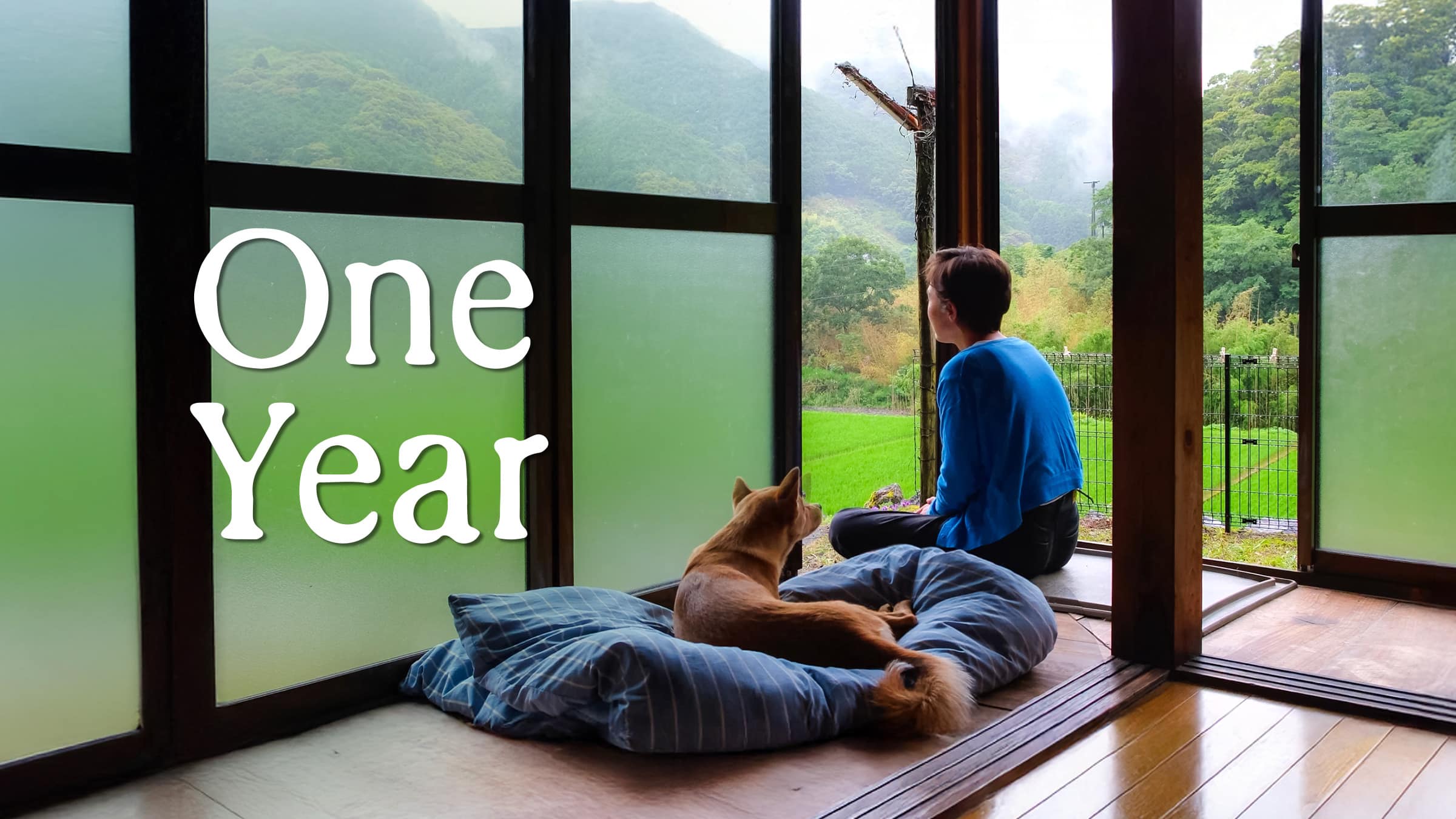
It’s been a whole year since I uploaded my first anniversary video, sharing our countryside life with all of you. Now, to celebrate my second year of capturing the rhythms of life in the Japanese countryside, I’ve put together a brand new video journey through Japan’s twelve months!
From springtime rice planting to lively summer festivals, and through crisp autumn days and cozy winter nights, join us as we take you through a whole year, month by month, of our life in rural Japan.
April: A Burst of Color and New Beginnings
As April blooms in Japan, our countryside bursts into a symphony of color. Sakura petals drift like pink snow, quickly followed by the blush of momo (peach) blossoms. This April was extra special because it marked Pancake’s very first birthday! Of course, we celebrated properly with a stack of fluffy, delicious Japanese pancakes. Amidst the celebrations and flowers, we also began tackling the weeds that had grown rampant over winter, a battle that signals the start of outdoor work. This is also when the gutters are cleaned, an essential step for the upcoming rice planting season, and we start to feel the first hints of the rainy season, marked by sudden, dramatic thunder showers.
May: The Rhythm of Rice Planting
As May settles in, our neighborhood shifts into the rhythm of rice planting season. It’s a meticulous process: tiny seeds sprout in trays, then large machine planters glide through flooded fields, with human hands carefully tending to any missed spots. This is, without a doubt, one of the busiest times for our neighborhood farmers. While the preparations are hectic, once it’s done, a quiet settles over the paddies, and we simply watch the young rice take root. Meanwhile, the wild countryside brings its own distinct flavors of spring. This is when we hunt for fresh bamboo shoots, picking them while they’re still tender. Of course, all this wild abundance also means our wilder neighbors come out to show themselves… which tends to send Sir Pancelot into a bit of a tizzy! As May draws to a close, with the rice fields planted, we can finally fire up the grill and enjoy our first outdoor BBQs, celebrating the longer, warmer days.
June: Settling In and New Adventures
As the warmth finally settles in, our cozy kotatsu enters hibernation. June almost always begins with rain, marking the start of our rainy season. However, it’s not solely about gloom; this is when the giant-headed hydrangeas burst into vibrant color, brightening even the rainiest days. This month brought a whirlwind of new beginnings, both right here in our own backyard and a little further afield. We got our countryside garden productive for summer, even getting our rototiller up and running. A huge highlight was introducing Japan to our Canadian and US family, who visited for the very first time! We took them on several day trips, including castles and an overnight stay at Dogo Onsen, one of Japan’s most ancient hot spring towns.
July: Humid Embrace and Refreshing Escapes
In July, the Japanese countryside is enveloped by a thick, humid embrace. In these scorching summer months, there’s only one way to find real relief: a dip in our local creek. It’s become our daily ritual, a refreshing pilgrimage with Pancake to the cool, flowing water. With all this life and warmth comes the mosquitoes, and that’s when the bug net becomes our best friend. The outside world never stops here — a constant hum of activity that is the symphony of summer.
August: Harvest, Home Battles, and Festivals
August is rice harvesting season, a grueling but rewarding time for local farmers. While they’re busy reaping the bounty from their May planting, we’re tackling our own battles at home. Jesse’s got his hands full fixing the sink piping, and I’m waging war against the out-of-control weeds and vines threatening to engulf our wall. With August comes the undeniable weight of summer’s peak. The air is so thick it feels like a damp cloth draped over us, and the sky seems constantly ready to open up. This is, after all, the peak typhoon season, when the rains become particularly heavy. Fortunately, we were lucky this year, with only one typhoon brushing our southern part of Japan. For every hour spent on outdoor work, there’s always a balance in the form of one incredible reward: the summer festivals, a neighborhood gathering that makes all the back-breaking work worth every single drop of sweat.
September: Spider Lilies and Wildlife Shifts
As September arrives, so too does the higanbana spider lily. As day and night begin to equalize, these striking red flowers emerge along the rice paddies and roads, signaling the arrival of autumn. This is also the last month we see some of the mountains’ more brazen wild creatures before they retreat back to higher ground. This year, however, their beauty was tinged with a stark reality: the mountains had been particularly lean, meaning more of our wild neighbors ventured into our fields. September also marks the bittersweet end of summer, celebrated with some of the last grand festivals of the season.
October: Firewood, Renovations, and Lean Harvests
As October rolls in, our minds immediately turn to firewood. This marks the beginning of a lengthy process of cutting, splitting, and stacking before it is seasoned, in hopes that it will be ready for the winter ahead. Beyond the outdoor tasks, a big indoor project has officially begun: our house ceiling renovation. After three years, it’s time to tackle some unwanted mice who’ve been making themselves a little too comfortable in the false ceiling. This isn’t a weekend job, and we’re looking at a long few months ahead. The mountains were lean this October; our fruit trees, usually abundant, simply failed to thrive. It wasn’t long before we felt the ripple effect, with fruits snatched up much earlier than usual by hungry wildlife.
November: Crisp Evenings and First Fires
As November settles in, the Japanese countryside offers a distinct shift. The days still hold the lingering touch of autumn, but the evenings now bring a significant, crisp coolness. While the fresh cuts of firewood begin their slow seasoning process, we reach for the most seasoned of the bunch to ignite our very first fire of the year. The moment the fire starts, a warmth chases away the house’s chill, filling the room with a coziness that only a wood stove fire can bring. This subtle change is our cue, a clear signal to intensify our preparations for winter.
December: Winter’s Embrace and New Year Traditions
December’s arrival brings the first few signs of winter here in southern Japan. The maple leaves blaze in fiery reds and gold. Then, the beloved kotatsu makes its grand return, an unmistakable signal of winter’s true arrival. As the New Year approached, we embraced tradition and created Kadomatsu, one of Japan’s many symbolic decorations. These traditional bamboo and pine decorations are placed at entrances, inviting good fortune. And of course, no Japanese New Year is complete without mochi. We made it for the first time with the local community, pounding the sticky rice by hand until it was pliable. This freshly made mochi became the centerpiece of our final New Year’s dinner, a delicious and symbolic end to the year.
January (2025): A Rare Snowfall
Snow is a rare guest in these southern parts of Japan. And yet, it has graced us with its presence every single year since we moved here. Usually, it’s a fleeting visit, a brief dusting in January. But this year, the winter chill dug in its heels, stubbornly refusing to leave.
February: A Lingering Winter
Just as we were on the cusp of spring in February, we were abruptly plunged back into winter. It snowed. And while snow here usually means a single, fleeting day, this year, it kept falling. And falling. With the last of the day’s snow finally melted, I could now start planting and planning for the new garden this year.
March: The Triumphant Return of Spring
As March unfolds, the Japanese countryside visibly awakens, shedding its winter embrace. This is the triumphant return of spring. The air vibrates with the chatter of birds, then the unmistakable magic begins: the blush of early sakura and the vivid pinks of peach blossoms emerge.
Conclusion: A Full, Rich Year
This journey through twelve months has been a true reflection of life here, from the deep snows of winter to the humid heart of summer, the rice planting, and the local festivals. It’s been another full, rich year living in this corner of Japan.
Thank you so much for joining us on this adventure and for all your incredible support. We hope you enjoyed this glimpse into a year in the Japanese countryside! If you’d like to see an ad-free version of this, you can find it and other videos like it on my Patreon. We will see you next time. Bye!