The wildlife in the Japanese countryside is always one of the many interest points for visitors. When family and friends visit us, we always go for walks hunting for monkeys, or we’ll point out the poisonous centipedes or spiders. During the flooding of the rice fields in early May, the roads erupted with tiny frogs covering the asphalt. After the harvest, tracks of boar rooting through the fields are a common sight. Over the years I’ve lived here, I’ve captured as many animals as possible on film—birds, insects, mammals, you name it, and have created quite a personal glossary of wild animals here in rural Japan.
Arthropods
I will admit that this category was the hardest to get used to. The first time we entered our akiya, a vacant house, we encountered a huntsman spider hanging silently out on the shoji door. Now, I approach them completely differently, barely glancing when I see one, knowing they’ll soon scurry away. Arthropods do not have an internal skeleton. Instead, they have an exoskeleton —a hard, protective outer shell composed of chitin and protein. Although this is a more nerve-wracking category for many, rest assured, they are super interesting.
Huntsman Spiders


Huntsman spiders, or ashidakagumo (アシダカグモ), are not poisonous or dangerous. The females are typically dark with larger bodies, while the males are lighter, with striped legs and wider arm spans. Despite their intimidating appearance, these fast-moving spiders with long, hairy legs actually help by hunting insects like cockroaches and flies. We now look at them with fondness for doing a job we’d much rather not do. I even had the lucky chance to watch one molt!
Mukade Centipedes

Mukade (ムカデ), or the giant poisonous centipede, is venomous. While it has a bite that packs a punch, it’s closer to a bee sting and barely warrants a trip to the hospital. Jesse and I have been stung twice while in bed. They like soft places, such as beds, laundry baskets, and shoes, so we’ve made a habit of shaking out any of our shoes before slipping our feet into them.
Geji Geji
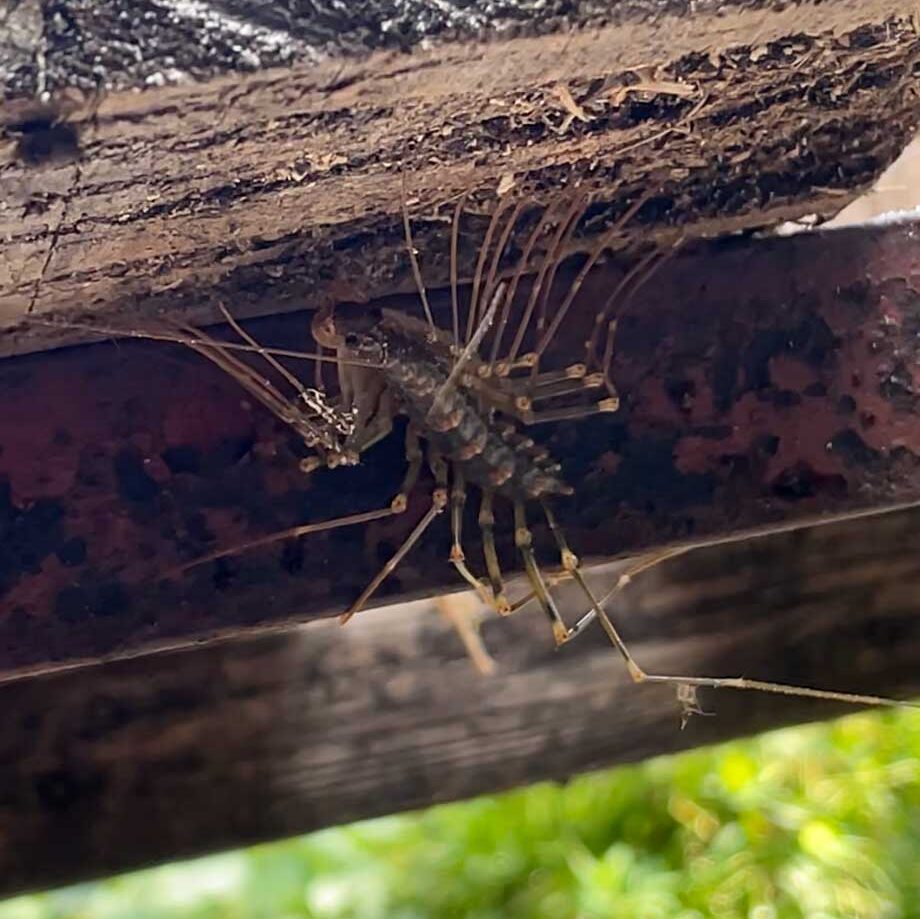
The house centipede, or geji geji (ゲジゲジ), is another common arthropod. While they aren’t poisonous, their sting can be painful, causing swelling and itching similar to a bee sting. Luckily, they are very shy and prefer to stay out of sight.
Mammals
When it comes to the animals we encounter here, the mammals are often the most memorable. From the monkeys who visit our backyard to the elusive wild boars in the fields, these creatures are an integral part of our daily life.
Japanese Macaques
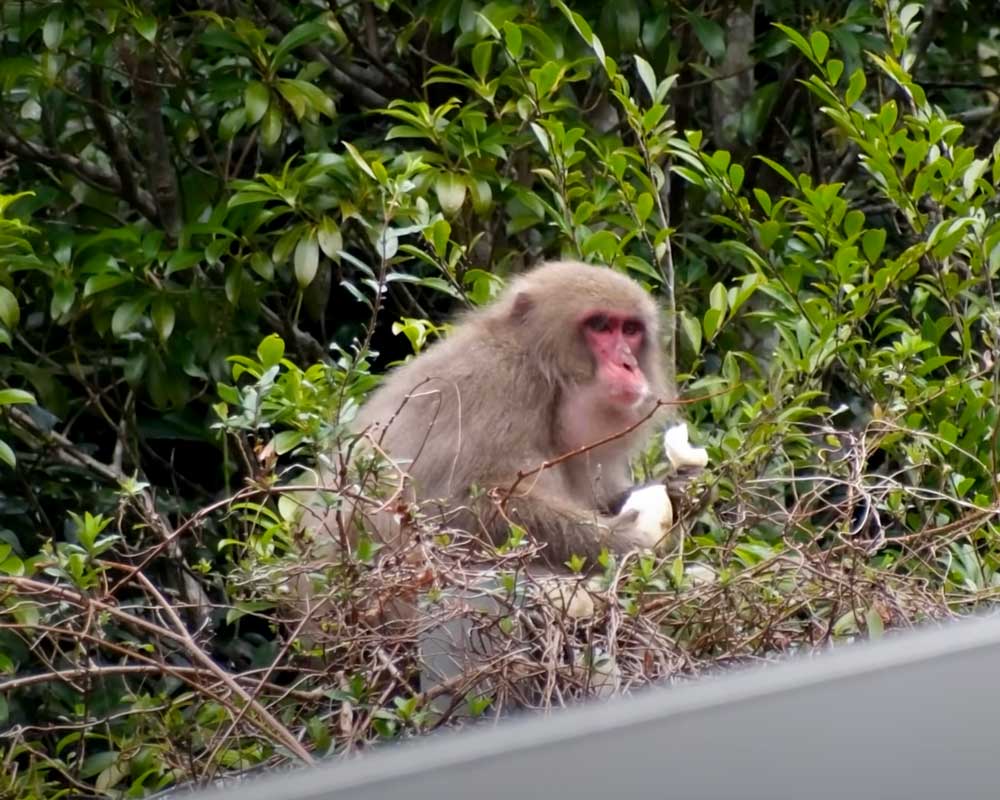
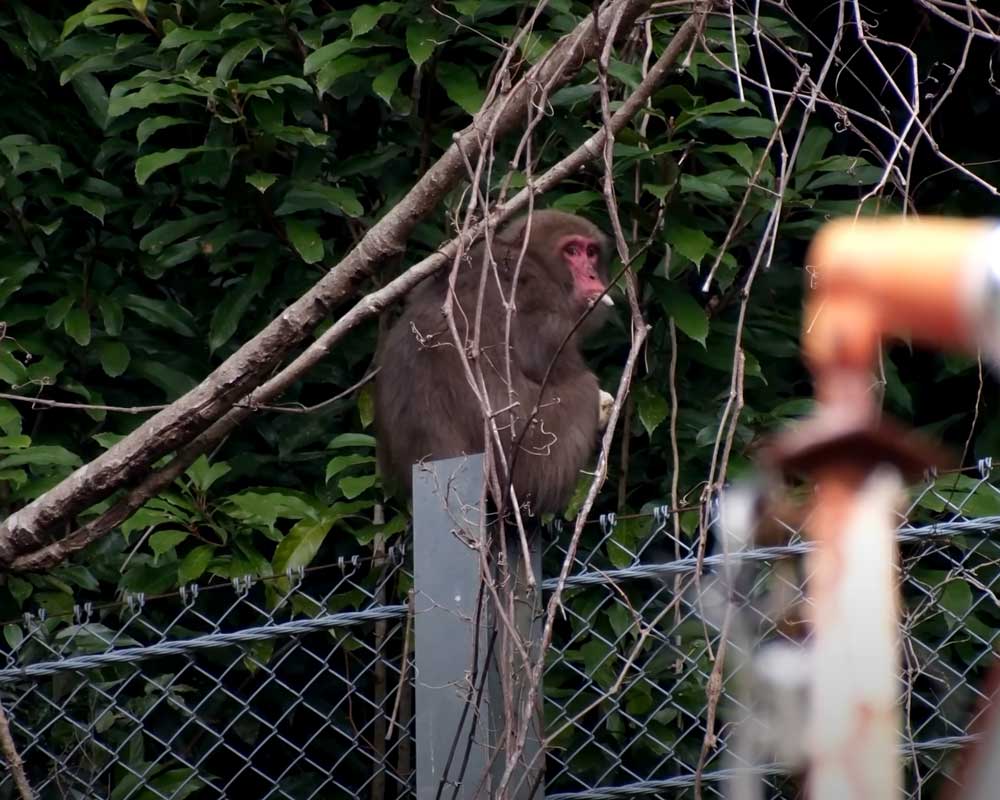
Japanese macaques are native to Japan. Go to rural areas all across the country and you’ll likely stumble on them. Ever seen those hot spring-dipping monkeys in Japan? Those are them! We see them in our backyard. While they can be cute, they’re still wild animals. When they are truly wild, they tend to run away from humans, which is great for us, but they’ll still try to sneak in and steal our vegetables and fruit when we’re not looking. They travel in big troops, and we’ve come to recognize their screeches.
Badger
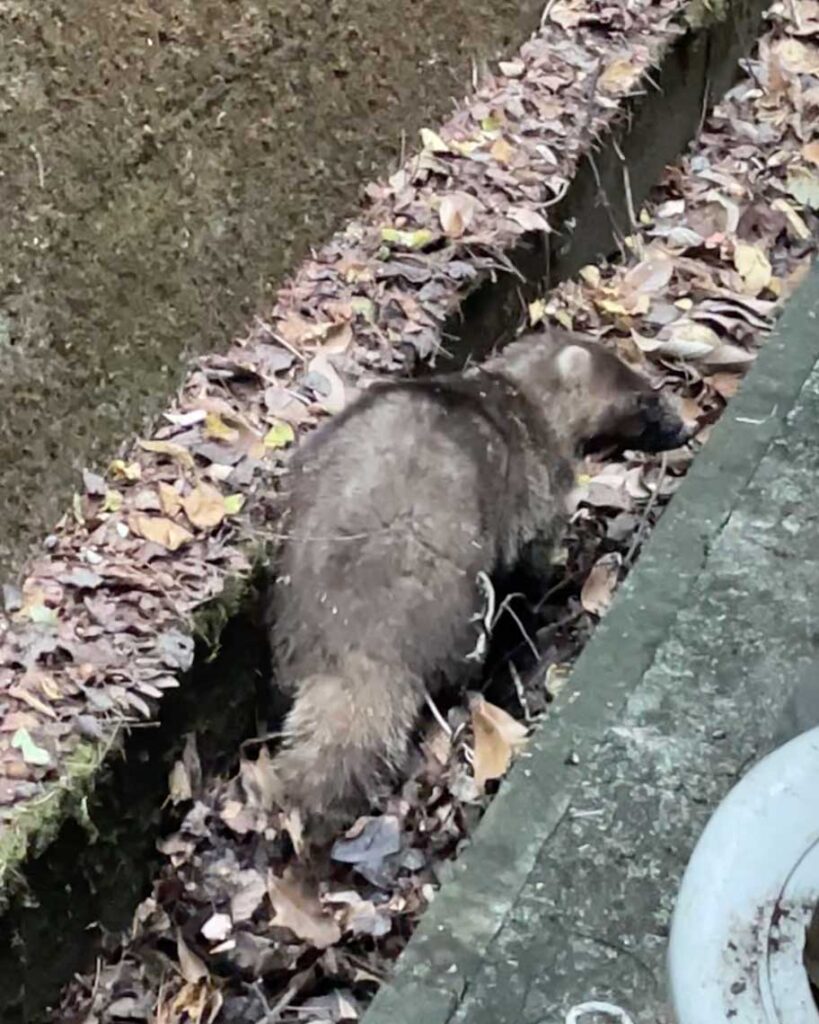
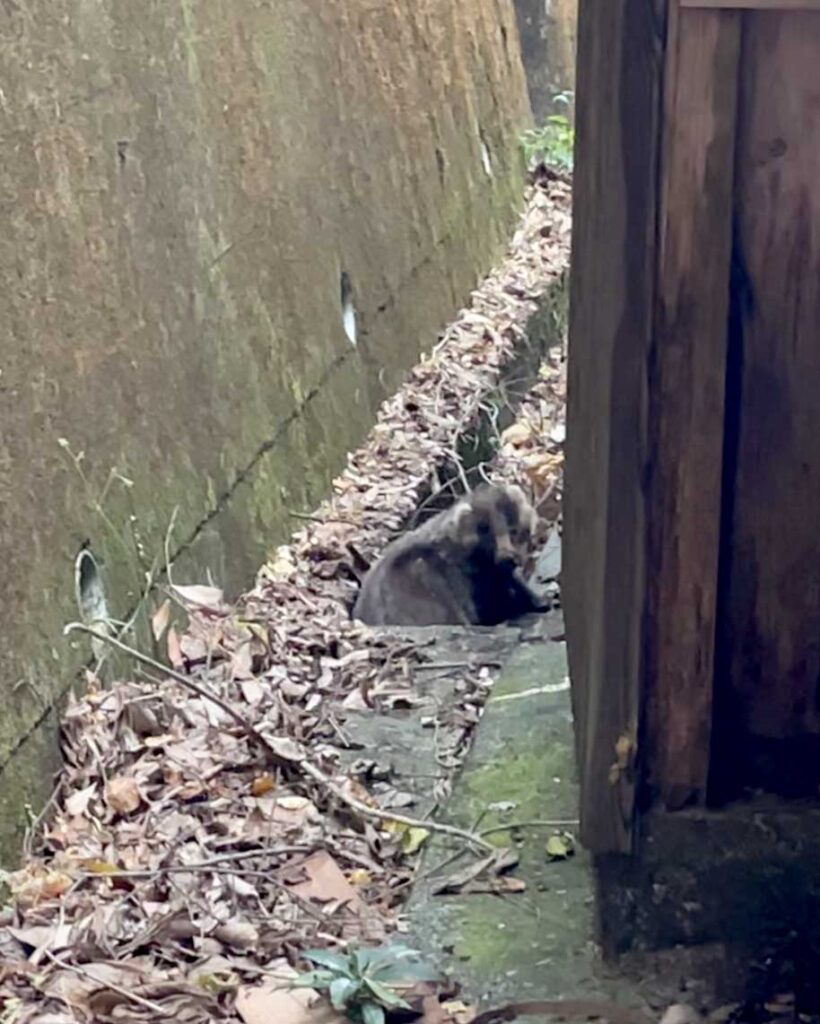
These daring badgers, also known as anaguma, are bold creatures. I’ve stared one straight in the face, and it just simply looked at me, then continued to rummage through the dirt for grub. They are endemic to Japan.
Japanese Boar

The Japanese boar, or inoshishi, is a common topic of conversation among farmers, especially during the later part of the rice harvest season. They are known to enter rice fields and uproot crops, destroying months of work. These animals are very shy and elusive. Although they are large and wild, they will avoid humans at all costs. Do not approach them.
Tanuki
The tanuki, also known as the raccoon dog, is depicted in folklore as a clever and mischievous creature that can transform into various forms. They appear in many historical fables and stories. However, they always seem to escape my camera before I get a chance to capture one.
Japanese Civet
A Japanese civet refers to the masked palm civet, known as ハクビシン (hakubishin) in Japanese. A civet is a small, lean, mostly nocturnal mammal native to tropical Asia and Africa. Closer to being a mongoose than a cat, they like fruit. We always look up at fruit trees at night to see if we can see them lurking in the dark.
Japanese Giant Flying Squirrels
If there’s one elusive creature, it’s the flying squirrel. Known as ムササビ (musasabi), I’ve only seen one once. Walking outside in the evening with Pancake in one hand and a flashlight in the other, we looked up to see what could only be described as a giant squirrel monkey.
Reptiles & Amphibians
The Japanese countryside offers an ideal habitat for many amphibians and reptiles, ranging from small, harmless lizards scurrying across a stone wall to larger snakes. The flooded rice fields in May are cool, moist environments, perfect for frogs and salamanders, whose presence is often a sign of a healthy ecosystem. We love their loud, rhythmic croaking, which is a familiar sound on warm, humid nights, especially during the rainy season.
Mamushi Pit Viper
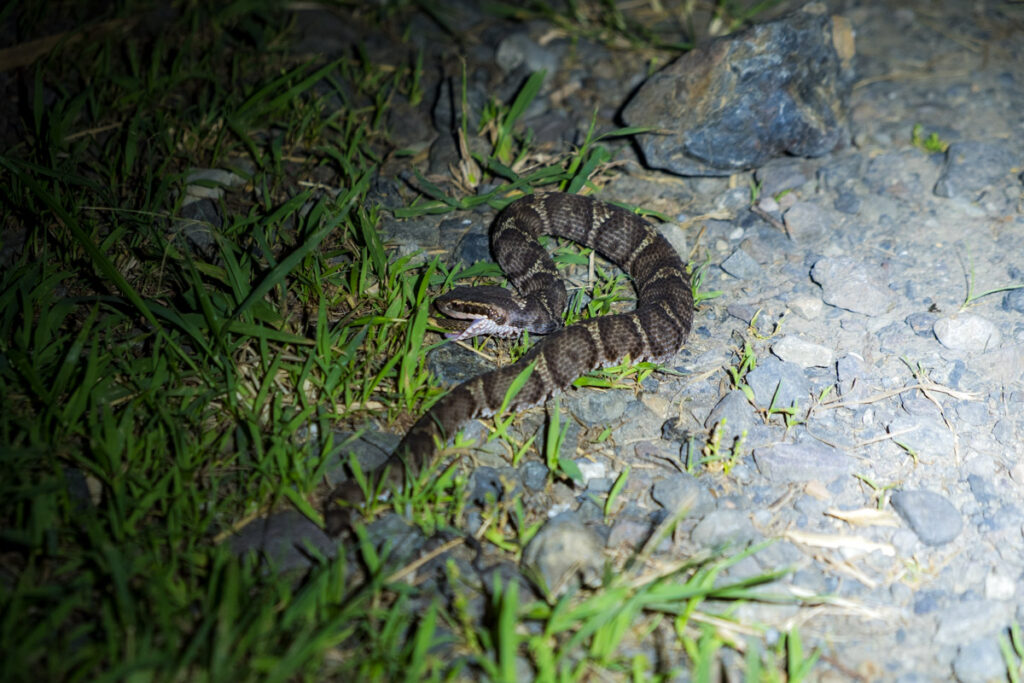
Although the mamushi pit viper is not as venomous as some other highly venomous snakes, you’ll still want to go to the hospital and get anti-venom. They tend to sit and wait if you approach them and only slither away once they feel it’s safe to escape. On hot, summer evenings, Jesse and I bring flashlights pointed downwards to make sure we don’t accidentally step on one still warming itself on the hot pavement after a long day.
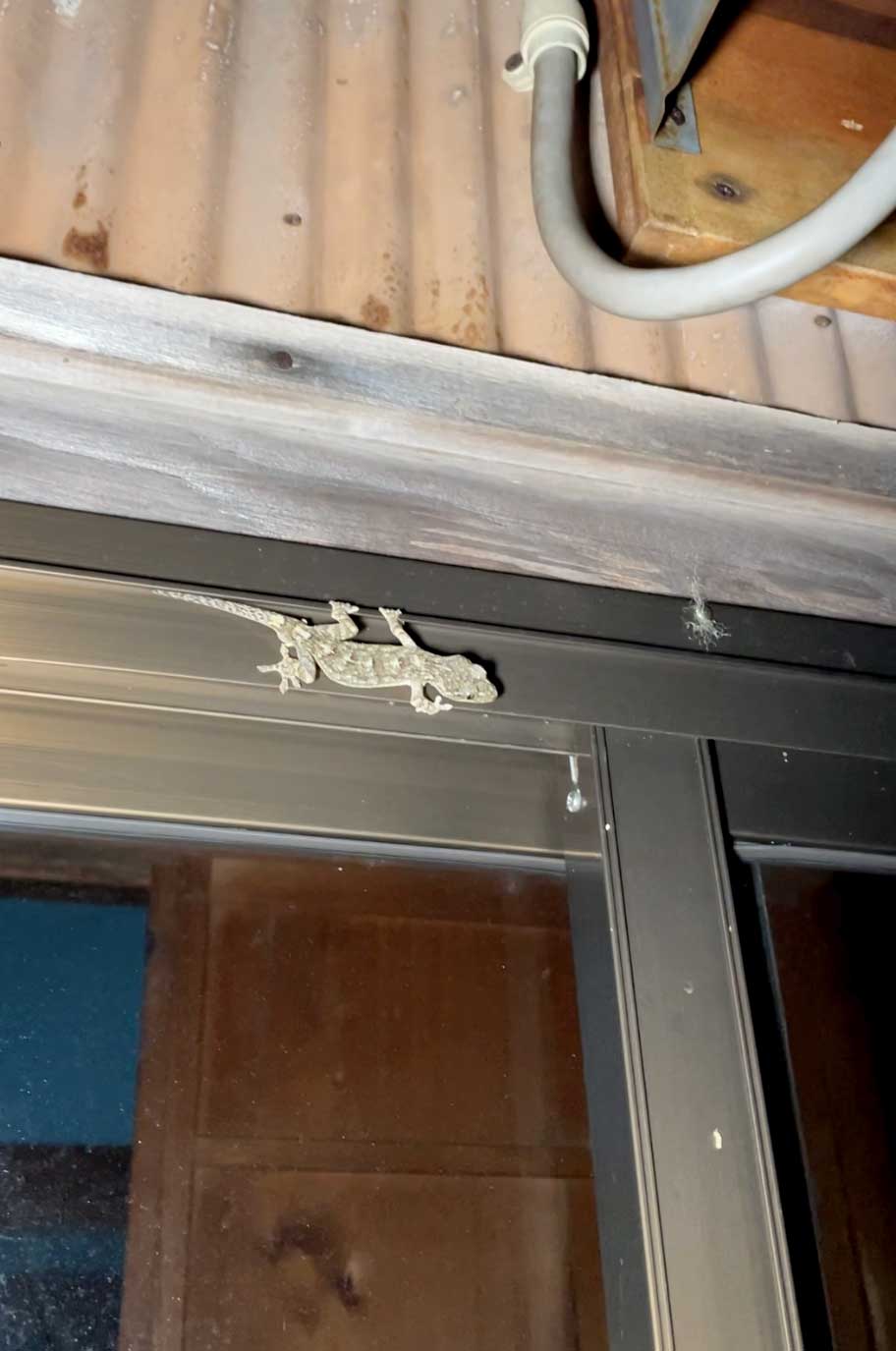
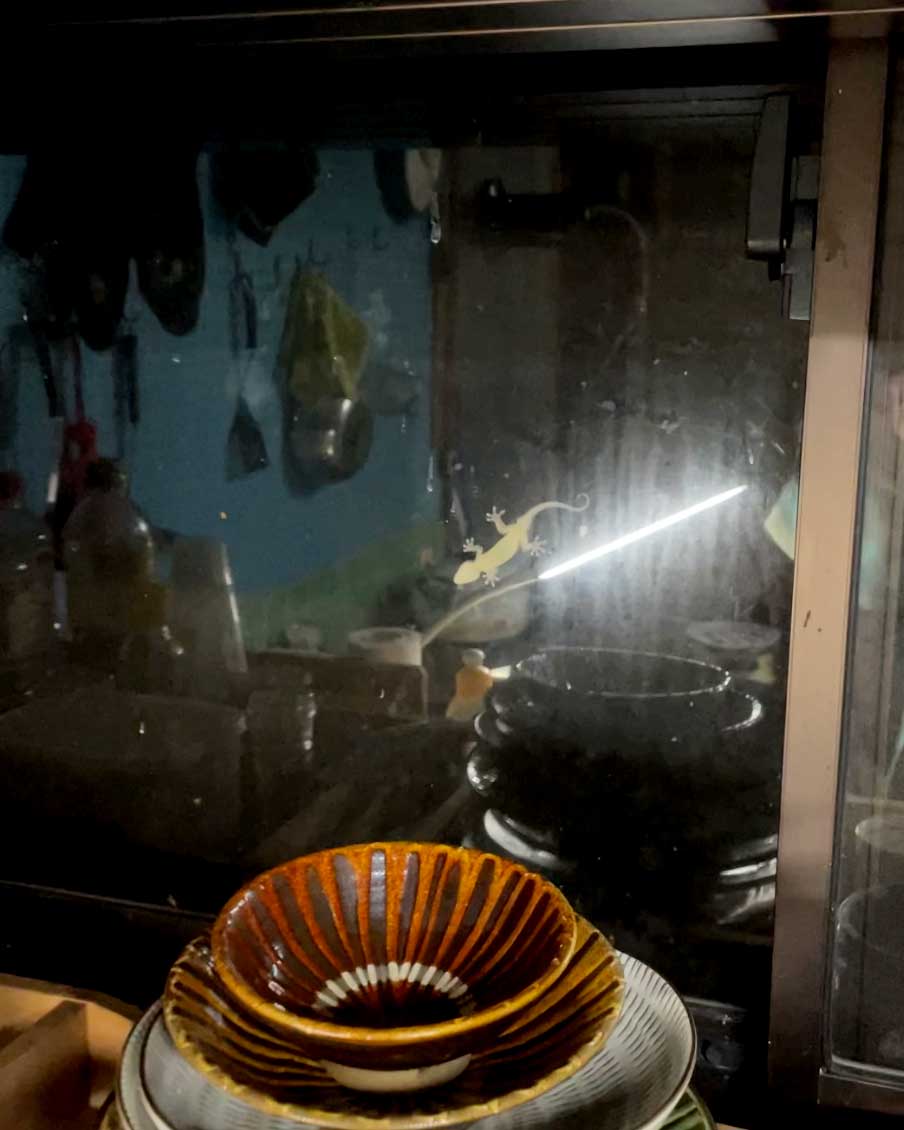
Schlegel’s Japanese Gecko
Schlegel’s Japanese gecko, also known as yamori (ヤモリ), is a species of gecko. Almost any time of year, we see these geckos stuck to the outside windows and doors of the house, waiting for an unsuspecting fly to land nearby. We also aren’t surprised when a random gecko drops from the ceiling into our laps.
Japanese Five-lined Skink
The Japanese five-lined skink is a common Japanese lizard, known for its shiny scales. When they are young, their bodies are a vibrant mix of blue, black, and gold stripes, which later turn to a uniform gold as they mature. Step out on a hot summer midday, and you’re bound to see a pair sunbathing on the cement pathway before they flee into their respective cracks and corners.
Japanese Tree Frog
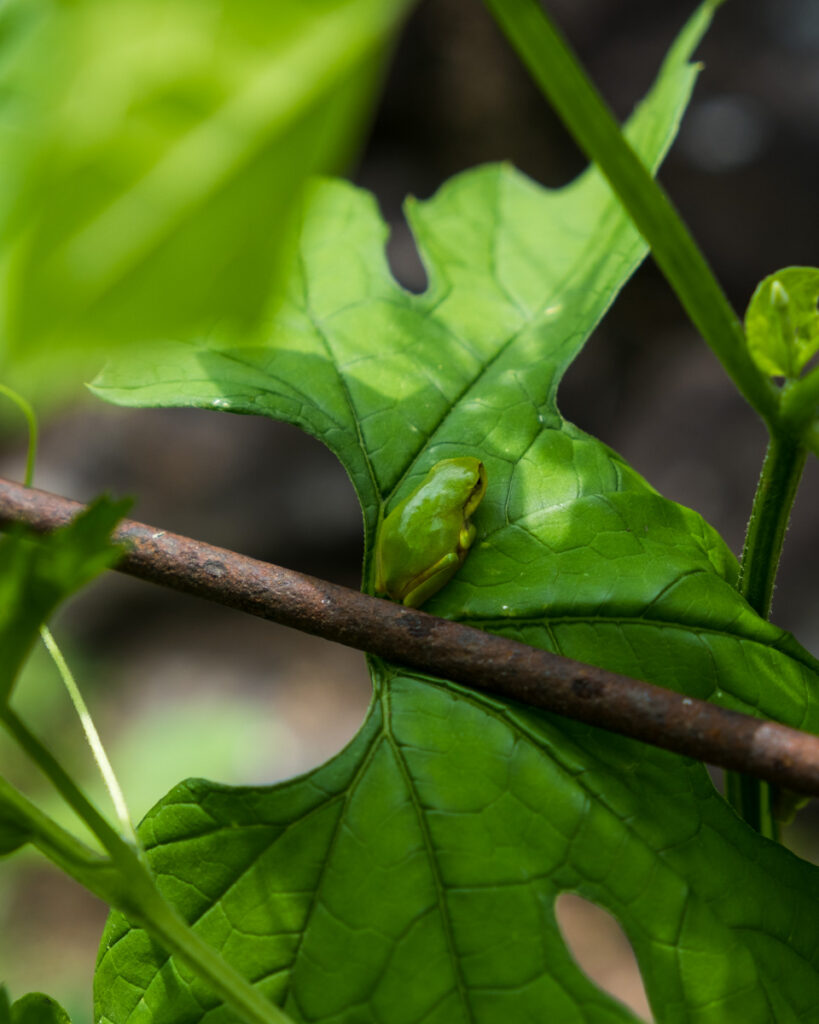
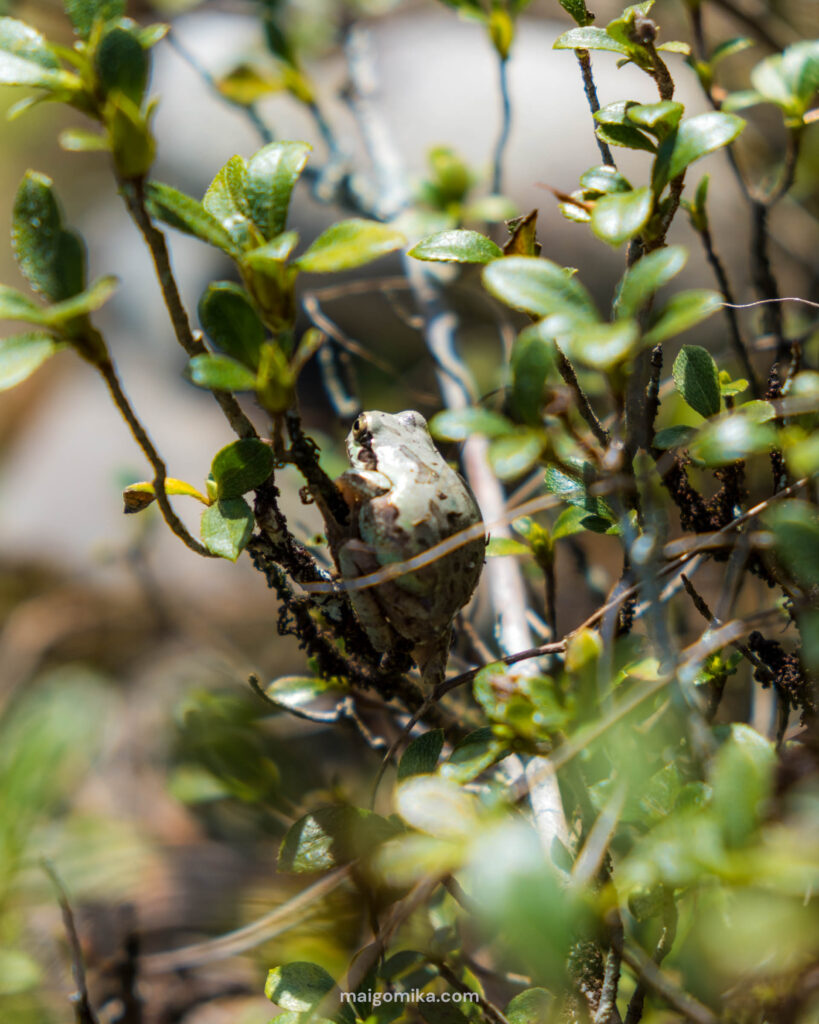
The Japanese tree frog, or nihon-amagaeru (ニホンアマガエル), is a small, bright green frog commonly found in gardens and rice fields. We often see them clinging to leaves or stems with their tiny, adhesive toe pads.
Birds
Birds hold such a special significance in my experience here in Japan, some of their calls truly signal a change in season. So much so, that I even dedicated a part of a spring video entirely to birds.

Grey Herons
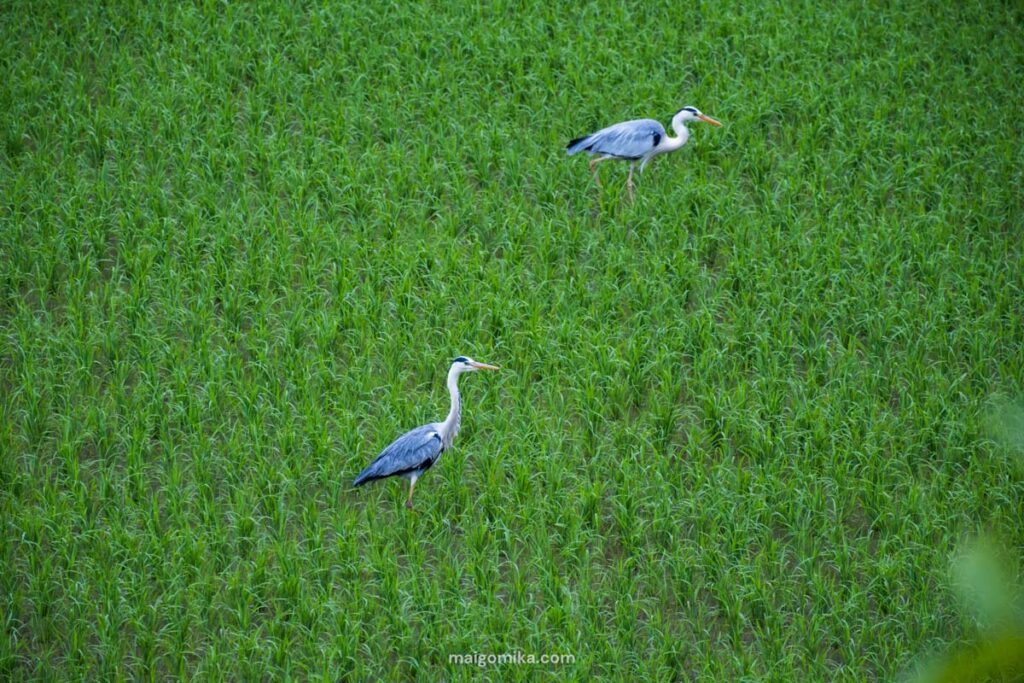
A common bird I observe in these regions is the gray heron, also known as Aosagi (アオサギ). Unlike the North American blue heron, the gray heron is found in Europe, Asia, and Africa. It is smaller, with a smaller bill, mainly gray plumage, and lighter thighs, as opposed to the reddish-brown thighs of the blue heron.
Black Kites
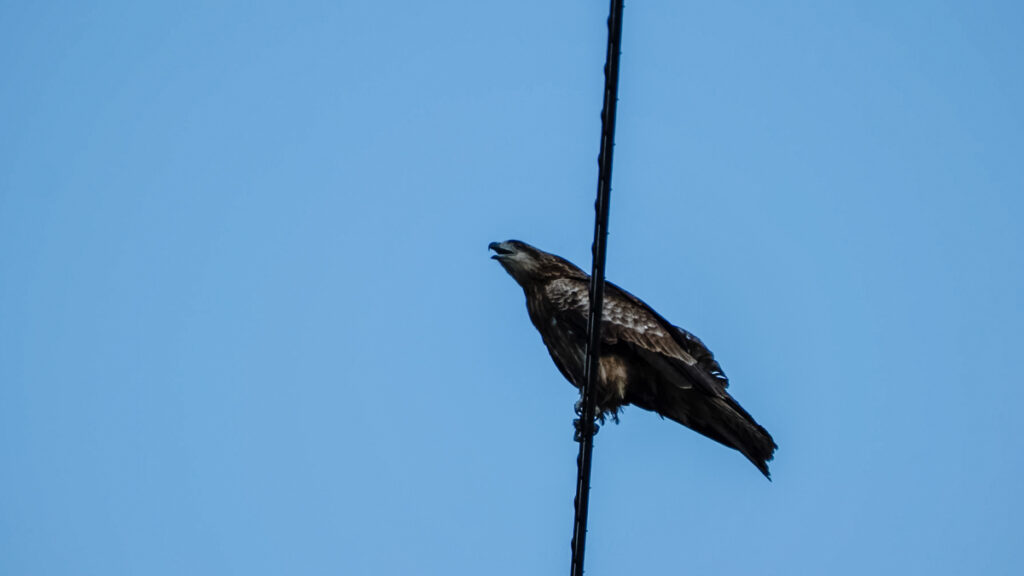
Black kites, or tobi (トビ), are very common birds of prey known for their powerful flying abilities, hunting techniques, and iconic cries that many people love. They are widely distributed throughout Japan, particularly in coastal and plains areas. They are usually observed year-round and prefer open areas such as coastlines, marshes, and rural regions.
Japanese Green Pheasant
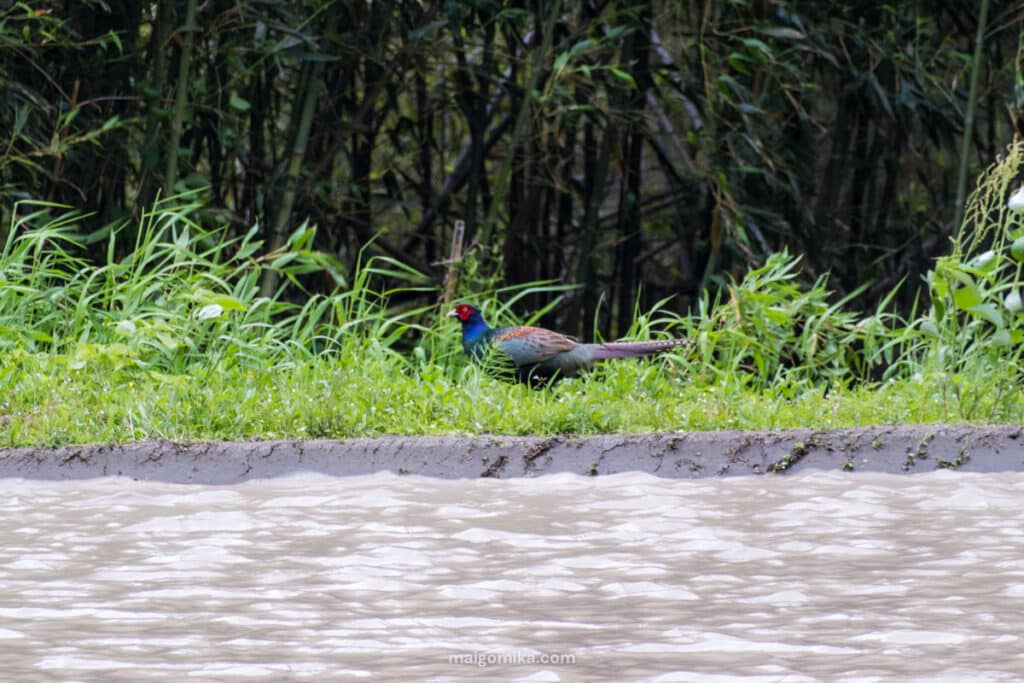
The Japanese green pheasant, or kiji (キジ), is Japan’s national bird. The first (and only time) I saw one was near the rice paddies, which makes sense since they are often seen walking along the roads in the countryside or hiding in the tall grass. The males are known for their iridescent green and purple plumage and their distinctive red patches around the eyes.
Eastern Spot-billed Duck

You can easily spot the Eastern spot-billed duck by the bright yellow on the tip of its black bill, a unique detail that stands out against its dark, scaly-patterned body. What’s neat is that both the male and female share this look, and when they fly, you can catch a beautiful flash of purple and blue on their wings. These two ducks consistently return to the same field in early summer.
White Egret
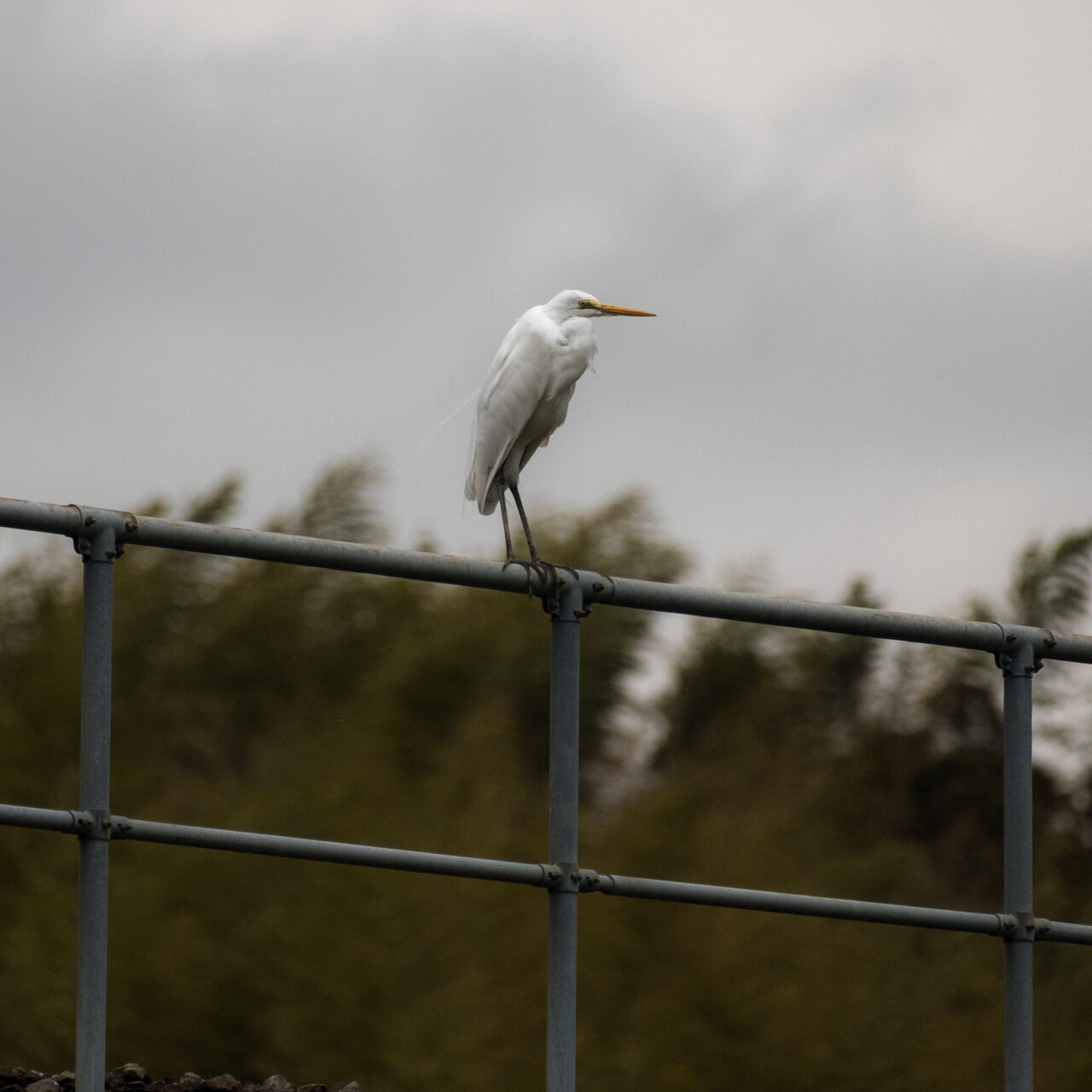
We often see several types of graceful white egrets (sagi, サジ) wading through the flooded rice fields and along rivers. It’s tricky to tell the difference, but the three main species found here are the Great Egret, the Intermediate Egret, and the Little Egret. Regardless of the species, they are a beautiful sight, patiently hunting in the shallow water, especially in the spring when the paddies are freshly flooded.
Japanese Tit
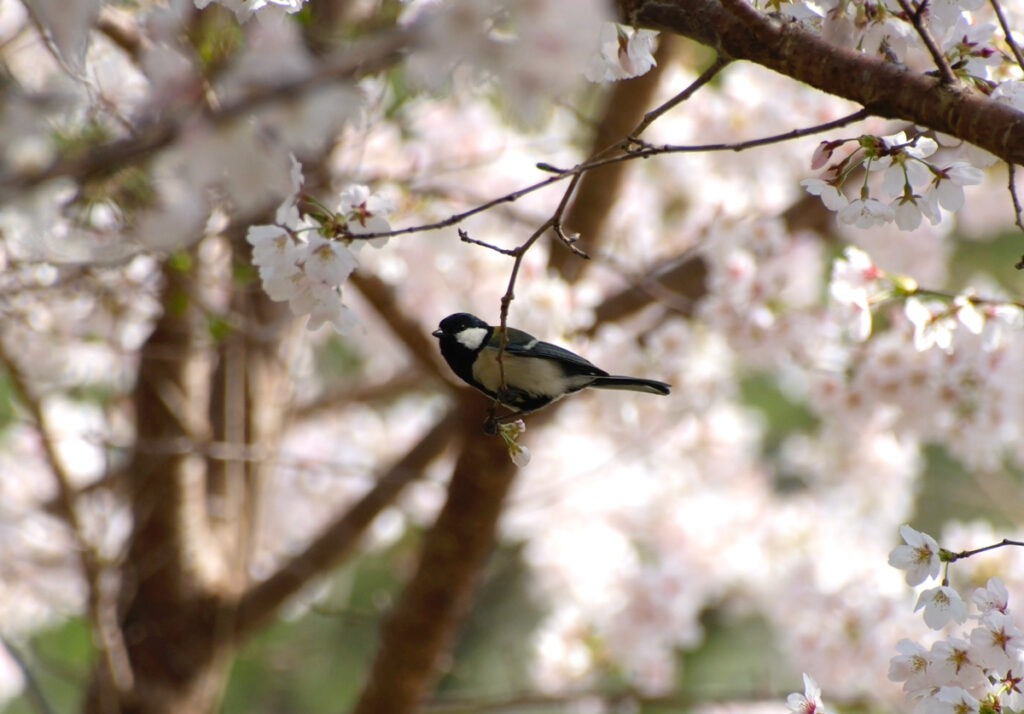
The Japanese tit, or shijūkara (シジュウカラ), is a small songbird with a distinctive black cap and a stripe down its chest. They are very common and their cheerful, repetitive calls are often heard in gardens and forests.
Eurasian Tree Sparrow
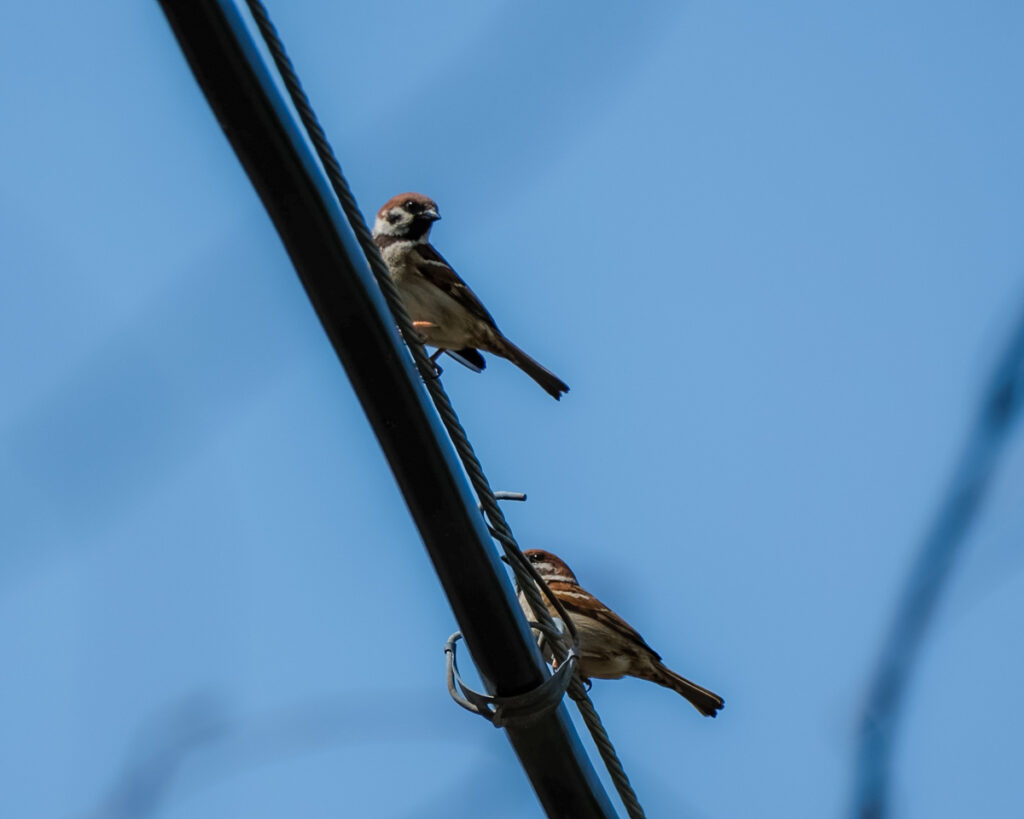
The Eurasian Tree Sparrow is a ubiquitous sight, known by its Japanese name, suzume (スズメ).
Japanese Bush Warbler
The Japanese bush warbler, or uguisu (ウグイス), is famous for its beautiful, melodic song that signals the arrival of spring. Whenever I hear its distinct song in spring, I know it’s truly spring. Though often heard, this small, olive-brown bird is very shy and rarely seen.
Oriental Greenfinch
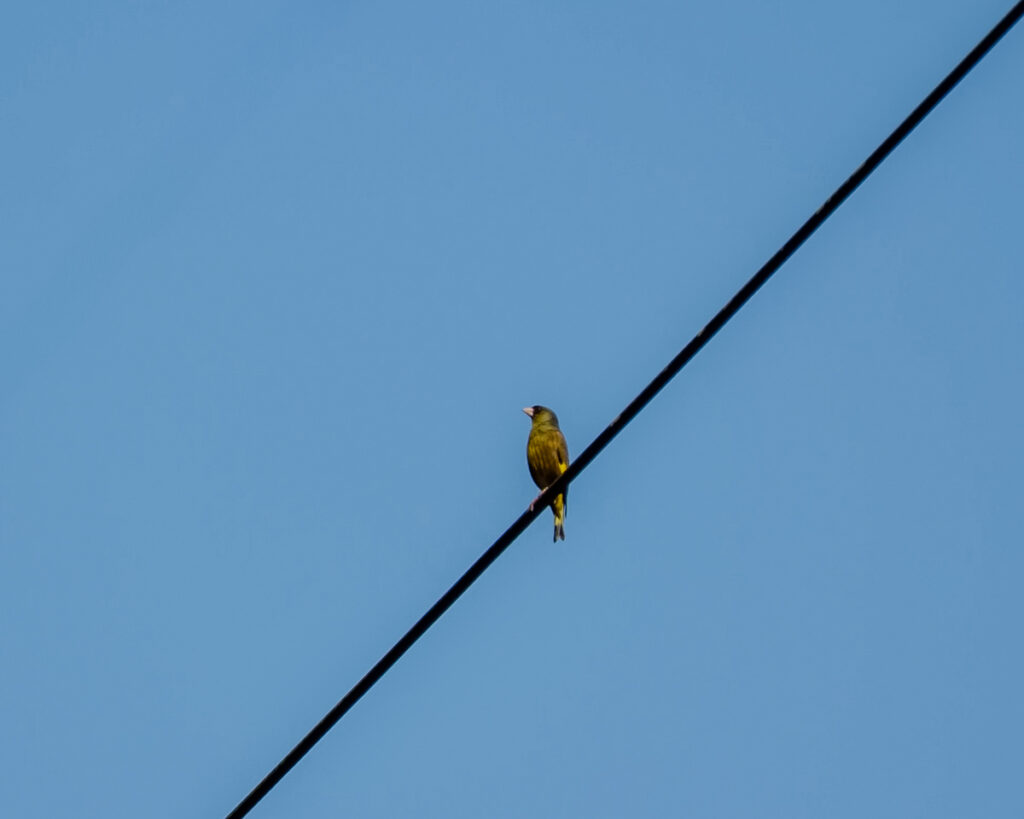
The oriental greenfinch, or kawarahiwa (カワラヒワ), is known for its thick, cone-shaped bills, and is easily identified by its yellowish-green plumage.
Bull-headed Shrike
The bull-headed shrike, or mozu (モズ), is a small, gray bird of prey known for its hooked beak and aggressive hunting style. They are often seen perched in open areas, waiting to pounce on insects and small reptiles.
Meadow Bunting
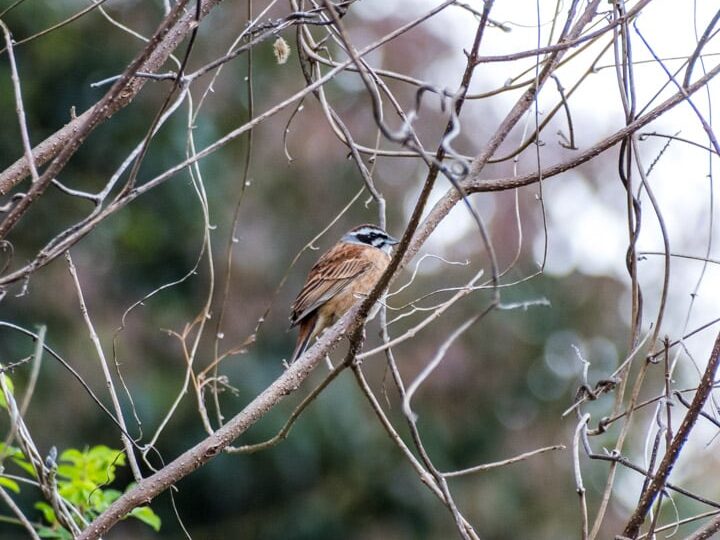
The meadow bunting, or hōjiro (ホウジロ), is a small, ground-dwelling bird that can be found in grasslands and fields. They are known for their sweet, high-pitched song and their tendency to stay close to the ground.
Barn Swallow
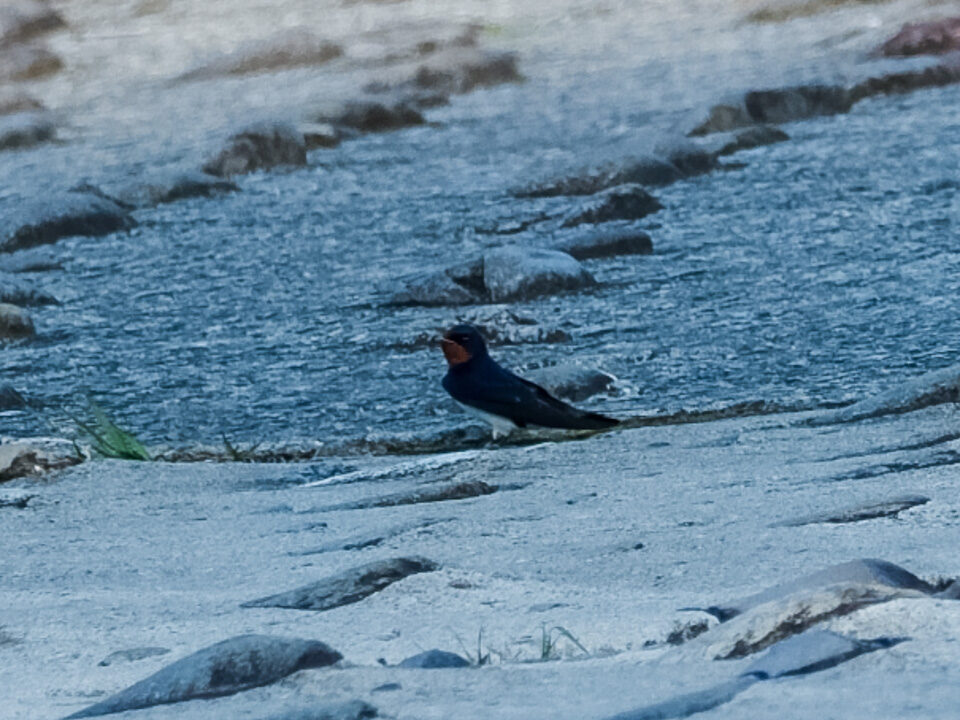
The barn swallow, or tsubame (ツバメ), is a slender, blue-black bird with a forked tail. They are a beloved symbol of summer and are often seen building their mud nests on the eaves of houses and buildings.
Japanese Wagtail
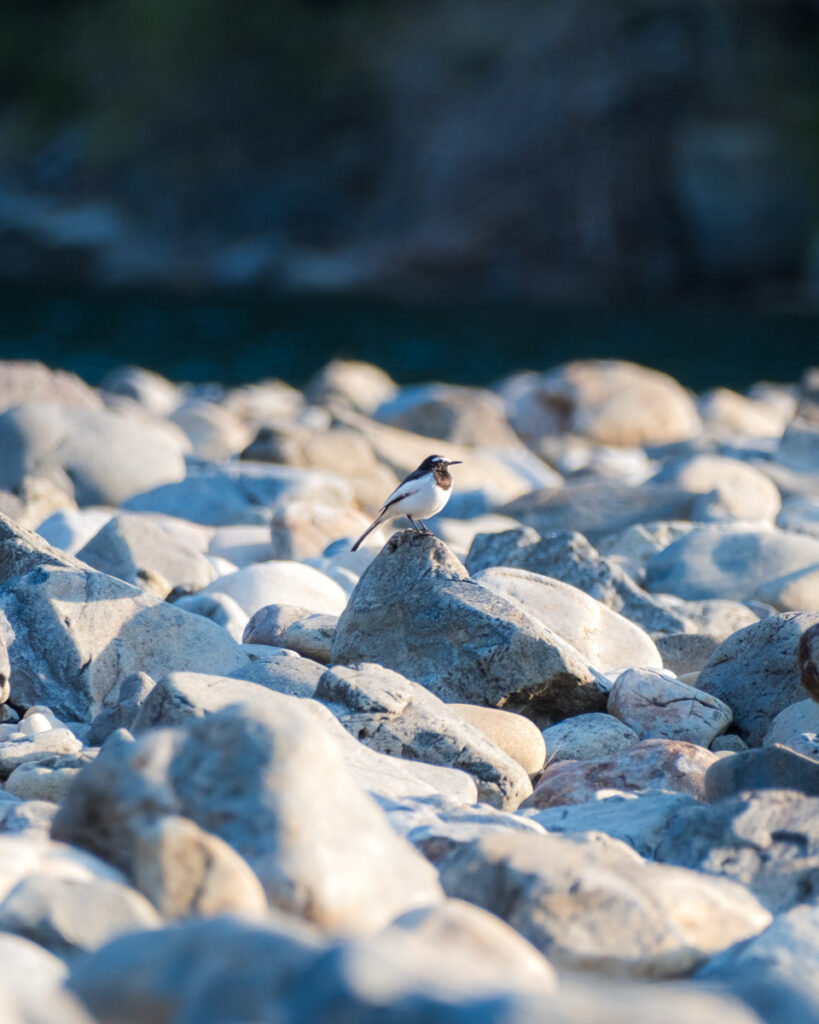
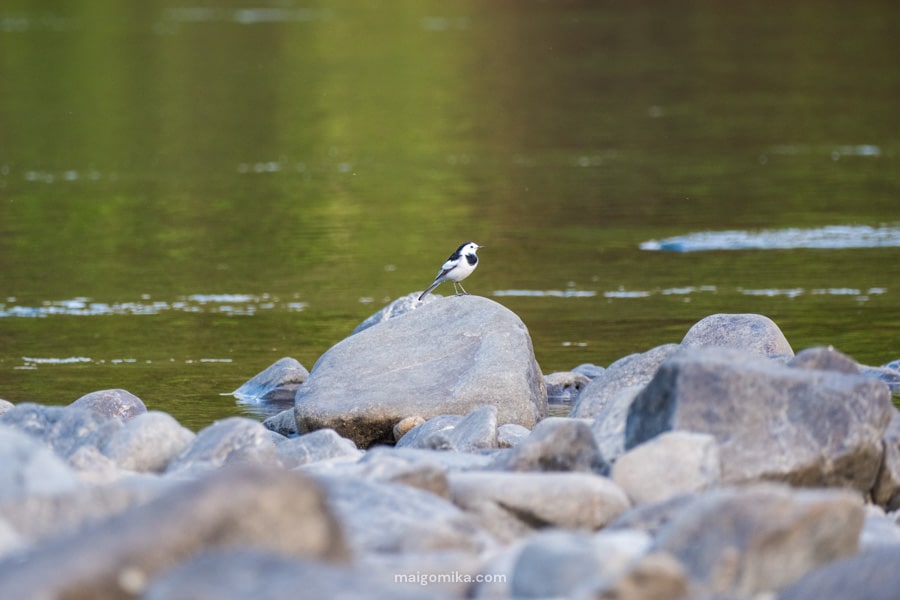
The Japanese wagtail, or segurosekirei (セグロセキレイ), is a black and white bird known for its constant tail-wagging motion. They are often found near rivers and streams, where they feed on insects.
Long-billed Plover
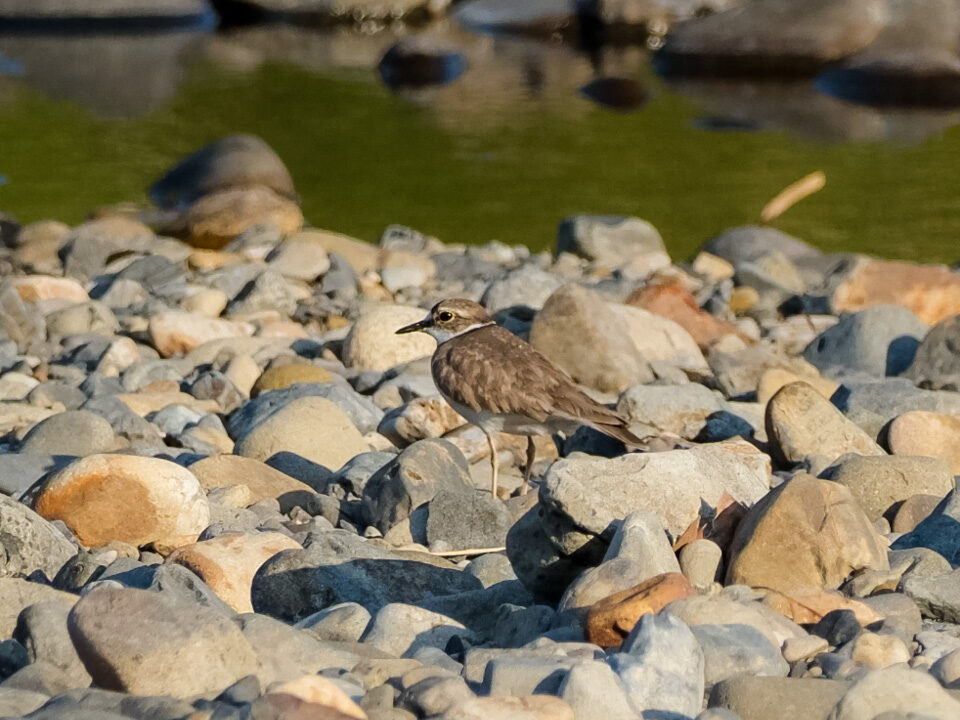
The long-billed plover, or ikaruchidori (イカルチドリ), is a small wading bird with a long, thin beak. They are typically found along riverbanks and gravel beds, where they use their long bills to probe for small aquatic invertebrates.
Grey Wagtail
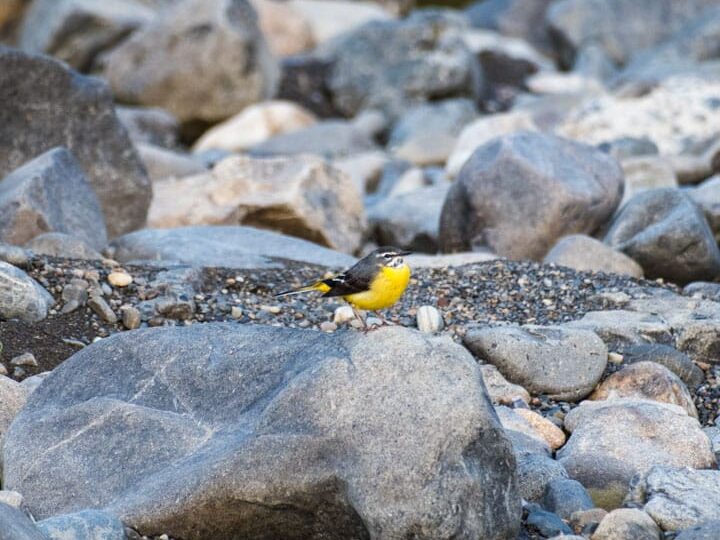
The grey wagtail, or kisekirei (キセキレイ), is a colorful bird with a vibrant yellow underside and a long, constantly bobbing tail. They are often seen near waterways and are easily identified by their striking plumage.
Living in the Japanese countryside means sharing our home with a wide variety of fascinating creatures. From the tiniest gecko to the most elusive flying squirrel, are a part of what makes life in Japan so unique. I can’t wait to see what new creatures I’ll be able to capture on film in the years to come!




My wife and I are looking to emigrate from the US as soon as finances can be freed up. Your articles makes it seem like this can be a reality, not just some pipe dream. Thank you very much! (Still not sure about the packs of “minkeys”)
Hi John, what exciting news! I hope you find the perfect location for the both of you! Just be aware of the monkeys 😉