Originally published Nov. 2025. Updated March 2026.
Our house is tiny. Just 82 square meters, with old beams and a pre-Showa feel. But buying it was anything but simple.
From first contacting the owner in November 2024 to finally getting the keys in October 2025, it took us a full year to buy this akiya in rural Japan.
But the delay wasn’t about negotiating the price. The real challenge was everything behind the scenes: inheritance transfer, unclear title, locating heirs, old mortgage records that still had to be cleared on paper, and local land rules that affected what we could and couldn’t buy.
This was also not a standard listed property purchase. We found this house through local word of mouth, not through a real estate listing or akiya bank website.
That meant we could access a house that likely would never have made it onto the open market. But it also meant we were taking on the legal uncertainty, extra paperwork, and risk that akiya bank platforms and agents often resolve before a property is publicly listed.
So this article is for people who are wondering what it actually looks like to buy an off-market akiya in Japan — especially one with messy paperwork. I’ll walk through the process step by step, what it cost us, where the delays happened, and who this path is realistically for… and who it probably isn’t for.
- Who This Path Is For
- Who This Path Is Not For
- Our Meiji-Era Time Capsule
- The Process at a Glance
- Our 1-Year Akiya Purchase Timeline
- Nov–Dec. 2024: The Local Edge and The Inheritance Riddle
- Feb–April 2025: The Scrivener, Heirs, and the First Mortgages
- June – Aug. 2025: The Agricultural Land Hurdle
- Sept – Oct. 2025: The Final Snags and Closing
- Why Did It Take a Year?
- What It Cost to Buy Our Akiya in Japan
- The Risks We Took On
- Why Some Akiya Never Make It Onto Listing Sites
- So, Is This Process Worth It?
Who This Path Is For
This will be most useful if you are:
- already living in Japan, or spending significant time here
- looking for akiya through local connections rather than only online listings
- considering a house that may not be “market ready” yet
- comfortable with uncertainty, waiting, and extra paperwork
- able to cash purchase, since financing can be difficult for this kind of property
- willing to renovate, sometimes heavily
Who This Path Is Not For
This path is probably not for you if you are:
- trying to buy a house in Japan entirely remotely from overseas
- looking for a simple, predictable transaction with clear timelines
- unwilling to take on legal uncertainty or upfront risk
- relying on mortgage financing for a low-cost rural property
- looking for a move-in-ready home with fully resolved title and land issues
If that sounds more like you, browsing established akiya platforms, akiya banks, or agent-supported listings may be a much better fit, because many of the title, inheritance, and land issues are usually sorted out before those homes are presented for sale.
Our Meiji-Era Time Capsule
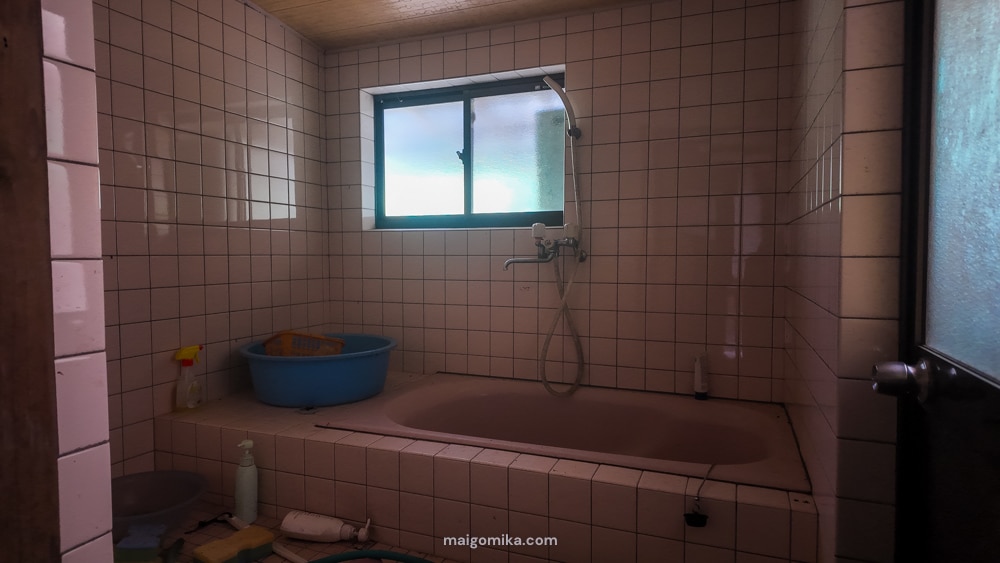
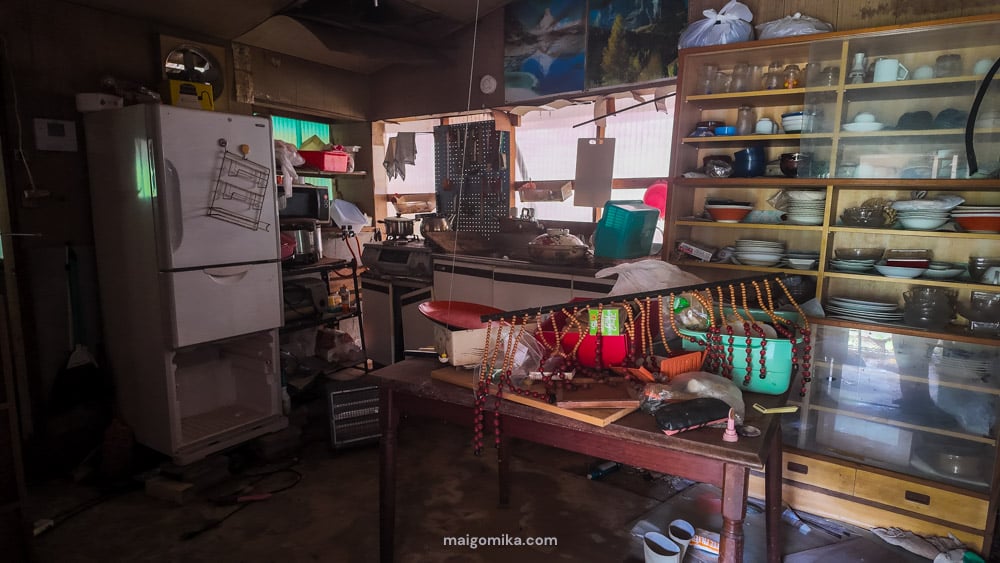
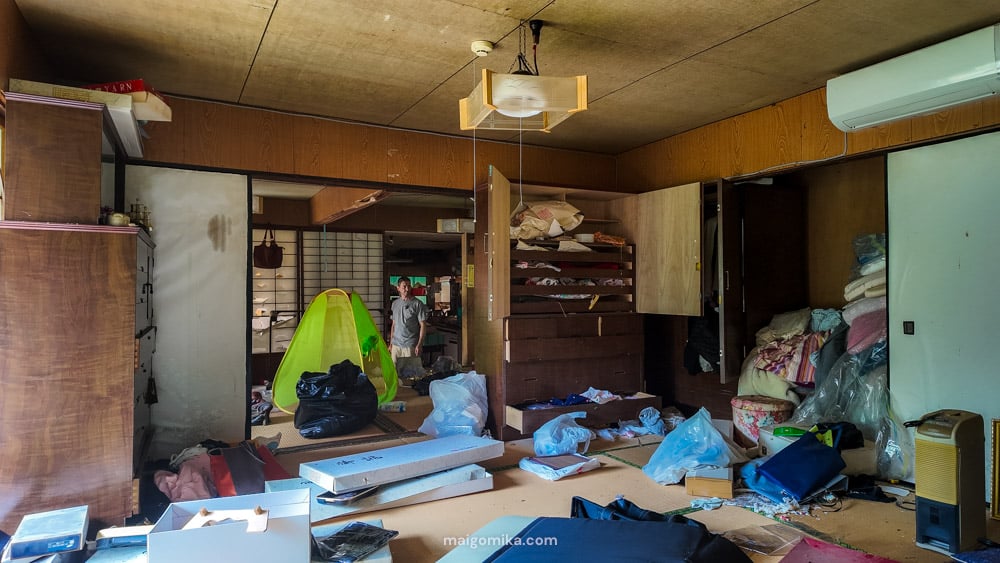
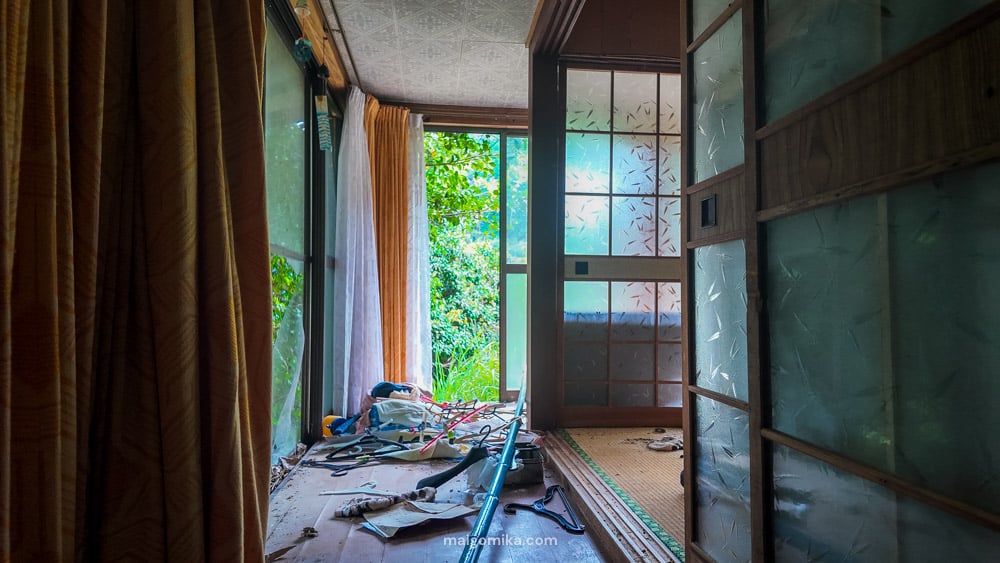
The house itself is small — 81 m² (around 870 sq. ft.) — with a later addition tacked onto the side. The purchase price was ¥500,000 for the house itself, plus some mixed-use and forestry land. Including legal and real estate fees, our total came to ¥1,300,000 (about $8,200 USD).
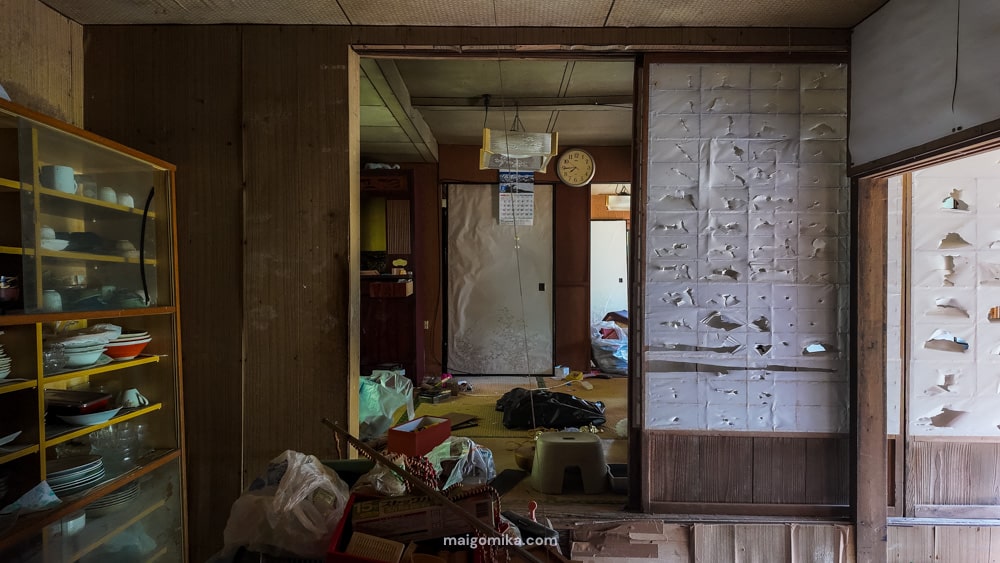
We don’t know the exact construction date, since detailed building records weren’t kept until the Showa era, but we learned that property taxes were being paid on this spot in 1868 — the year of the Meiji Restoration. In other words, we were buying a genuine piece of local history.
Read: The Shocking Reality Of Our First Year In An Akiya House (and How We Made It Better)
The Process at a Glance
Here are the main steps we went through:
- Hear about the house through local connections
- Meet the seller and confirm willingness to sell
- Visit City Hall and pull property records
- Discover that the title was still in the deceased parents’ names
- Hire a judicial scrivener to handle inheritance transfer and title work
- Locate heirs and obtain signatures/seals
- Investigate and clear old mortgage records
- Hire a real estate agent to formalize the sale
- Confirm what land could legally be sold to us
- Drop the agricultural land portion after the committee’s refusal
- Clear a second mortgage registration issue
- Finalize the contract and close
Our 1-Year Akiya Purchase Timeline
Below is the rough timeline of how the purchase unfolded, from first introduction to final closing.
| Date | Event | Details |
|---|---|---|
| Nov 2024 | Initial Discovery | House found via a friend-of-a-friend connection; our search ended after three years. Connected with the seller (owner’s daughter). |
| Nov/Dec 2024 | City Hall Visit | We pulled property records and discovered the major issue: the title was still in the deceased parents’ names. |
| Dec 2024 | Contact & Negotiation | We agreed on a price under 500,000 JPY. |
| Dec 2024 | Title Issue Identified | The title issue required Inheritance Transfer (Sōzoku) to consolidate the property claim before sale. |
| Feb 1, 2025 | Judicial Scrivener Hired | We hired a specialist to find all heirs and manage complex property registration. |
| Feb – Apr 2025 | Scrivener’s Investigation | The scrivener hunted down descendants and discovered the existence of unsettled mortgages. |
| Apr 9, 2025 | Inheritance Cleared | The scrivener found all heirs, and they signed paperwork, consolidating the title under the seller. |
| Early July 2025 | Real Estate Agent Hired | We brought on an agent to manage the formal sales process. |
| July 2025 | Agricultural Committee Inquiry | The agent began checks regarding the sale of surrounding agricultural land to us. |
| End of July 2025 | Bureaucratic Roadblock | The Agricultural Committee denied us the right to purchase agricultural land due to lack of full, permanent residency. |
| Aug 2025 | Decision Point | We decided to proceed with buying just the house and its non-agricultural plot. |
| Sept 2025 | Second Mortgage Scare | The scrivener discovered a second, previously settled mortgage that still required formal registration removal. |
| Sept – Oct 2025 | Final Due Diligence | The scrivener retrieved final documentation from the loan company to clear the remaining debt record. |
| October 2025 | Closing & Signed Paperwork | We cleared and finalized the title, signing the transaction after a full year. |
Nov–Dec. 2024: The Local Edge and The Inheritance Riddle
The process began with a piece of local knowledge. Our quest for an akiya finally ended in November 2024 when we were introduced to a house through a friend of a friend who knew the property’s family. This connection allowed us to bypass the anonymous real estate market and connect directly with the seller—the daughter of the deceased owners—via the LINE app.
After chatting on the phone, we set up a meeting at the house, where we talked about its history. I tentatively asked if she was willing to sell. To my surprise, she was not only willing but very accommodating and interested in the idea of us giving the place a new life.
In December 2024, we visited City Hall together to pull property records and land maps, and were given pink-highlighted sections showing exactly what her family owned.
It was here that we discovered our first major challenge: the title was still legally in the names of her long-deceased parents. In Japan, without a will, the property becomes a shared asset among all their descendants. The house was technically owned by a whole collection of estranged relatives—a common reason why so many akiya sit vacant.
Read about our akiya experience: What You Need to Know About Akiya Abandoned Homes in Japan
Before the seller could transfer the title to us, she first had to consolidate the entire claim under her name through a complex process called Inheritance Transfer (Sōzoku). It meant we had to find and obtain the official inkan (seal) of every living heir.
Feb–April 2025: The Scrivener, Heirs, and the First Mortgages
Knowing we needed expert help to solve the inheritance puzzle, we hired a Judicial Scrivener (司法書士、Shihō Shoshi) on February 1, 2025.
👉⚖️ What’s the Difference Between a Judicial Scrivener vs. an Administrative Scrivener?
Their job was to act as our legal detective: hunt down every single person with a legal claim and manage the delicate, complex business of transferring their rights by obtaining their official seals (inkan).
Using the property and tax records we provided, the scrivener tracked down all descendants. During this investigation (which spanned into early April 2025), the scrivener discovered another critical issue: unsettled mortgages taken out by the original owner.
He alerted us that before the title could be fully cleared, we needed to ensure these loans were either officially paid off or, if already settled, that the necessary payment registration was filed.
By April 9, 2025, the inheritance was successfully cleared, with all heirs located and having signed the necessary paperwork, allowing the title to be consolidated under the seller’s name.
June – Aug. 2025: The Agricultural Land Hurdle
With the inheritance finally sorted, we moved into the formal sales process by hiring a dual English/Japanese-speaking real estate agent in early July 2025.
The agent immediately encountered the next major bureaucratic hurdle: agricultural land regulations. In Japan, the rules for foreigners purchasing agricultural land vary widely by municipality, and this required a lengthy back-and-forth with the local Agricultural Committee.
After a month-long wait, we received the definitive news from the agricultural committee: we could not purchase the surrounding agricultural land because we were not permanent residents.
👉 Read more about the agricultural purchase regulations for foreigners.
This setback forced Jesse and I to pause and think, but ultimately, in August 2025, we decided to proceed with buying just the house and its non-agricultural plot.
🔑 A Quick Anecdote about the Power of the Introduction
The roadblock with the Agricultural Committee taught us an important lesson of rural life: Local support is the real currency.
When we hit this wall, our non-local real estate agent, despite his best efforts, struggled for six weeks just to get a definitive answer from the committee. The rules weren’t online, and he was calling from outside the region.
Months later, I simply mentioned this struggle to the resident who originally introduced us to the house. He made one quick call to a friend, who then called the committee. The very next day, I was sitting in the town hall, with the agricultural committee members passing out business cards, then showing us an interactive map of restrictions on an iPad. They even offered on-the-spot advice on designating new plots and converting some agricultural land to mixed-use.
The takeaway is, have a local vouch for you (if you can). The bureaucratic doors that remain locked to even the most qualified outsider can be unlocked instantly by a single, trusted community introduction.
Read more if you are interested in inaka country life in Japan: Is Inaka Life For You? Here Are 7 Truths To Consider Before Making The Big Leap
Sept – Oct. 2025: The Final Snags and Closing
Just as the paperwork seemed complete, another issue arose in September 2025. While preparing the final documentation, the real estate agent contacted the judicial scrivener only to discover that the scrivener had missed a second settled mortgage that still required formal registration to clear the title.
This triggered another month-long delay as the scrivener worked to obtain the necessary details from the mortgage lender.
Once this final due diligence was complete, the scrivener cleared the title, and the real estate agent finalized all contracts. Interestingly, we both shared the same real estate agent for the transaction, which is typically unusual in Japan. Finally, in October 2025, after a full year of legal and bureaucratic maneuvering, we signed the paperwork and became the official owners of our akiya.
Why Did It Take a Year?
The biggest misconception about buying a cheap akiya is that a low purchase price means a quick transaction. In our case, the opposite was true.
The main delays came from:
- Title not being in the seller’s name. The property was still legally in the deceased parents’ names, so inheritance transfer had to happen before any sale.
- Heirs needing to be identified and contacted. Without that, the seller could not legally transfer clear title.
- Old mortgages still existing on paper. Even if they had been paid off in practice, they still had to be formally cleared from the registration.
- Agricultural land restrictions. Part of what we thought we were buying turned out not to be legally available to us.
- The fact that this was off-market. There was no smooth agent-led pipeline; much of the process had to be figured out as we went.
What It Cost to Buy Our Akiya in Japan
The price of the house was ¥500,000, but by the time we added the legal work, title-related costs, agent fees, and the extra paperwork needed to clear the property for sale, our total came to ¥1,300,000.
Here’s a rough breakdown of where that money went:
| Item | Approximate Cost |
|---|---|
| Purchase price | ¥500,000 |
| Judicial scrivener fees | ¥ |
| Registration / title-related taxes | ¥ |
| Real estate agent fees | ¥ |
| Stamp tax | ¥ |
| Mortgage-clearing/document retrieval costs | ¥ |
| Other legal / administrative costs | ¥ |
| Total | ¥1,300,000 |
The Risks We Took On
One reason this path is not for everyone is that we were taking on real uncertainty from the start.
At different points, we did not know:
- whether all heirs would agree to sign
- whether old mortgage records could be cleared smoothly
- whether the seller might change her mind
- whether the land attached to the house could legally be sold to us as planned
- whether the money we were spending upfront would actually lead to a completed purchase
That’s one of the biggest differences between an off-market akiya and a more conventional listing: you may need to spend money on legal work, document retrieval, and professional help before you have any guarantee the sale will go through.
Why Some Akiya Never Make It Onto Listing Sites
One thing this experience taught us is that many akiya do not stay off the market because no one wants them. Sometimes they stay off the market because the paperwork is simply too troublesome.
A house may never get listed because:
- the title is still in a deceased relative’s name
- heirs have not been identified or contacted
- land boundaries or land categories are unclear
- an old mortgage record still needs to be cleared
- the family assumes there is no buyer anyway
- the process feels too mendokusai to start
That is why local connections can sometimes uncover houses that never appear online. But it is also why those houses often come with hidden legal and administrative work.
So, Is This Process Worth It?
For us, yes. This house was worth the wait, the paperwork, and the uncertainty.
But this is a very specific way to buy an akiya in Japan: through local connections, before the legal and administrative mess has been cleared up for sale.
That path can open doors to houses that never appear online. But it also asks much more of you: patience, local relationships, flexibility, cash, tolerance for uncertainty, and a willingness to deal with bureaucracy that may take months to untangle.
If that sounds like you, it may be worth exploring. If not, you may be much better served by starting with agent-supported or already-listed akiya properties, where much of this work has already been done.




After reading all the steps that you both went through helped better understand why so many houses are abandoned. I am really curious if the deep cleaning services allowed you to video the process. Also if you thinking of making the renovation of the bathroom to more western standards (shower, toilet, sink all in your room)?
What is the total land size? Thanks for the videos! We are a retired couple following your channel from Florida. Would love to have a little house in Japan, but unfortunately at this moment there aren’t visas that would work for us.
Hi Maria, thank you for your questions! I am glad to hear the article helped explain some of the complicated reasons for the abandoned houses situation in Japan. Indeed, there is a lot to do if you plan on purchasing an akiya, and the few reasons I outline is just a glimpse into some of the challenges one can encounter. As for your questions:
-We haven’t hired a cleaning service yet so have had no opportunity to film.
-We would like to adhere to Japanese bathroom standards (separate toilet and bathroom) for our house. We like the traditional system, though will include some modern amenities to make it as comfortable as possible!
-The total land size is roughly 2500 square meters.
So exciting! Congratulations!
Thanks for sharing your journey.
Looking forward to future episodes.
But take care and don’t get any injuries in the process of cleaning up etc.
Stay safe!
Hi Victoria, and thank you for your kind words! We will be sure to take care of ourselves while we embark on this work — we certainly don’t want to delay in the work!
You’re doing a great service to the foreigners whose eyes bug out and imaginations run wild when they read about the “low prices” for akiya. As a long time (permanent) resident of Japan who owns property here, I have often tried to explain how much these “cheap” houses end up costing, how difficult the purchase will likely be, and what you’ll actually be buying once all is said and done. The truth is that there is always a very good reason (or a multitude of them!) for why these properties are empty and priced as they are.
From now on, I’m just going to link your blog instead of trying to list up all the things that foreigners don’t understand about buying property—and properties themselves—in Japan!
Hi Aaron, thank you so much for the comment! You’re absolutely right—it’s so easy to get swept up in those ‘dream prices’ and miss the reality of the fine print. Since you’ve been through the process yourself, you know that the sticker price is often just the beginning. I’m honoured that you’ll be sharing the blog; hopefully, I can keep pulling back the curtain on the realities of ownership while equipping people with the practical tools they actually need. Thanks for the support and for sharing your perspective!
I am so excited about your new home project!! How far do you have to travel between the house where you currently live and the new one? I’m impressed with how hard you both work, and I wish you could take your newly insulated current house with you! The road that your new place is on seems quiet, so that will be nice. Is there a stream nearby? Can’t wait to see the workshop. And the new plans.
I just spent almost a month in Japan, traveling around some of the southern islands and towns. Mine was a small group who was there to study with a fabulous textile artist who lives in Fujino.
Thanks for bringing us along on your journey! Best New Year’s Wishes!!
Thank you Robin for your comment! The house is not that far, so we will be able to go back and forth easily as we work on renovations. We will still use our rental, so our insulation work will not be in vain! We have a stream nearby, which will be very nice during the summer months. Sounds like you had a lovely month-long trip through Japan! Japan has so many wonderful textiles rich with a long of history and tradition, so I can imagine there was a lot to learn from your Fujino artist!
I lived in Eastern Kochi for the last couple of years, so finding your channel was really fun. I thought, “wow, this looks so familiar and nostalgic!” then saw your Umaji video! Amazing.
Eastern Kochi is such a beautiful corner of the world! Glad the videos could bring back a bit of that nostalgia for you. 😆