Originally published December 2019 · Updated for 2026
My love affair with Kurokawa Onsen (黒川温泉) began in 2016, during our first trip to Japan.
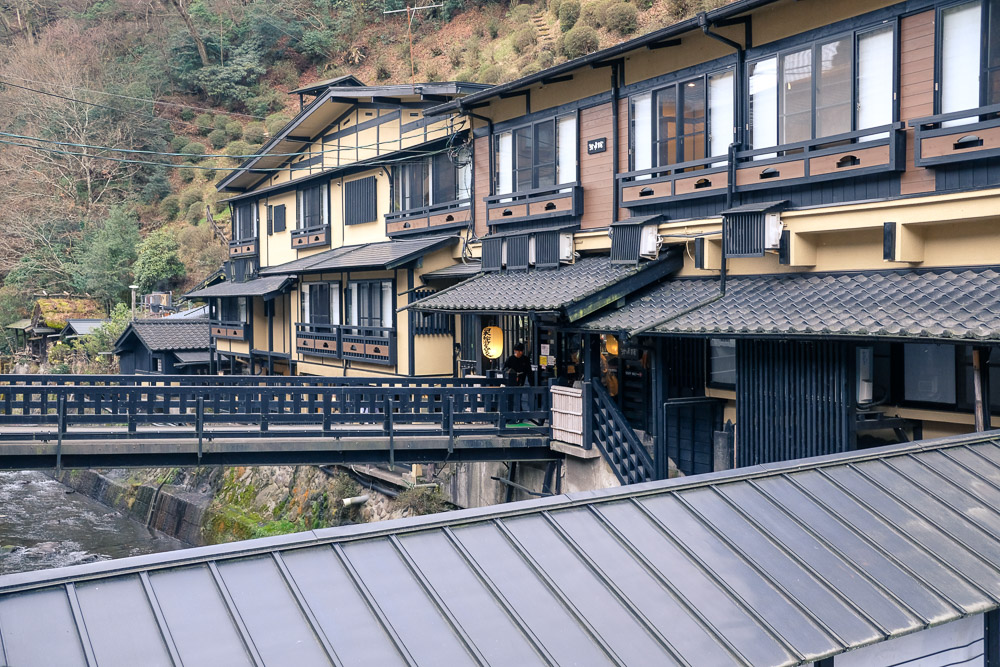
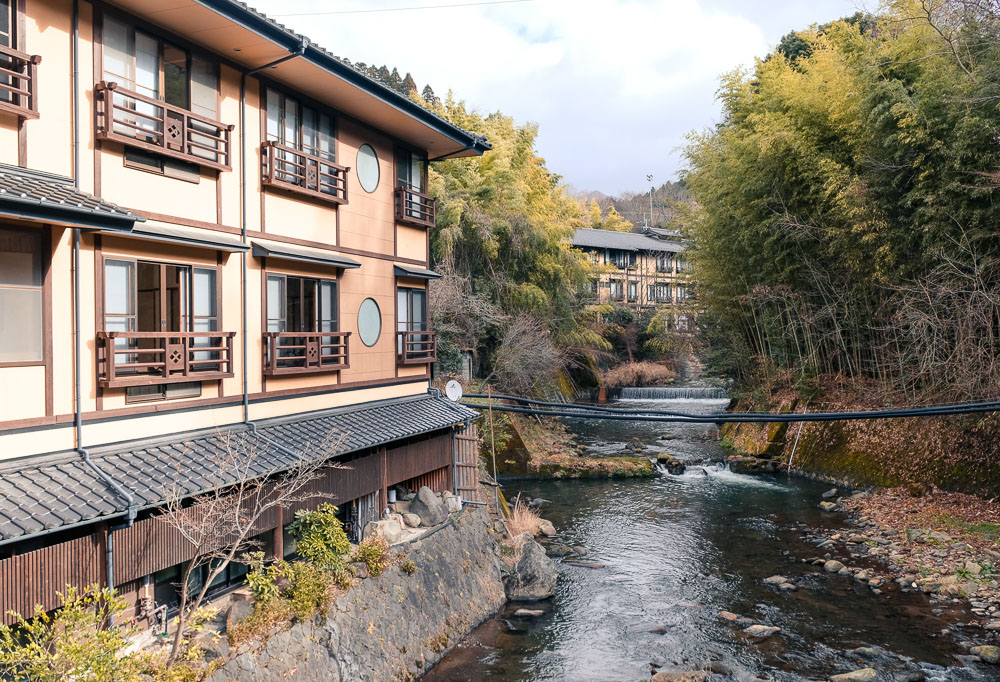
We were traveling without a strict plan, flipping through a guidebook on a whim, when the small mountain onsen town of Kurokawa in Kumamoto Prefecture caught our attention. Curious, we decided to go. As our bus wound through quiet forest roads, a narrow valley opened up to reveal a riverside town of traditional ryokan, with steam drifting softly into the air.
At the time, we didn’t realize this was one of Japan’s famous onsen towns — or that this accidental visit would quietly set the standard for every ryokan stay that followed. Three years later, when choosing where to spend our second Christmas living in Japan, Kurokawa Onsen was an easy choice.
- What Is Kurokawa Onsen?
- Why Does Kurokawa Onsen Feel Different From Other Onsen Towns?
- Our Stay at Yamabiko Ryokan
- Our Japanese Kaiseki Dinner (and a Moment of Recognition)
- Kurokawa Onsen Winter Illuminations
- Best Things to Do in Kurokawa Onsen
- When is the Best Time to Visit Kurokawa Onsen?
- Conclusion: Farewell to Our Winter Wonderland
- Planning Your Visit to Kurokawa Onsen
- How to Get to Kurokawa Onsen
- Kurokawa Onsen FAQ
What Is Kurokawa Onsen?
Kurokawa Onsen is a small hot spring town in Kumamoto Prefecture, Kyushu, known for its preserved traditional ryokan, walkable village layout, and onsen-hopping culture using the nyūtō tegata bathing pass. Unlike large resort onsen towns, Kurokawa emphasizes quiet immersion in nature, seasonal scenery, and slow travel.
Why Does Kurokawa Onsen Feel Different From Other Onsen Towns?
- Walkable village built around a river valley
- Onsen-hopping culture encouraged via nyūtō tegata
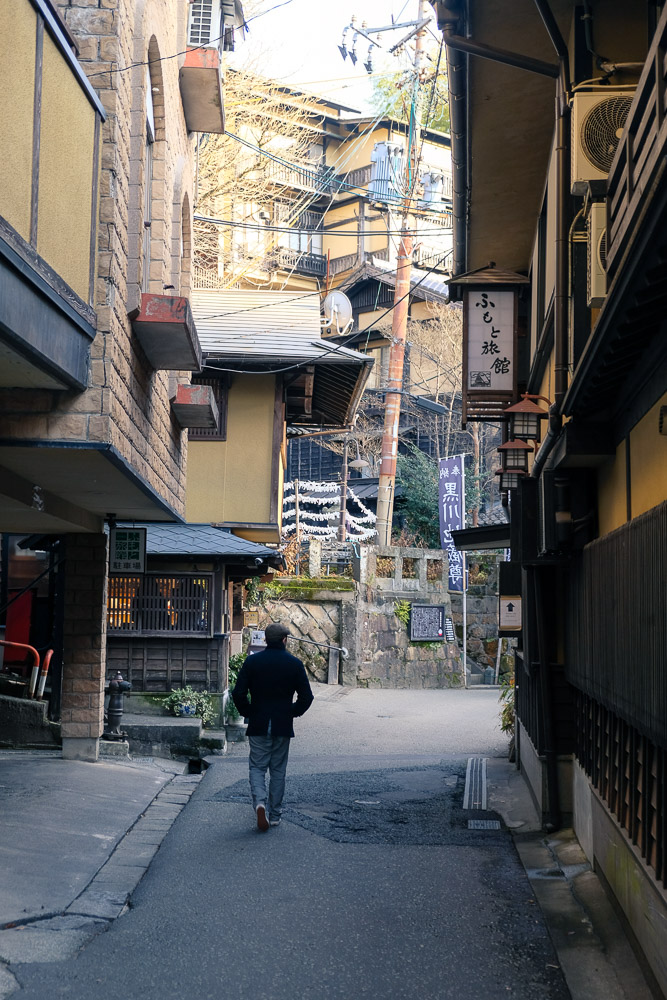
- Minimal signage and low visual clutter
- Strong cooperation among independent ryokan owners
- Designed to feel like one cohesive village rather than a resort complex
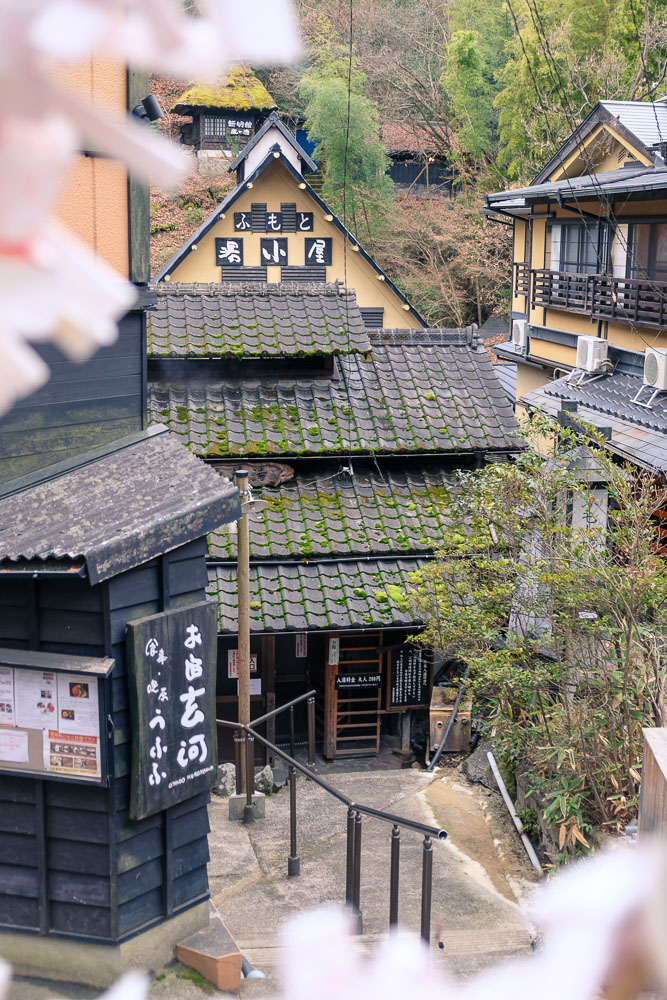
Kurokawa Onsen’s history dates back to the Edo period (1603–1868), when it served travelers and locals as a place to soak after long days of work and travel. Its remote setting meant Kurokawa developed slowly, helping preserve the traditional atmosphere you can see today.
However, like many rural destinations in Japan, Kurokawa faced threats from rapid postwar modernization during the mid-to-late 20th century, including over-concrete development and commercialization.
Rather than let the village’s character be threatened, the ryokan owners banded together and agreed on a shared vision of preservation.
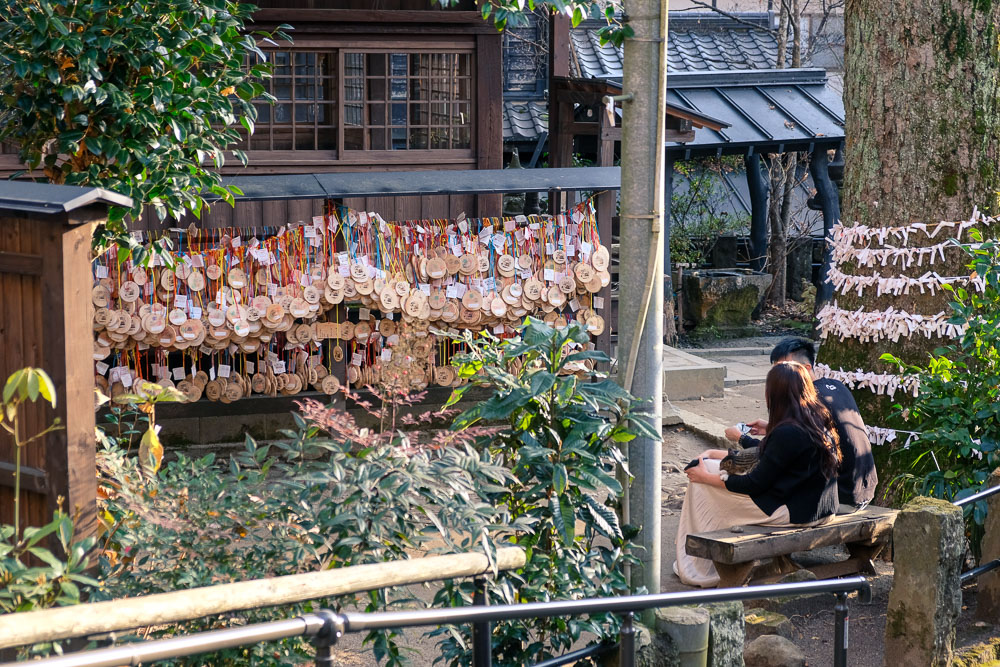
Buildings followed traditional design guidelines, signage was kept subtle, and the village retained a unified, timeless aesthetic. They also created the famous nyūtō tegata (wooden bathing pass). Instead of encouraging guests to stay “sealed” inside one ryokan, the pass invites visitors to experience multiple inns and baths across the village.
Our Stay at Yamabiko Ryokan
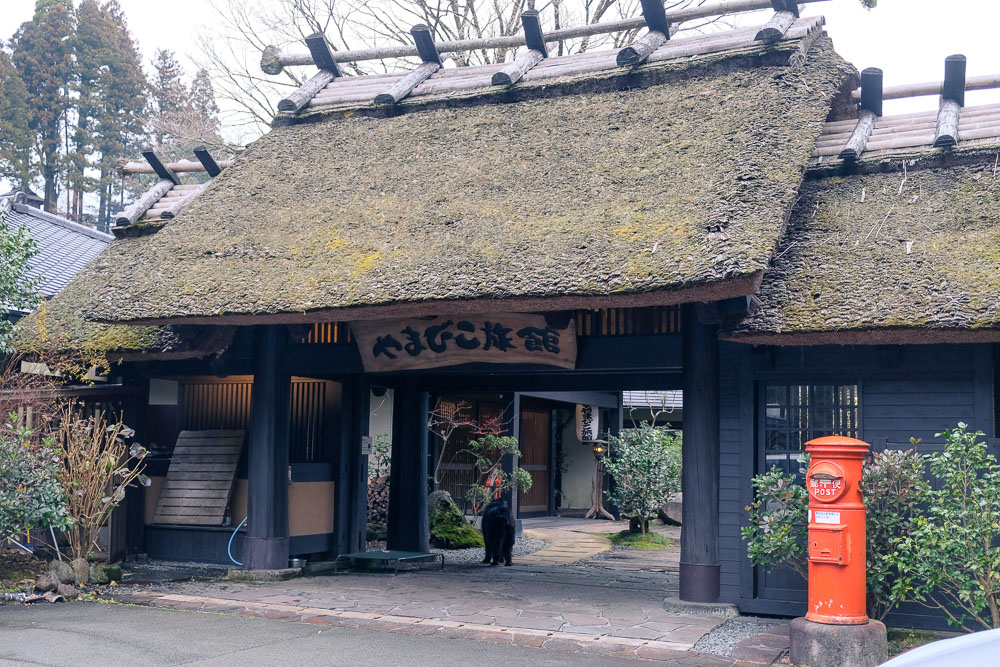
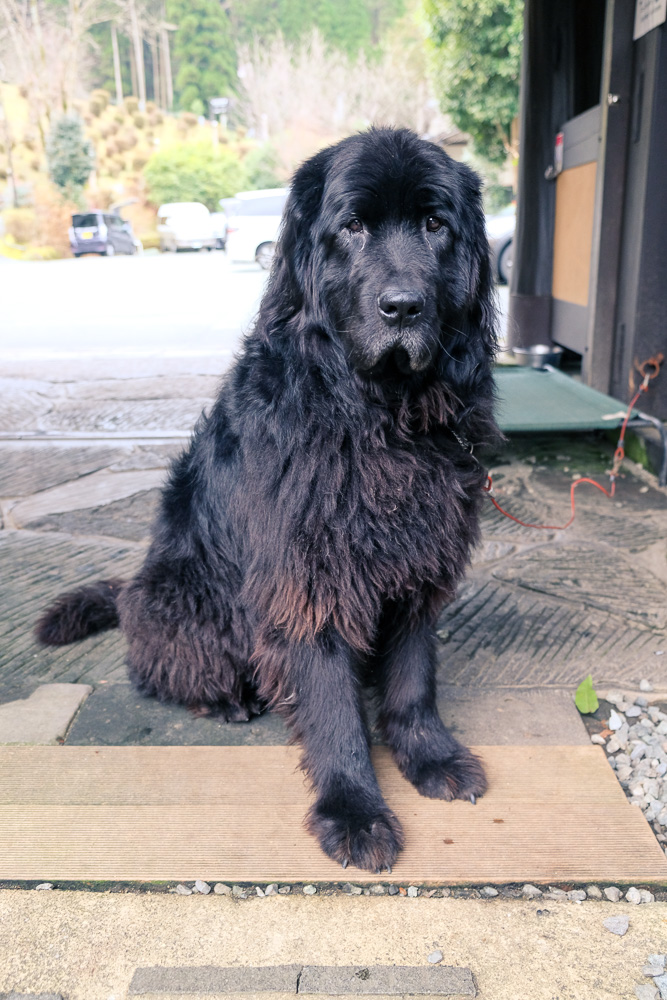
After arriving by bus, we took a short walk to Yamabiko Ryokan, our home for the next two nights. Waiting out front was Ume-chan, the inn’s resident dog, greeting arriving guests.
What we remembered most from our first visit — and were happy to confirm again — was Yamabiko’s six private onsen baths reserved for overnight guests. And so, after our long journey, we checked in, dropped our bags, slipped into yukata, and headed straight downstairs.
Yamabiko Ryokan Private Baths (All Guest-Only)
While Yamabiko also has large gender-segregated public baths, we gravitated toward the kashikiri-buro (貸切風呂) — private or family baths — which are not part of the onsen-hopping system. One of the best perks of staying at Yamabiko Ryokan is access to six private onsen baths — no reservations needed. We took a quick look at the illuminated bath availability signs to see which were free, then slipped in.
The 6 Private Baths at Yamabiko
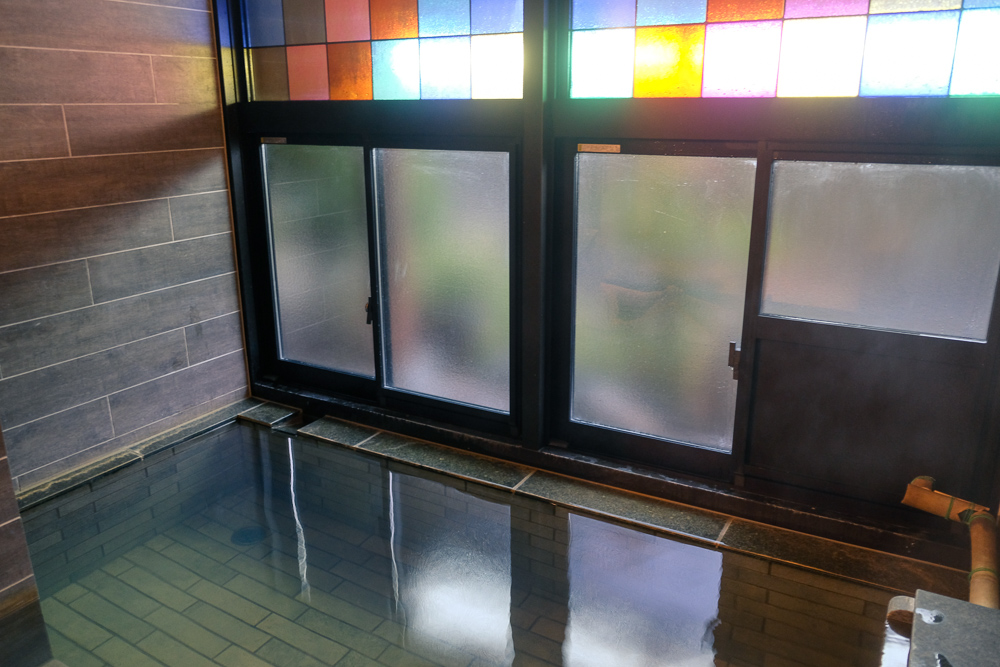
The “Romantic Bath”
Retro stained-glass mosaic with a charming Taishō-era (1912-1926, known as Japan’s “Jazz Age”) vibe.
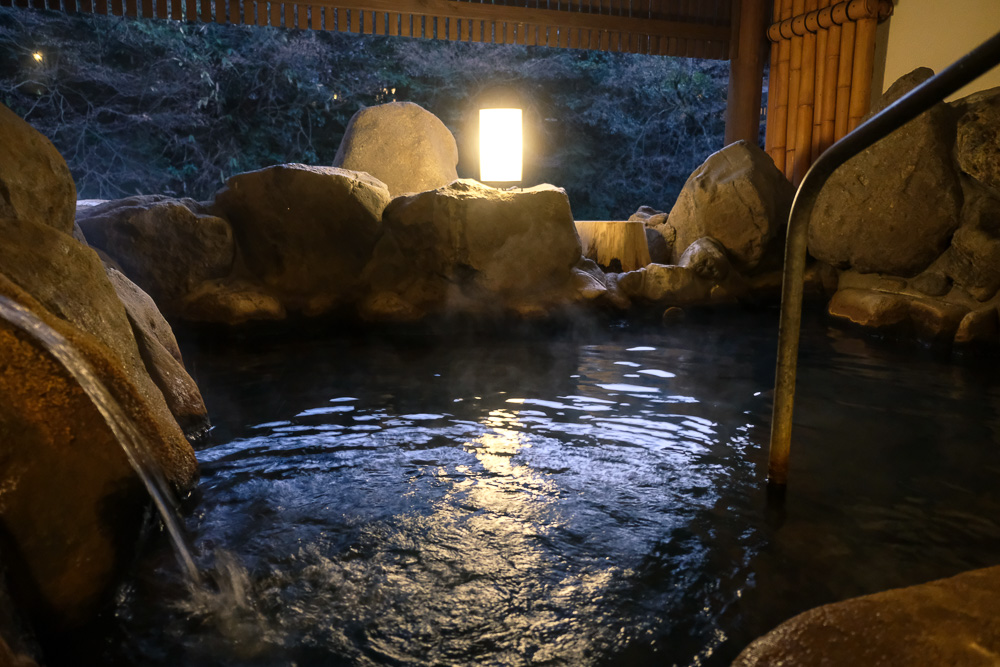
Rock Bath
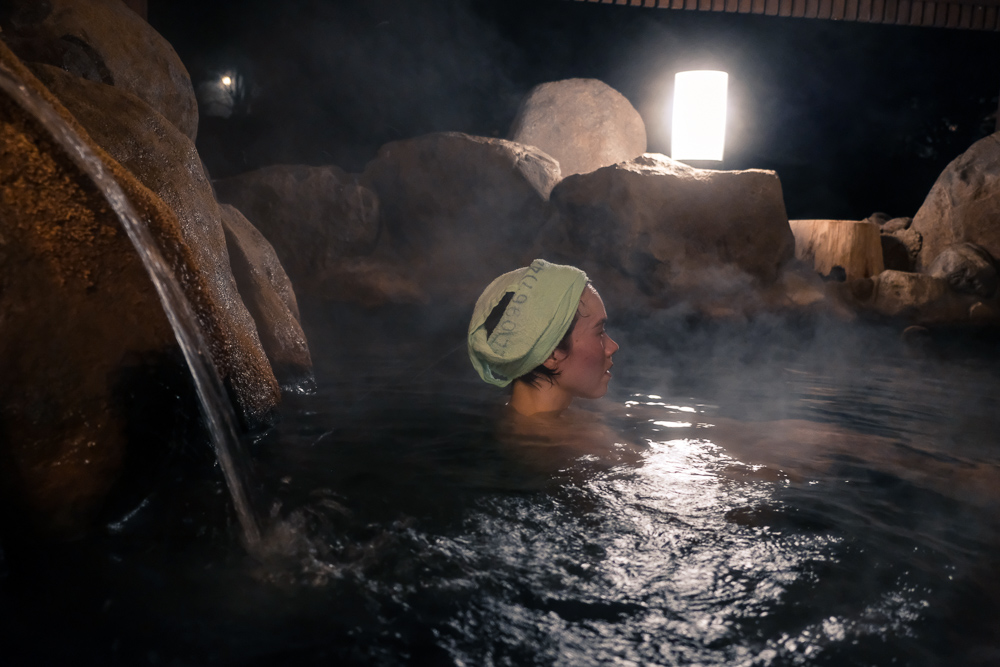
Moody and atmospheric—especially gorgeous at night, feeling like you’re bathing in the heart of the mountain. 🪨
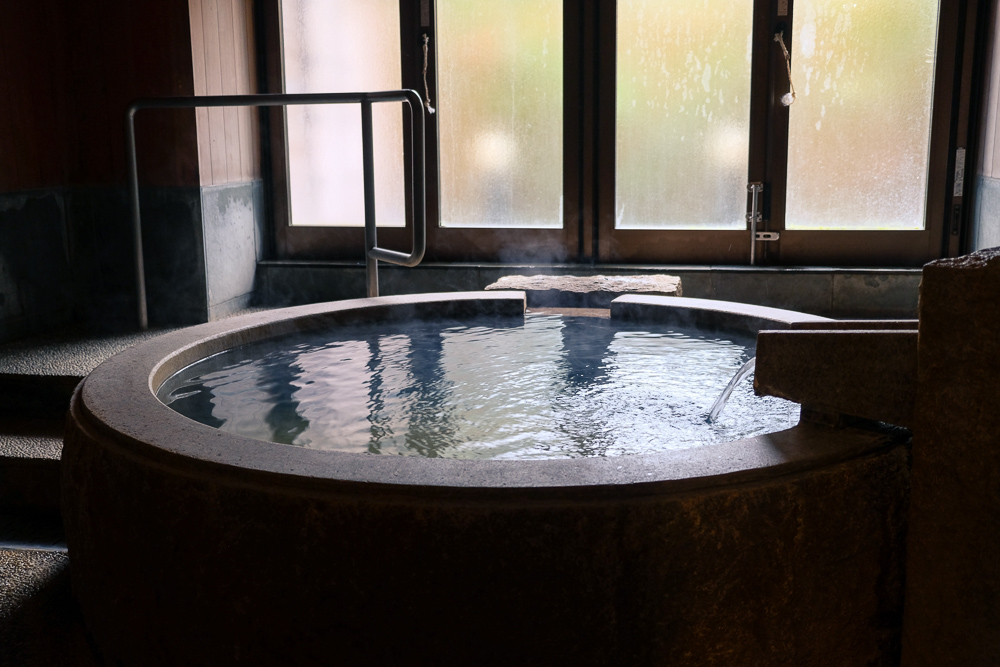
Hollow Bath
A bath I remembered from our first visit (though, unfortunately, it didn’t have the stone turtle statue once perched on the bath’s edge from our first visit). 🐢
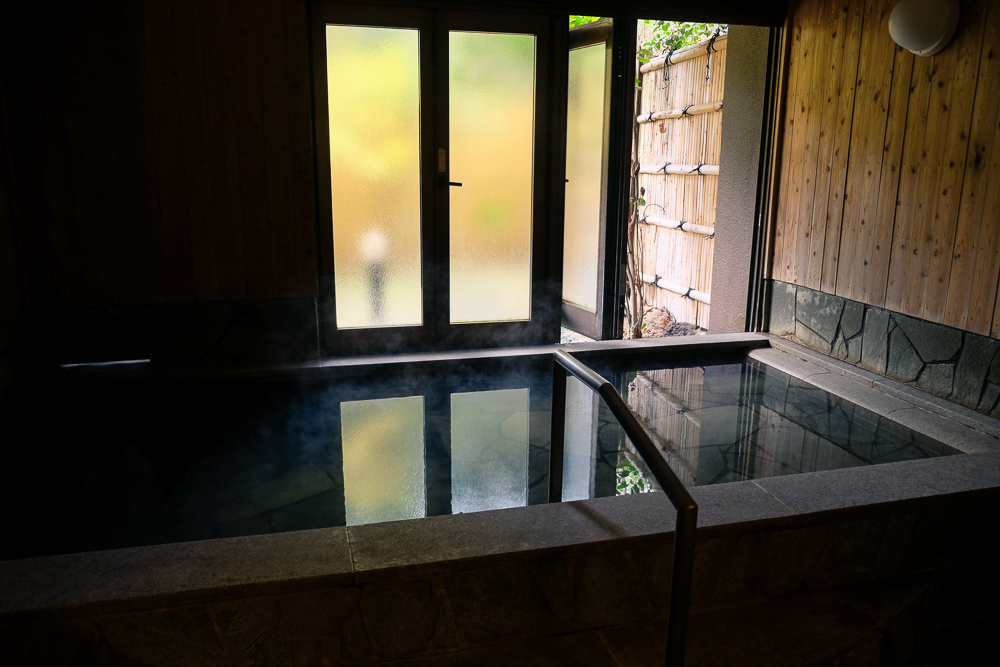
Sleeping Bath
Shallow, reclined layout — lovely if you want to lie horizontally for a gentle soak. 😴
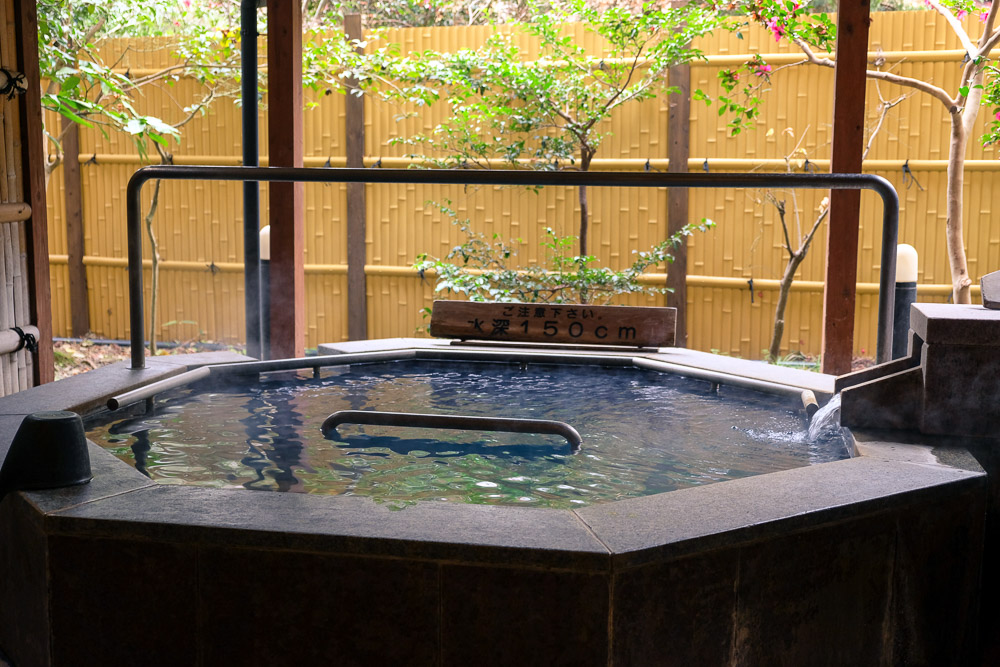
Standing Bath
At 150cm deep, it offers a unique, weightless full-body experience.🧍
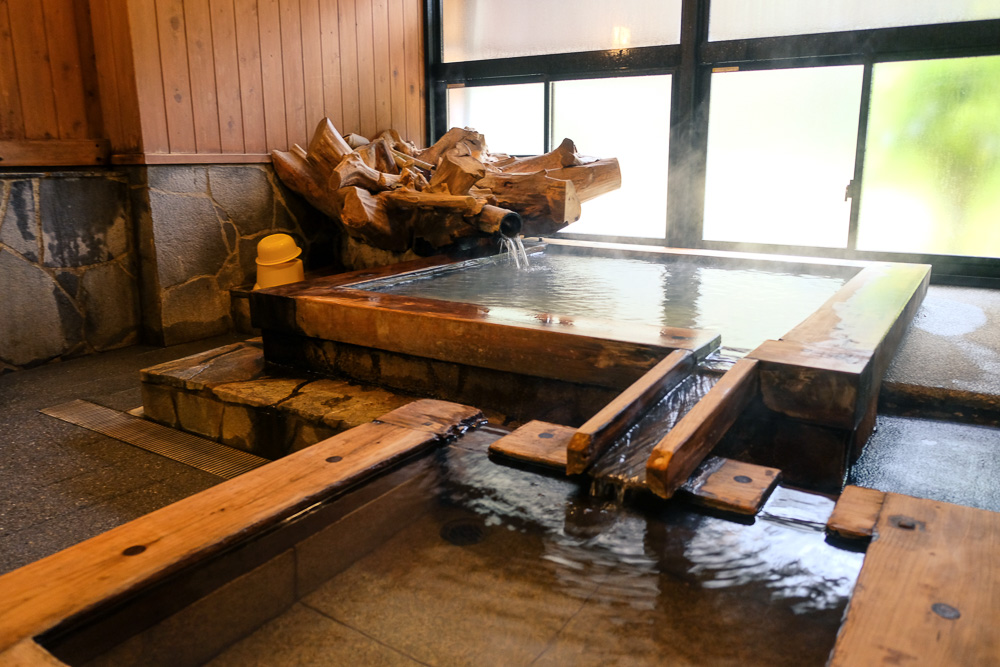
Hinoki Bath
Warm wood scents, a built-in bench, and river views. It’s the perfect balance of steaming water and crisp mountain air.
And my personal favorite. 🌲
Our Japanese Kaiseki Dinner (and a Moment of Recognition)
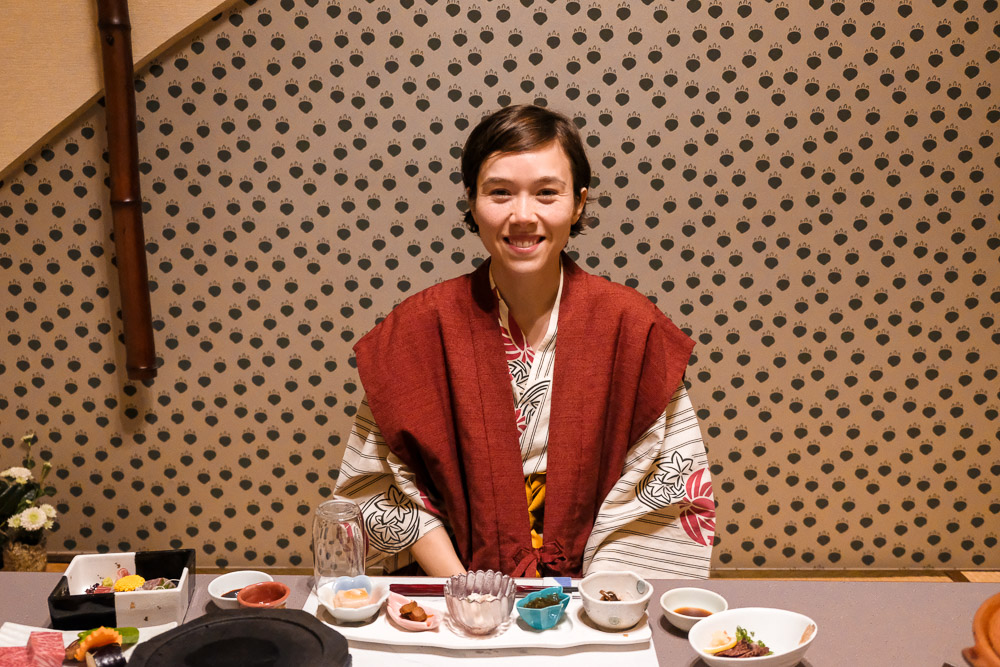
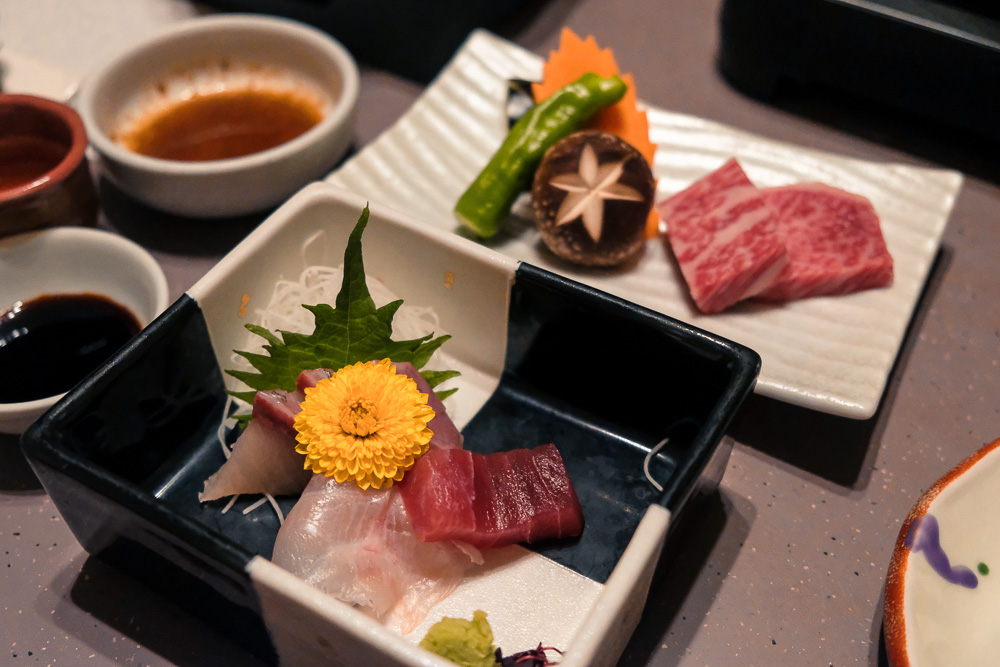
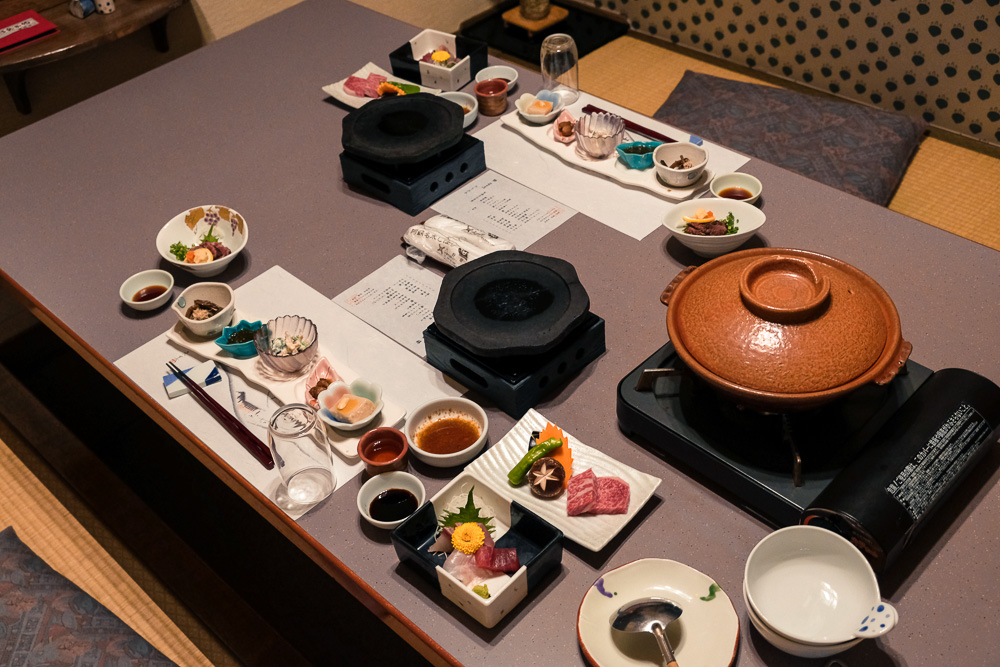
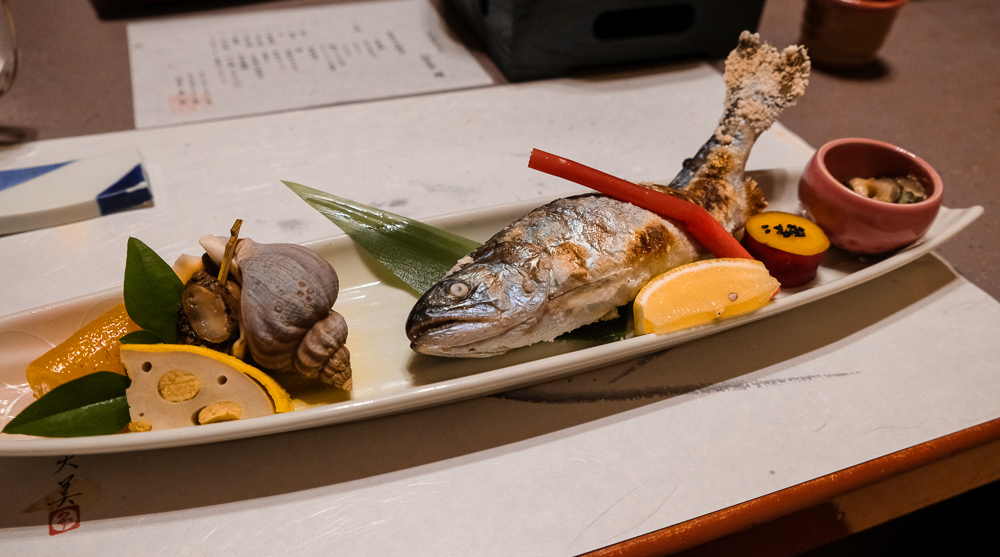
After an afternoon of soaking, we settled into our private dining area for a multi-course kaiseki meal. In Kumamoto, you are bound to see the local specialty: Basashi (horse meat). Dish after dish arrived like tiny works of art—sashimi, grilled fish, and seasonal vegetables.
Dish after dish arrived like tiny works of art — sashimi, grilled fish, seasonal vegetables — all bursting with fresh, local flavor. We were very grateful we hadn’t eaten lunch, because the portions were generous in the best way.
During the meal, our server paused and asked if this was our first time at Yamabiko. When we mentioned our visit years ago, his face lit up. “I thought so,” he said. “You looked familiar.” Whether it was true memory or just rural hospitality, it felt quietly special—the kind of recognition that only happens in places that move at a human pace.
Kurokawa Onsen Winter Illuminations
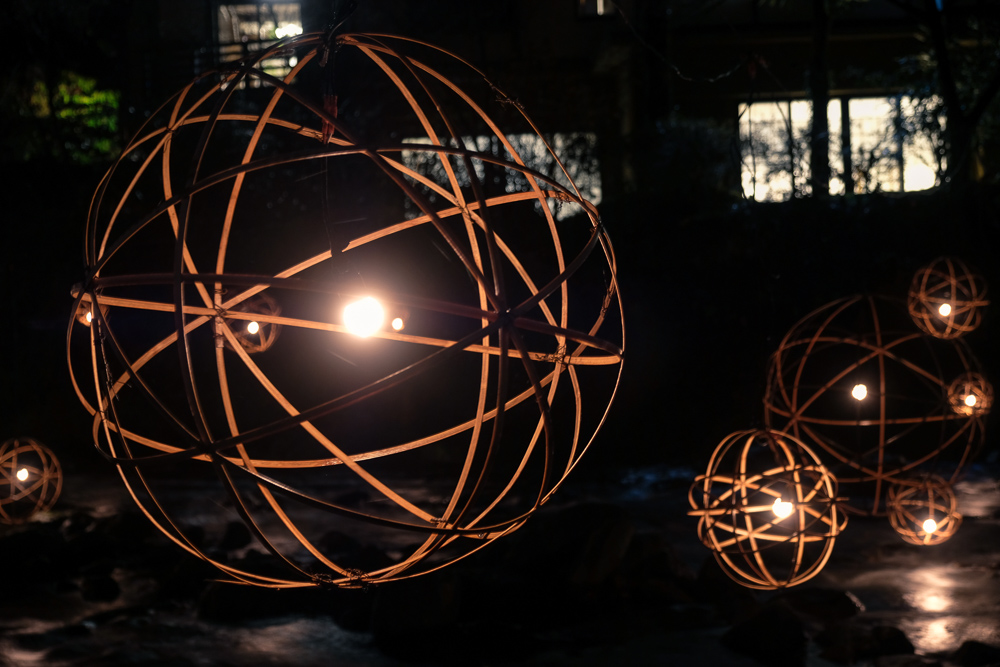
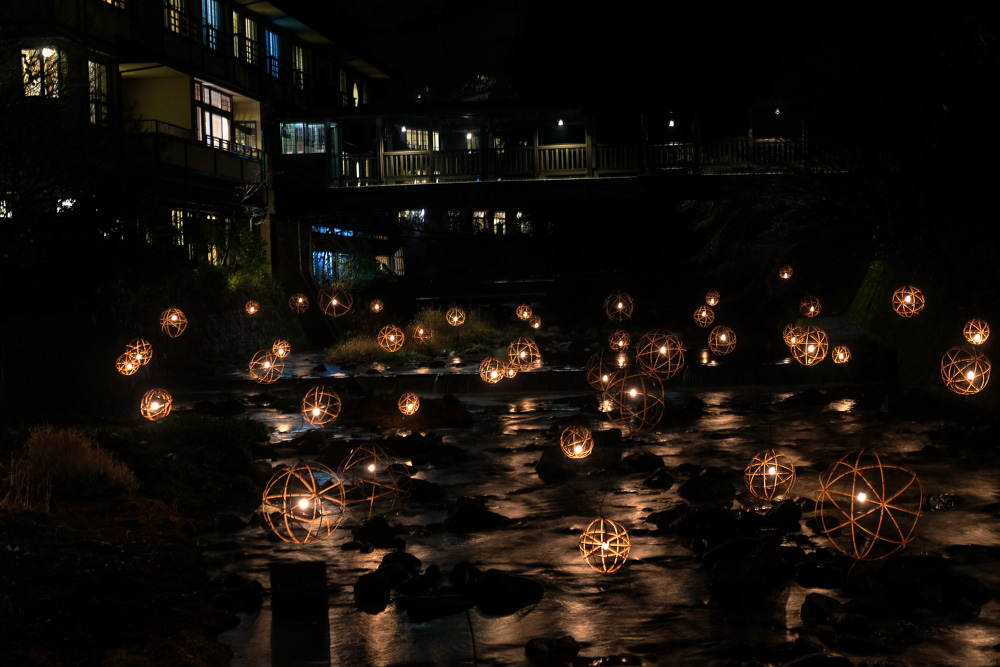
After dinner, we pulled on our coats and stepped into the cold night air. My mission: to capture the glow of Kurokawa Onsen Yu Akari Illumination.
A bonus of a winter visit is seeing the locally crafted bamboo lanterns decorating the main river running through the town. As dusk settled, the lanterns cast a soft, ethereal glow across the water and stone paths. It was worth braving the chill — one of those “this doesn’t feel real” winter moments.
Best Things to Do in Kurokawa Onsen
Kurokawa is one of those rare places where you don’t actually need a destination. It’s compact, wonderfully walkable, and built for slow wandering. I love strolling along the river, crossing the little stone bridges, and just taking in the traditional architecture.
If you’re planning a visit, here is how to make the most of it:
Onsen Hopping with the Nyūtō Tegata (Bathing Pass)
The nyūtō tegata (入湯手形)—Kurokawa’s signature cedar bathing pass—is a quintessential part of the Kurokawa experience. For ¥1,500, this wooden token lets you sample three different outdoor baths (rotenburo) from a selection of 24 participating ryokan. It’s a fantastic way to compare different mineral waters and forest views.
- How to Use: Just wear it around your neck like a local and present it at the front desk of any inn you want to try.
- Bath Hours: 8:30 AM – 9:00 PM
- Where to Buy: Available at the Visitor Center or any participating inn.
- Ready to wander? [Download the Kurokawa Onsen Map here]
Footbaths and Face Steamers
If you’re not quite ready for a full soak, keep an eye out for the free ashiyu (footbaths) tucked away in various corners of the village. I found a wonderful one near a public fireplace; my feet felt wonderfully warm, then wonderfully soggy, and it was exactly the kind of simple joy this place excels at.
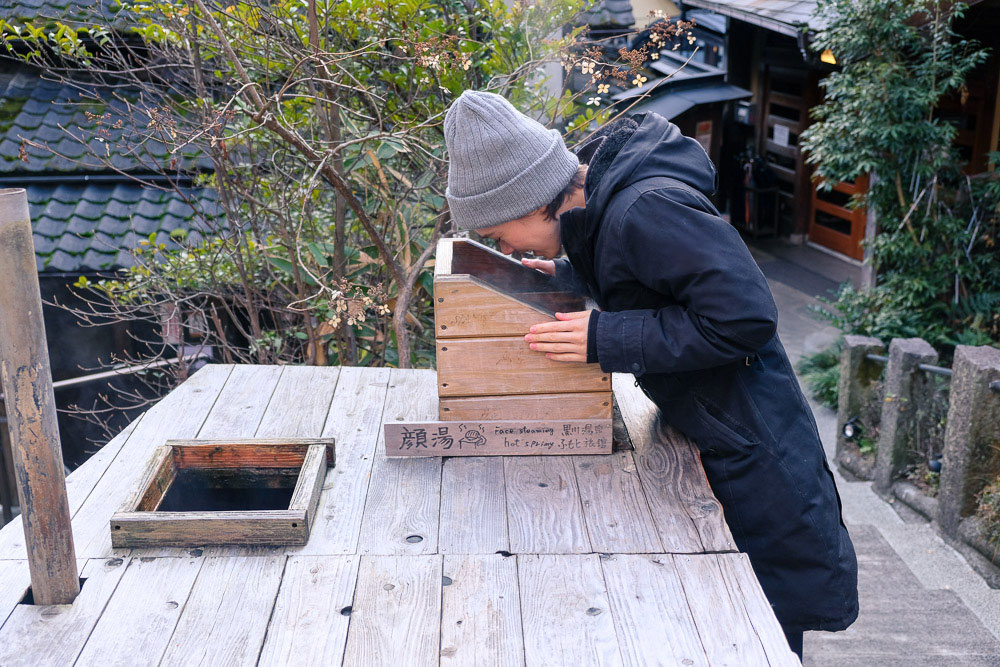
Don’t miss the natural face steamers either! They are essentially hot spring steam vents that give you a quick, on-the-go spa treatment. My skin felt amazing afterward.
Local Treats to Try in Kurokawa
Between baths, make sure to pop into the tiny shops lining the lanes. My top three must-tries are:
- Onsen Tamago: Eggs slow-cooked right in the hot spring water.
- Jersey Milk Soft-Serve: The region is famous for its cows, and this ice cream is ridiculously rich.
- Hand-Toasted Rice Crackers: There is nothing like a warm, crunchy senbei fresh off the stove.
Renting an Electric Bike in Kurokawa Onsen
If you want to see the rolling green hills surrounding the village, I highly recommend renting an electric bike (which, if you know me, is one of my favourite ways to explore Japan’s rural areas). You can rent them at the Kurokawa Onsen Tourist Association (look for the “Bechinkan” building in the center of town).
When is the Best Time to Visit Kurokawa Onsen?
The best time to visit Kurokawa Onsen is late autumn through winter (November to February), when cooler temperatures make outdoor hot spring bathing especially enjoyable. Autumn brings colorful foliage, while winter offers peak onsen atmosphere with steam rising into cold mountain air.
Soaking in an outdoor bath (rotenburo) while the air is cold is, in my opinion, the absolute peak of onsen culture. There’s nothing quite like slipping into steaming water while the winter air bites your cheeks.
Conclusion: Farewell to Our Winter Wonderland
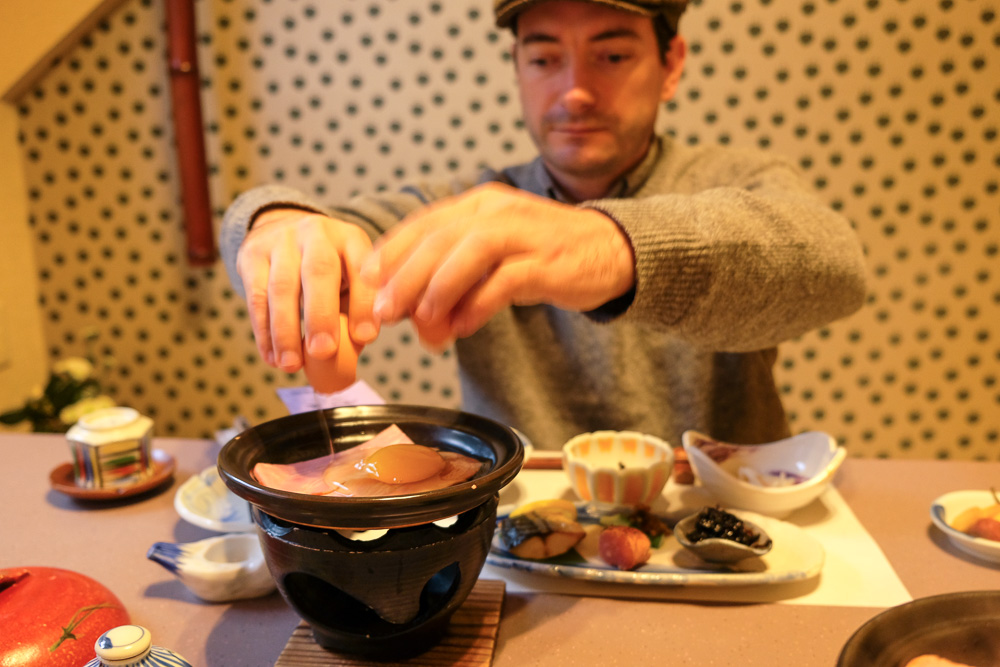
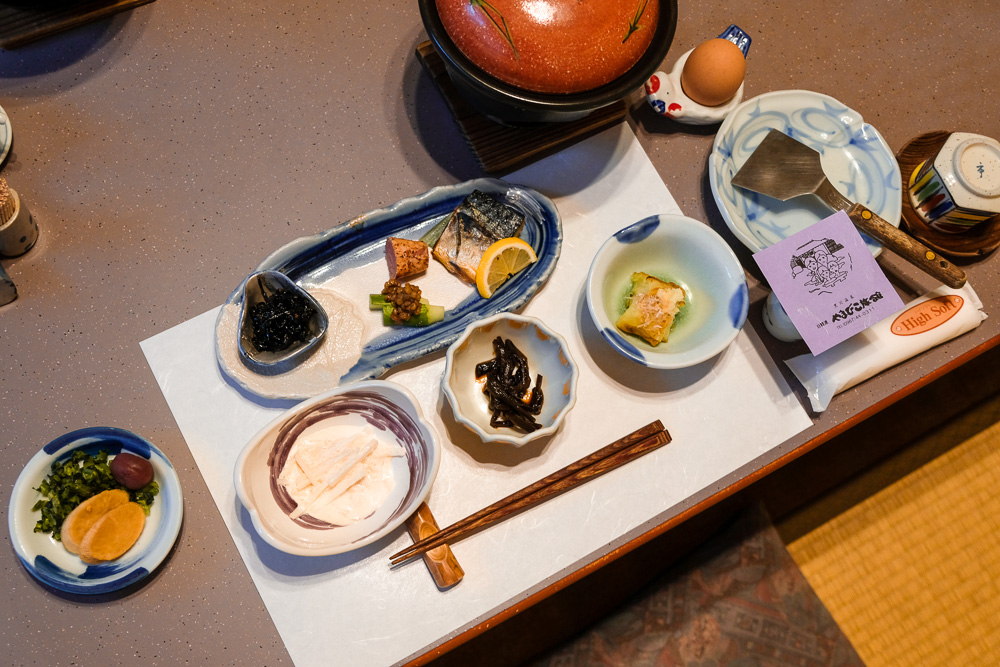
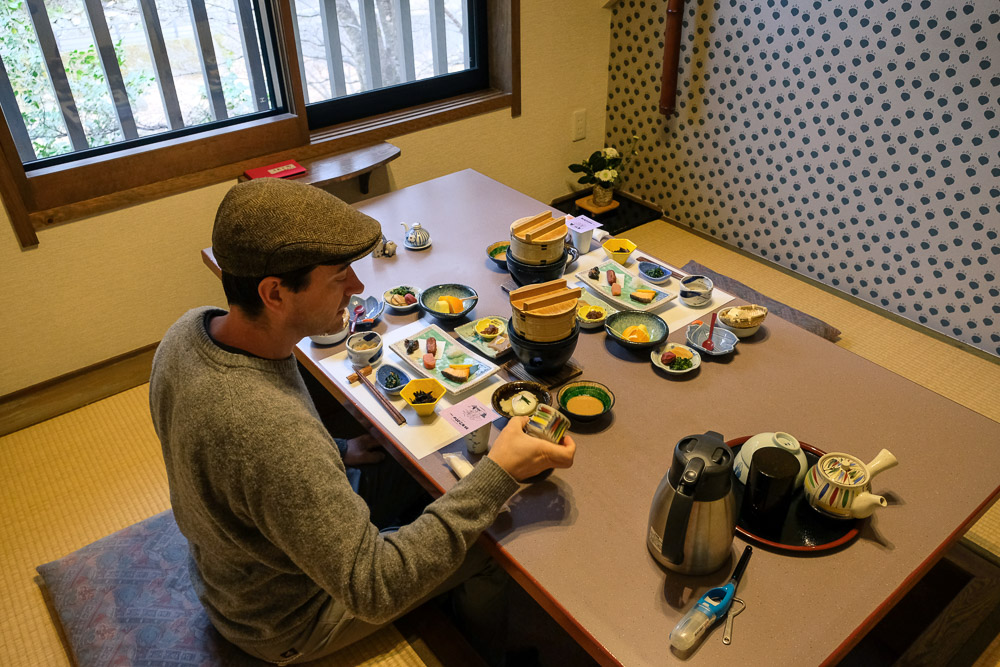
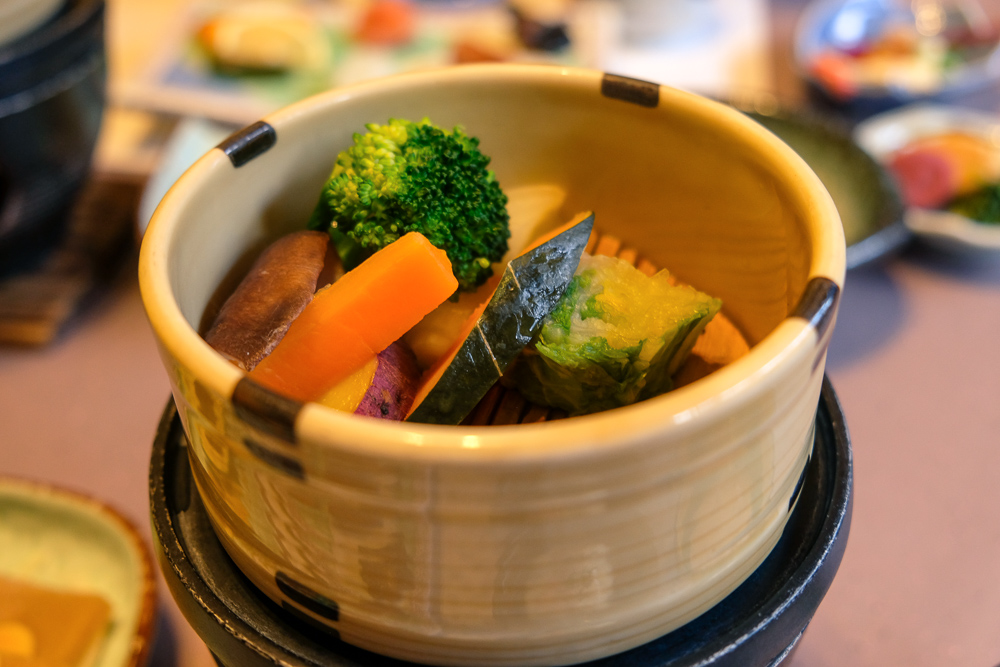
On Christmas morning, breakfast was served in our private dining room — tofu, rice, pickles, a soft-boiled egg, and steamed vegetables. We spent the rest of the day doing what Kurokawa Onsen does best: not much at all. We rested in our room, wandered at an unhurried pace, and slowly made our way through the remaining private baths we hadn’t yet tried.
After one last generous meal, we returned to our room for a final soak. I think I took nine baths that day. I fell asleep almost immediately — the kind of deep, heavy sleep that only comes when your body is truly relaxed — and woke up the next morning feeling completely reset.
Having six private baths at our disposal felt indulgent in the quietest way, paired with intimate meals, tatami rooms, and the sense that time moves differently here. In places like this, the ryokan isn’t just where you stay — it becomes the experience.
More than anything, Kurokawa reminds you that the main thing to do here… is nothing at all. Put your phone away. Take your time with each meal. Listen to the river. Move between your room and the baths until your mind finally slows to match your body.
Planning Your Visit to Kurokawa Onsen
Kurokawa is what I call a “Level 3 Inaka” destination — deeply rural, beautiful, and a little harder to reach. That remoteness is part of the appeal, but it does require a bit more planning.
- Public transport exists, but it isn’t frequent (Check the last bus/train time as services can stop early)
- Consider renting a car for flexibility
- Book your ryokan in advance
- Eat dinner at your ryokan (options can be limited at night)
- Carry cash (small rural shops may not accept cards)
- Download offline maps (mountain reception can be spotty)
- Bring your own wifi (An eSIM (10% off Saily with code MAIGOMIKA10), or a Pocket WiFi if in a group or need extra data for work (Sakura Mobile is great for longer stays, Japan Wireless is better for heavy data users.)
👉 New to rural Japan? Start with my guide to traveling in “inaka” Japan.
How to Get to Kurokawa Onsen
🚌 By Bus: There are direct highway buses from hubs like Fukuoka’s Hakata Bus Terminal and Kumamoto City. From Fukuoka, the journey takes roughly 3 hours.
🚗 By Car: Driving is a convenient option — especially if you want to explore more of the wider Aso region (famous for its massive caldera and dramatic volcanic landscapes). Many ryokan offer free parking for guests.
✅ Who Kurokawa Onsen Is Perfect For
- Travelers seeking a quiet countryside escape
- Couples / solo travelers who want quiet + nature
- Ryokan and onsen enthusiasts
- Slow, experience-focused trips
🚫 Who it’s not ideal for
- Nightlife seekers
- Tight, packed itineraries
- Travelers reliant on frequent public transport
- Those preferring modern resort hotels
Kurokawa Onsen FAQ
Kurokawa Onsen is located in the Aso region of Kumamoto Prefecture on the island of Kyushu, Japan. The onsen town sits in a quiet mountain valley along the Tanoharu River.
Yes, Kurokawa Onsen is worth visiting if you are traveling in Kyushu. Its preserved village design, walkable layout, and onsen-hopping culture make it one of the region’s most distinctive hot spring towns. Travelers not visiting Kyushu may find other onsen towns more convenient.
Kurokawa Onsen is known for its unified town design, walkable layout, onsen-hopping culture, winter lantern illuminations, and peaceful mountain setting.
One to two nights is recommended. One night allows time for bathing and exploring the town, while two nights provide a slower pace and a fuller onsen experience.
Yes. Some ryokans offer traditional mixed-gender outdoor baths (konyoku). Bathing suits are not permitted, but many ryokans provide modesty towels or rental wraps for women.
Kurokawa Onsen has mixed tattoo policies. Many ryokans allow tattoos, especially when they are covered or when guests use private baths (kashikiri-buro). Booking a private onsen is the easiest option for tattooed visitors. *Tattoo policies vary by ryokan and may change, so it’s always best to confirm directly when booking.
The best time to visit Kurokawa Onsen is late autumn and winter. Autumn offers seasonal foliage, while winter provides ideal conditions for outdoor hot spring bathing, especially in colder mountain air. Avoid visiting during the New Year holiday period, when accommodation prices rise, and the town is most crowded.

Pingback: A First-time Futon Buyer's Cautionary Tale: What you Need to Know
Thanks. Googled kurokawa onsen and saw this article was first created in Jan 14 2026 and as of now im staying on Yamibiko Ryokan. At least i know which private onsen to go five hours later in the morning hoho.
Glad you made it to Yamabiko! You must tell me which of the private baths is your favourite. 😀