So, you’re interested in living in the Japanese countryside, or inaka (いなか)? For us Canadians, living in the inaka has been a dream. We get to garden and renovate our old house without needing a landlord’s permission. We love taking our dog out to the river, being greeted by a friendly, familiar face at the end of the street, and feeling a part of our community.
However, we are also honest about the trade-offs. Living here means being far from major cities, which equals less convenient access to cultural experiences like theaters, art galleries, cafés, and restaurants.
We know this lifestyle isn’t for everyone. If you’re considering an inaka move, being honest with yourself is the first step. So, here are seven considerations to keep in mind if you are considering countryside life in Japan.
- 1. Distance from Major Cultural and Urban Amenities
- 2. The Dialect Barrier: Learning Japanese Can Be Tougher
- 3. Limited Employment Opportunities in the Inaka
- 4. Supply Chain and Shopping Constraints
- 5. The Necessity of Car Ownership
- 6. The Inaka May Not Be as Cheap as You Think
- 7. Less Anonymity, More Participation
- Conclusion and Final Takeaway from the Inaka
1. Distance from Major Cultural and Urban Amenities
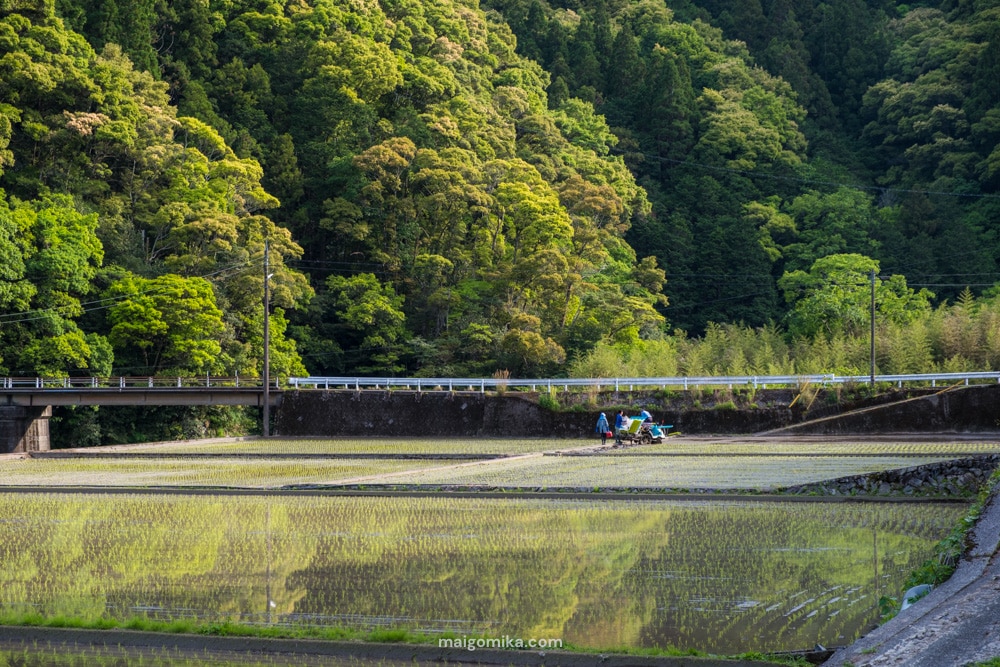
Being farther from the city means you sacrifice convenient access to specific amenities and cultural experiences. This isn’t just about missing a quick bite; it’s about shifting your entire lifestyle away from immediate convenience.
In the city, we take for granted the ability to pop into a French bakery, grab popcorn to watch the newest movie in the theatres, or browse a contemporary art gallery on a whim. In the inaka, these opportunities are rare, if they exist at all.
I myself even miss the occasional cozy cafe—the kind with good WiFi and a gentle background of white noise—to work at, or the proximity of a full-service gym.
Your food choices can be limited to local soba shops, small izakaya, or chain fast-food restaurants. If you’re craving Thai food, specialized vegan options, or even a different regional Japanese cuisine, you might be out of luck.
However, our solution is to make peace with the distance. We haven’t given up these things entirely; we just have to be intentional about them. We schedule regular “city trips” to enjoy specific activities. We make a weekend of it, visiting galleries, catching a show, and stocking up on our favorite imported goods (like our favorite high-quality cheese!).
Instead of dining out, we join dinner parties with our neighbors. We’ve focused on building our own cooking skills.
The takeaway: While we trade spontaneous convenience, we choose different ways to fulfill those needs to address our city cravings.
You might be interested in reading these, too:
- What You Need to Know About Akiya Abandoned Homes in Japan
- The Shocking Reality Of Our First Year In An Akiya House (and How We Made It Better)
- We Bought An Old House In The Japanese Countryside
2. The Dialect Barrier: Learning Japanese Can Be Tougher
After leaving our English teaching jobs in suburban Oita Prefecture to move to the countryside, we fully expected our Japanese to improve. Instead, our standard Japanese somehow seemed to… regress?
The reason is simple: the formal Japanese (Hyōjungo) we spent years learning from textbooks and city conversations was often radically different from the regional dialect (hōgen) spoken daily by our neighbors.
Hōgen doesn’t just involve a few new words; it often uses different vocabulary and distinct pronunciations that can make standard textbook Japanese less effective for genuine, day-to-day integration. Until you tune your ear to the local rhythm and lexicon, even simple conversations can be exhausting puzzles.
I have a low-tech solution: I keep a dedicated page in my notes app to write down new hōgen words and phrases I hear from the neighbors. It turns every casual conversation into a mini-lesson. Plus, my neighbors find it absolutely hilarious whenever I manage to whip out a local phrase or word mid-conversation.
The Takeaway: Be prepared to relearn Japanese as a fun, localized challenge. Laugh at your own mistakes and you’ll unlock a deeper connection to the community.
3. Limited Employment Opportunities in the Inaka
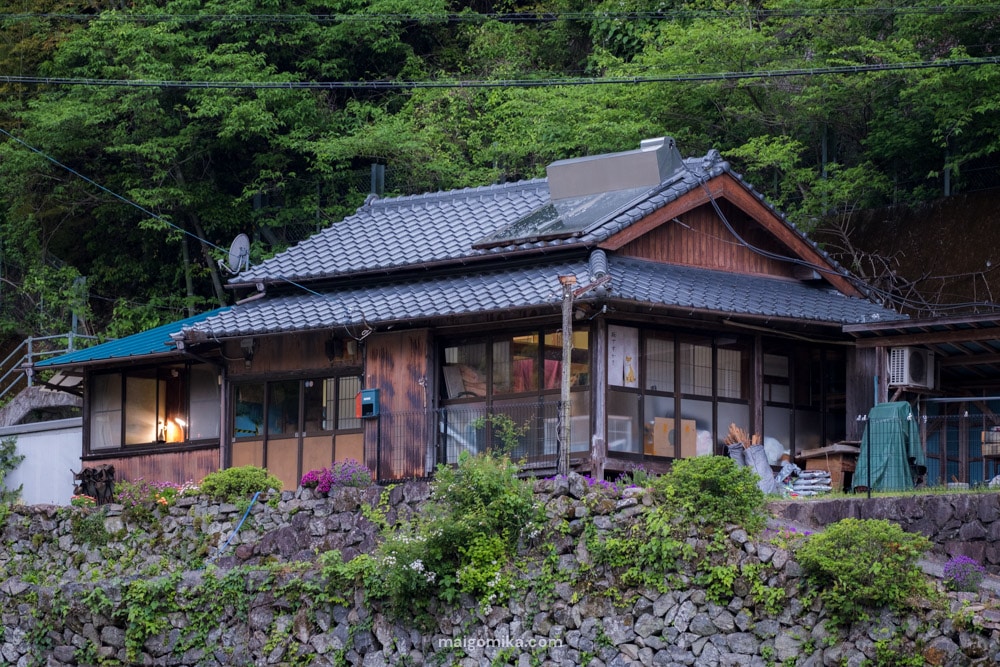
The job market operates very differently in the countryside than in the city. Job security and finding suitable employment can be a major hurdle, and perhaps the biggest challenge for foreigners relocating here.
Jesse and I are exceptionally fortunate. We were able to secure what are, for us, dream jobs: I work remotely, creating content and collaborating directly with rural communities, and Jesse works for a local blacksmith shop.
In these remote areas, local populations are often dwindling, and the job landscape reflects that. Existing job opportunities are primarily in aging industries, and most companies simply do not have the infrastructure, necessity, or experience to hire non-Japanese speakers.
Unlike city centers, there are very few international companies, language schools, or tourist-focused businesses that actively seek foreign staff. Most standard work visas in Japan are sponsored by companies that require you to work in an office setting, and those offices are overwhelmingly located in major cities.
For many, the biggest obstacle is the visa itself.
There are no easily obtainable long-term sponsored visa options specifically tailored for rural labor or revitalization projects for foreign nationals.
Read: What We Do for Work in Japan (And How We Got Our Visas)
If you want to make the inaka work, you have to approach employment proactively and strategically:
- High Fluency: Your probability increases significantly if you are already highly fluent in Japanese, allowing you to compete for local positions.
- Specialized Skills: Having a niche, in-demand skill set—especially in a trade, technology, or creative field—can open doors.
- Remote Work (The Ideal): Securing a remote job before you move, ideally with an international company that doesn’t require Japanese language skills, gives you the ultimate freedom.
The Takeaway: Prior research is absolutely essential. Don’t move expecting to find a job; move having already figured out your income stream.
4. Supply Chain and Shopping Constraints
While services like Amazon are reliable for delivery, the lack of variety in local stores can be frustrating. I miss the ability to verify an item’s quality on the spot, compare brands side by side, or simply browse specialty sections.
We also miss finding high-quality imported cheeses, specialty food items, and sustainable, eco-friendly cleaning and home products. Trying to find specific ingredients for international cuisine can sometimes feel like a scavenger hunt.
Initially, this constraint was frustrating, but it has become a surprising benefit: encouraging us to try making items ourselves.
For example, Jesse invested in a proper Dutch oven to make sourdough bread, allowing us to reintroduce our favorite hard-crust textures into our home.
The Takeaway: The need to acquire items elsewhere has prompted us to try making them ourselves. And if all else fails, there’s always Amazon.
5. The Necessity of Car Ownership
In most remote areas, owning a car might be non-negotiable. Public transit (buses, trains) is often limited, running only a few times a day, sometimes as few as 2 or 3 services. While the system exists, relying on public transport might require meticulous scheduling and forward planning. A simple trip to a nearby town for an appointment or a large grocery run becomes a much larger event dictated by the bus timetable.
There is also a financial commitment. Cars in Japan are costly to maintain, so you need to budget carefully: purchase price, insurance, annual road tax, and the mandatory two-year road inspection (called shaken), which can cost anywhere from ¥100,000 to ¥200,000 or more, depending on the age and condition of your vehicle.
However, for us, the car has been an amazing tool. We absolutely love the freedom it provides. We can leave whenever we want without waiting for a bus, take visiting family members on fun day excursions, or make a run for firewood for our stove during the winter. It gives us total control over our schedule and our adventures.
A practical hurdle, of course, is driving on the opposite side of the road. I personally found it easy to adjust to driving on the left, but I know many foreigners find it stressful, especially if they are used to fast, busy city driving.
If you’re a lifelong driver who is used to driving extensively back home, breaking those deeply ingrained habits can surprisingly be harder than learning fresh. You need to be patient with yourself and stay hyper-vigilant, especially when turning onto a street!
The Takeaway: A car may not be your optimal choice, but it provides daily flexibility for your countryside life. Budget for the maintenance, be patient learning to drive on the left, and you’ll unlock the real potential of inaka life.
6. The Inaka May Not Be as Cheap as You Think
One of the biggest draws of moving to the countryside is the promise of affordable housing, often involving older, cheaper properties (akiya). While the initial purchase/rental price might be low (our rental cost was delightfully inexpensive at $300 a year), the assumption that the inaka is simply “cheap” overall can be misleading.
For some older houses, repairs may not be optional but mandatory.
Even if you plan to DIY, you must purchase all the wood, plaster, pipes, wires, and fixtures. These costs add up rapidly.
Read more about our renovations:
- What You Need to Know About Akiya Abandoned Homes in Japan
- The Shocking Reality Of Our First Year In An Akiya House (and How We Made It Better)
- How (and Why) These 5 Helpful Fixes Made Our Akiya House More Comfortable
The time commitment is the cost most people overlook. If you choose to renovate a house yourself to save money, be prepared for a significant time commitment.
In our experience, Jesse and I do most of the renovation work ourselves, carving out weekends, holidays, and evenings between our regular work schedules. This means our “free time,” which we once spent relaxing or pursuing hobbies, has largely become dedicated to “house maintenance time.”
Old Japanese houses often require continuous, specialized care. You aren’t just renovating one room; you are continuously fighting moisture, updating old utilities, and addressing structural needs.
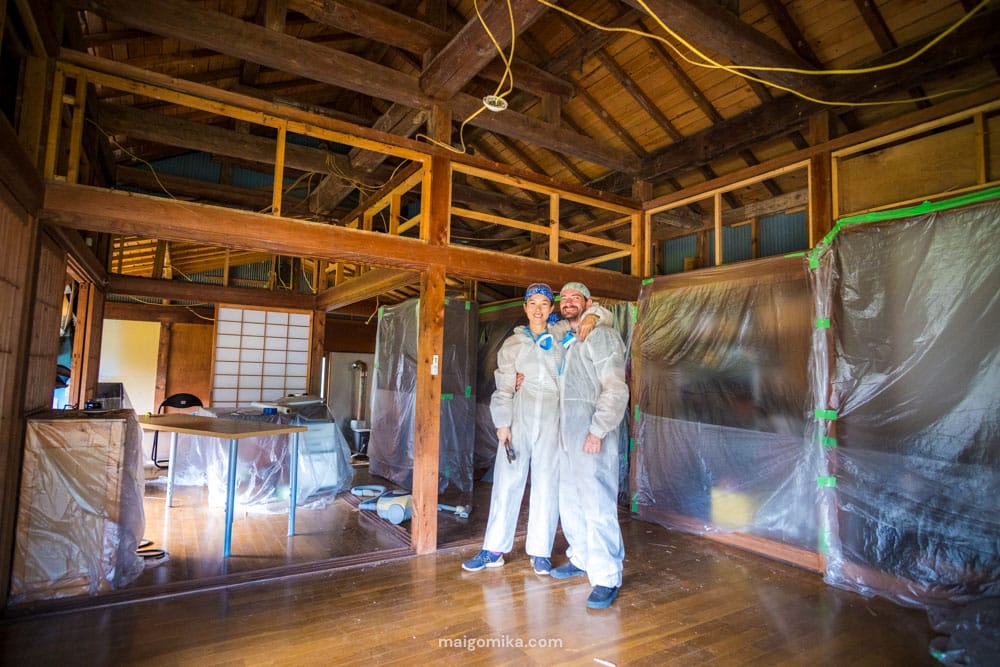
Despite the ongoing work, we get immense satisfaction in being able to improve the space we live in directly. Every single nail, every newly paper-ed shoji door, and every insulated wall is an investment of our energy, making the space uniquely ours. The fact that we have this freedom to create our home without bureaucratic oversight of a landlord is a huge psychological benefit that makes the labor feel worthwhile.
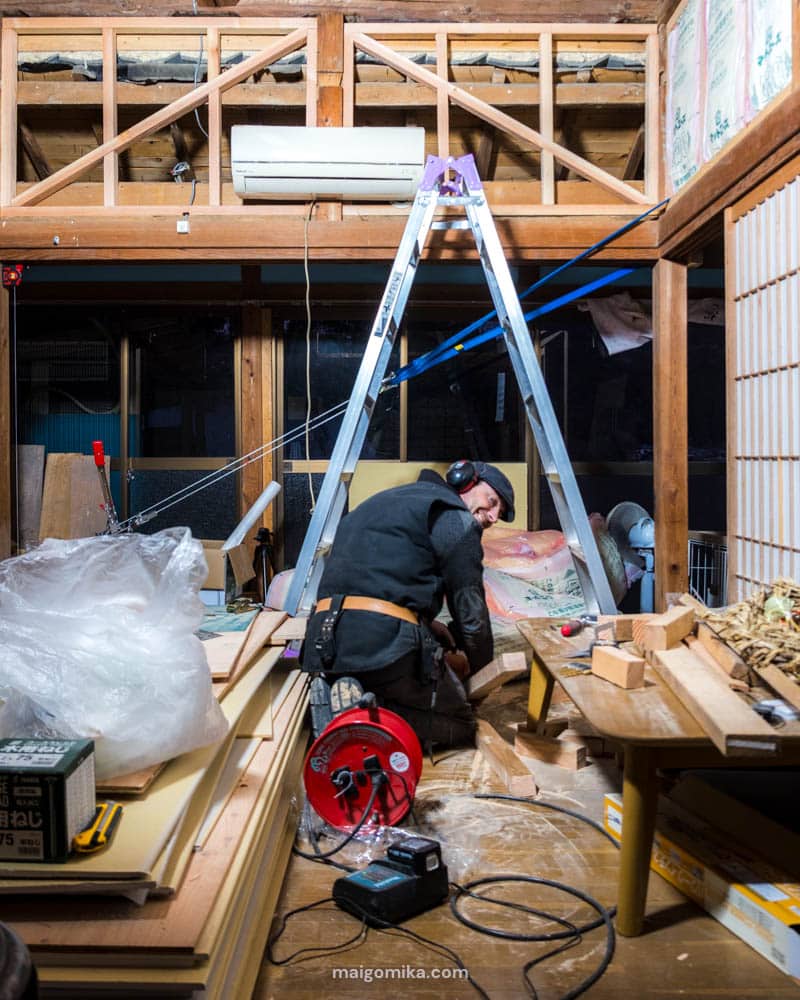
The Takeaway: While an akiya house might be cheap to acquire, be prepared to swap your weekend leisure activities for sawdust and plumbing, and you’ll end up with a home that is uniquely yours!
7. Less Anonymity, More Participation
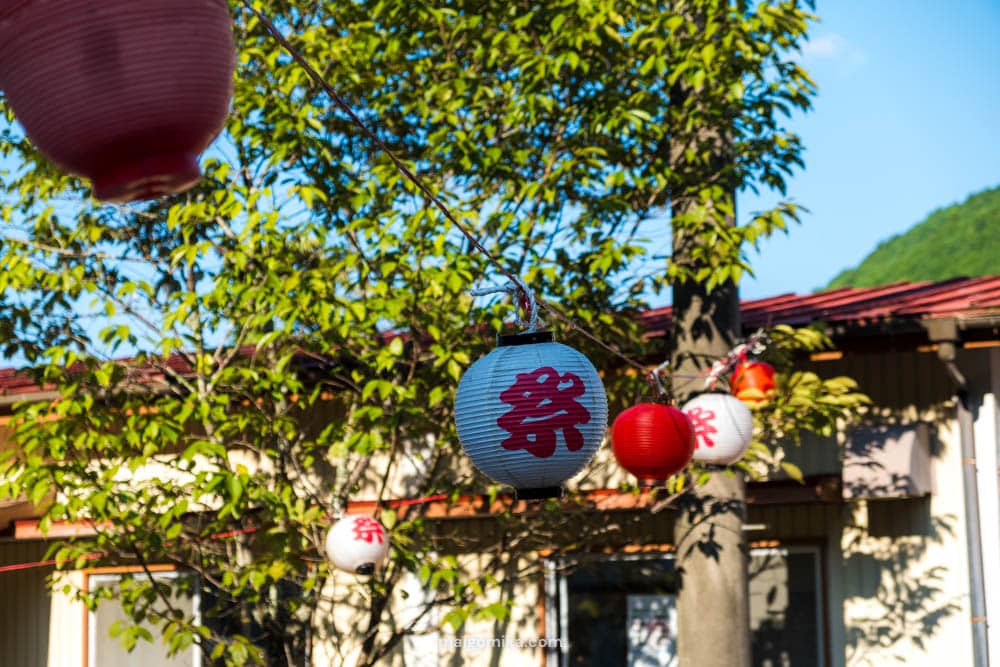
In the city, you can be anonymous; in the inaka, everyone knows you. This lack of anonymity and the expectation of participation in local events (like setting up for festivals or neighborhood cleaning) isn’t for everyone.
I’ve had conversations with friends who admitted they would feel uncomfortable with the idea of a neighbor casually dropping by unannounced, or even commenting on their daily comings and goings. I totally get it—the inherent expectation for community involvement means your life, to some extent, becomes a shared neighborhood affair.
However, for those who embrace it, the reward is a deep, warm sense of belonging. I like that our neighbors notice when I’m gone for work or traveling. It means the world when they welcome me back with a warm “Okaeri nasai” (Welcome home).
Whenever I need to know the best time to plant potatoes, I can walk next door and ask for garden advice easily. I actively embrace other duties and events—joining local festivals, going on field trips with neighbors, and helping with annual shrine cleaning. These “chores” are priceless ways to truly integrate, practice hōgen, and learn the culture firsthand.
The Takeaway: While you may lose some privacy, the reward is a part of a community that functions as a genuine support network.
Conclusion and Final Takeaway from the Inaka
Living successfully and happily in the Japanese countryside is ultimately about making a highly intentional choice. It requires an honest, realistic assessment of your fundamental needs, priorities, and—most importantly—your adaptability.
As we’ve explored, inaka life is a clear exchange: you trade spontaneous convenience (cafés, easy employment, anonymity) for connection (community involvement, homeownership, personal freedom, and quiet space).
We have been fortunate enough to experience both fast-paced city life and the slower rhythm of the inaka. While we genuinely enjoy both environments, the countryside provides the perfect foundation for us at this stage of our lives.
Which lifestyle calls to you? Does reading this article inspire you to embrace the inaka challenge, or are you truly a city person at heart? Let us know your thoughts in the comments below! What are you willing to trade for your ideal life in Japan?